
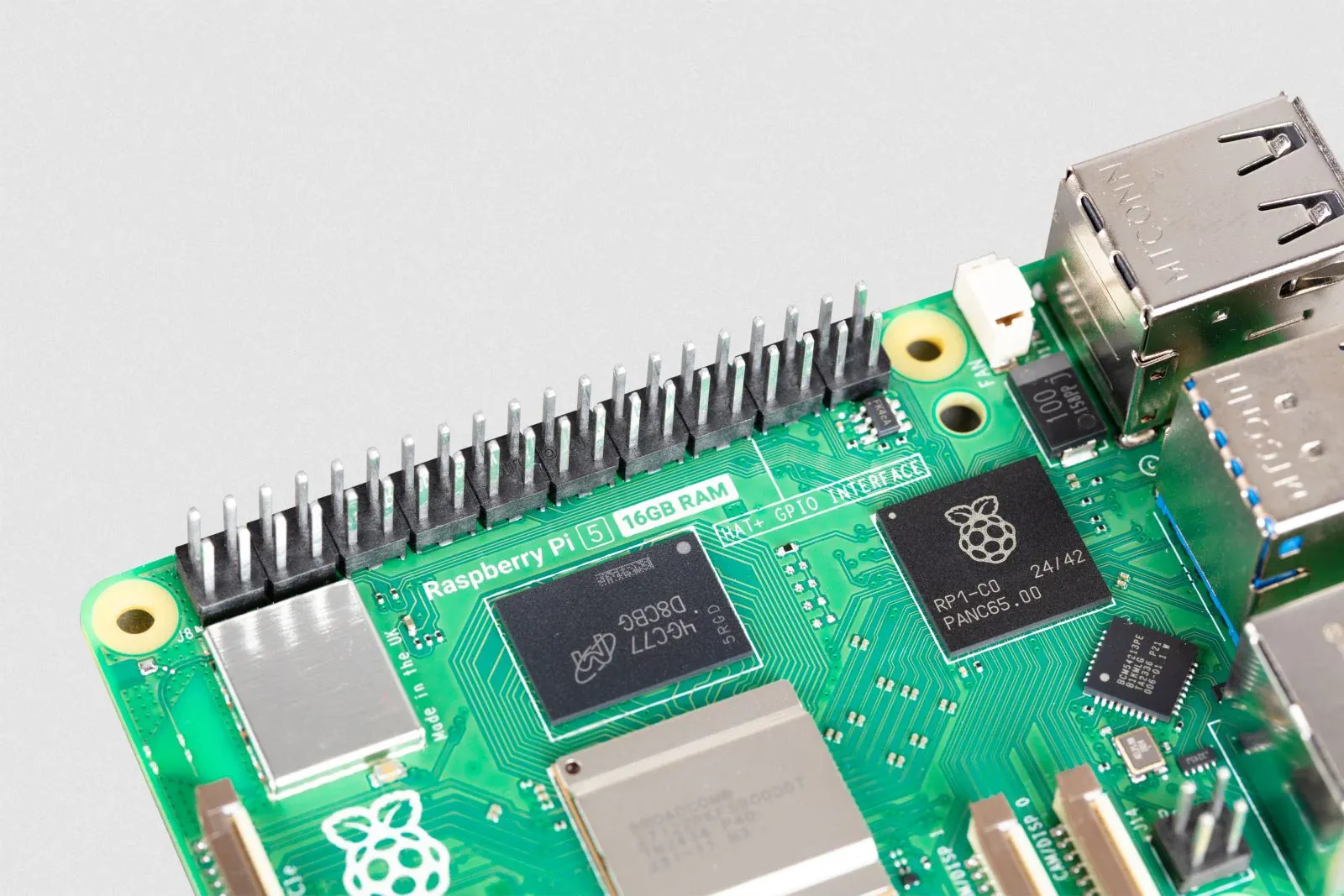
Running a truly intelligent language model on a $60 single-board computer used to be a frustrating exercise in patience. You would boot up a tiny 1.7-billion parameter model, ask for a simple script, and watch it spit out endless loops of gibberish. That hardware limitation is officially over.
In a recent hands-on review by XDA Developers, Google DeepMind’s newly released Gemma 4 E4B proved it can run typical LLM workloads smoothly on a resource-constrained Raspberry Pi. The model successfully wrote a usable code extension for a Docker socket without breaking a sweat. It completely avoids the hallucinations commonly seen in older, edge-tier hardware deployments.
The Magic Behind the 4.5B Footprint
Getting desktop-class reasoning onto a board with less than 8GB of RAM requires clever engineering. Google achieved this by utilizing Per-Layer Embeddings (PLE), which actively reduces the model’s footprint to just 4.5 billion effective parameters during runtime. Only the active expert weights load into memory at any given time.
But the real achievement here is the underlying structural design. The Gemma 4 family features a fully unified, encoder-free architecture that drops separate, memory-hogging vision and audio encoders. Instead, it projects raw pixels and audio waves directly into the text token space. You can feed it images, audio, and text simultaneously while keeping the entire process offline.
Google heavily optimized this release throughout mid-2026. They implemented Multi-Token Prediction for faster decoding speeds and utilized Quantization-Aware Training. The result? The memory footprint compresses down to anywhere between 1GB and 4GB. It even retains a full 128K context window and native offline tool calling.
How Edge AI Flips the Hardware Market
The ability to run a unified multimodal model locally fundamentally alters the competitive baseline for consumer hardware. Because the Gemma 4 E4B relies on PLE, high-level reasoning now runs natively on standard unified memory mobile chips. Hardware manufacturers no longer need to rely entirely on cloud-based API calls to power their integrated AI features.
We are already seeing this shift in early developer benchmarks. The E4B and E2B variants are actively outperforming local competitors like Qwen 3.5 and Liquid LFM when tested on structured coding and complex multi-step reasoning. This is the first time Google has successfully crammed a completely unified, encoder-free multimodal engine into an edge-sized tier. And it means any modern smartphone or integrated GPU laptop now has the raw offline intelligence of a conventional 8B model sitting directly on the silicon.