
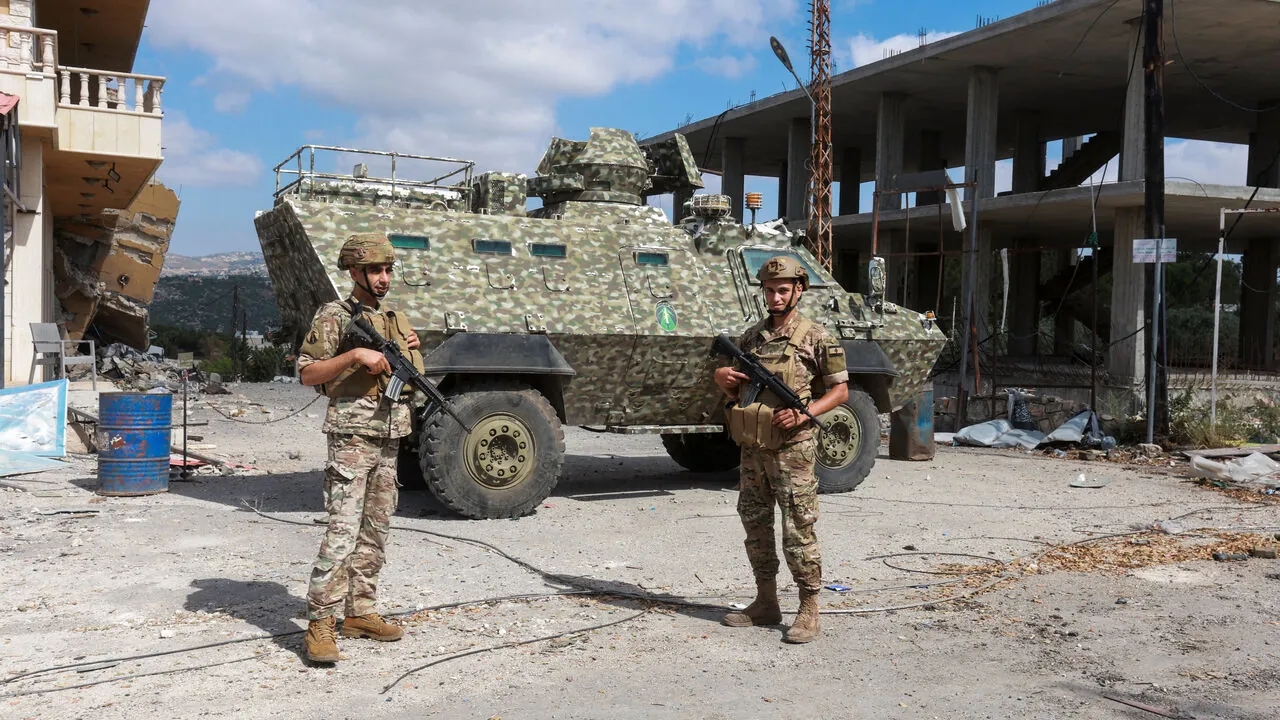
The US-mediated security framework designed to halt the Israeli-Hezbollah border conflict faces immediate skepticism from a former Biden administration official. Gavito warned that the newly implemented “pilot zones” in southern Lebanon will likely fail to secure a full Israeli military withdrawal. He stated that persistent security concerns will drive Israel to keep “pushing limits” within Lebanese territory.
The warnings arrive directly alongside a major mobilization by the Lebanese Armed Forces (LAF). The military officially deployed troops into three southern villages—Froun, Srifa, and Zawtar al-Gharbiyeh—on July 20 and July 21.
What We Know
- The deployment acts as a phased test of the Lebanese government’s ability to reassert sovereignty south of the Litani River.
- The trilateral framework establishes a new reciprocal security mechanism linking Israeli movements to Lebanese state control.
- Israeli military redeployments are strictly contingent on the LAF successfully neutralizing unauthorized military infrastructure.
The pilot zone operations officially commenced this week following diplomatic negotiations in Rome. The initiative requires the Lebanese government to dismantle Hezbollah’s military infrastructure in the designated areas. Gavito challenged the long-term viability of this scheme.
The LAF has established checkpoints and begun clearing unauthorized weapons across the three villages. This marks a critical operational test for the Lebanese state in territory historically dominated by Hezbollah.
The Israeli Defense Forces and national officials explicitly stated that further territorial withdrawals depend entirely on the LAF neutralizing Hezbollah’s presence in these zones. Verifying exclusive LAF control is now the mandatory prerequisite for any sequenced Israeli military redeployments.
The Strategic Burden on the Lebanese Armed Forces
The entire trilateral framework depends on the operational capacity of the LAF. Historically, the Lebanese state has struggled to enforce sovereign control south of the Litani River. If the LAF cannot physically dismantle entrenched military infrastructure in Froun, Srifa, and Zawtar al-Gharbiyeh, the reciprocal mechanism fails.
This failure would provide the IDF with the security justification to maintain or expand ground operations. The Rome track diplomatic effort relies on the state replacing non-state actors at the border. Gavito’s skepticism highlights the severe difficulty of executing that transition in an active combat theater.