
Artificial intelligence is already stripping away administrative jobs at a record pace. A May report from Challenger, Gray & Christmas tracked 49,135 U.S. job cuts tied directly to AI so far in 2026, making it the leading cause of layoffs for the second consecutive month. This software-driven squeeze naturally pushes anxiety toward physical labor, especially as robotics companies showcase increasingly autonomous machines.
But the physical takeover is hitting a wall. Despite incredibly cool viral demonstrations, robotics experts confirm that modern humanoids are still years away from replacing human workers on warehouse floors and assembly lines.
The 200-Hour Benchmark
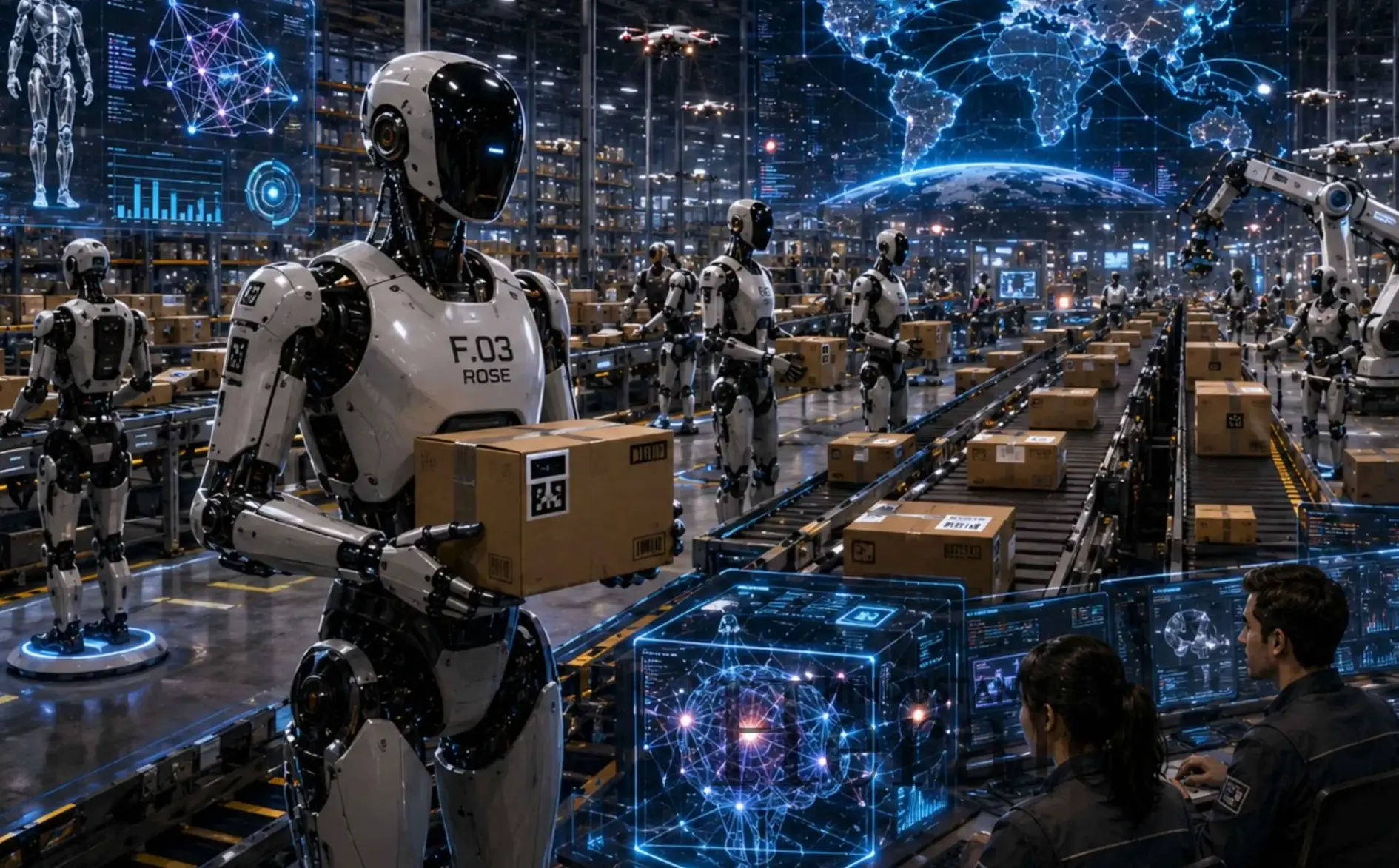
The current debate spiked in May after Figure AI fired up a highly public test of its F.03 humanoid robots. The company livestreamed models nicknamed Bob, Frank, Gary, and Rose autonomously sorting packages. Powered by the Helix 02 neural network, the robots blew past their initial 8-hour test window.
Figure CEO Brett Adcock pushed the machines to run for over 200 continuous hours. They sorted nearly 250,000 packages without any hardware failures and strictly zero teleoperation, according to a detailed report by TechRepublic. It is a brilliant display of machine endurance. Watching a metal frame sort boxes for a week straight without a break feels like peeking into the future.
Then you talk to the academics looking at the actual data.
Struggling Outside the Grid
Oliver Obst, an associate professor of robotics at the University of New South Wales, threw some cold water on the idea of an imminent mass rollout. He told Cointelegraph that humanoid robots still struggle heavily with unstructured environments. They simply cannot adapt to changing conditions the way a human worker does without hesitation.
Obst pointed out that humanoids are not currently more efficient or less error-prone than traditional robotic manufacturing setups. The industry still faces high hurdles with reliability, speed, overall cost, and the ability of these machines to recover from unexpected situations.
This exact structural problem surfaced again when discussing how to actually deploy them. Another researcher, Naranjo, noted that replacing humans in less static settings will depend on how fast society can physically alter spaces to be “robot-friendly,” as outlined in the recent researcher pushback.
Why Warehouse Layouts Must Change Before Humanoids Take Over
This brings up a fascinating reality about the current AI transition. Software algorithms can replace a document processor overnight because the digital environment is already perfectly structured for code. Physical robots do not have that luxury. The 49,135 AI-attributed job cuts tracked in the latest Challenger data are almost entirely white-collar and administrative.
For a humanoid like the F.03 to take over a random local shipping center, the building itself has to change. Aisles must be standardized, unexpected obstacles removed, and lighting optimized for optical sensors. A human worker can trip over a misplaced pallet, laugh, pick it up, and keep walking. A humanoid robot encountering an unexpected pallet often requires a complete reset of its immediate pathing logic.
We are watching the hardware catch up to the software at blinding speed. The Figure AI test proves the mechanical endurance is basically solved. But until companies are willing to spend millions redesigning their physical warehouses to cater to a robot’s lack of adaptability, human hands remain the most reliable tools on the floor.