
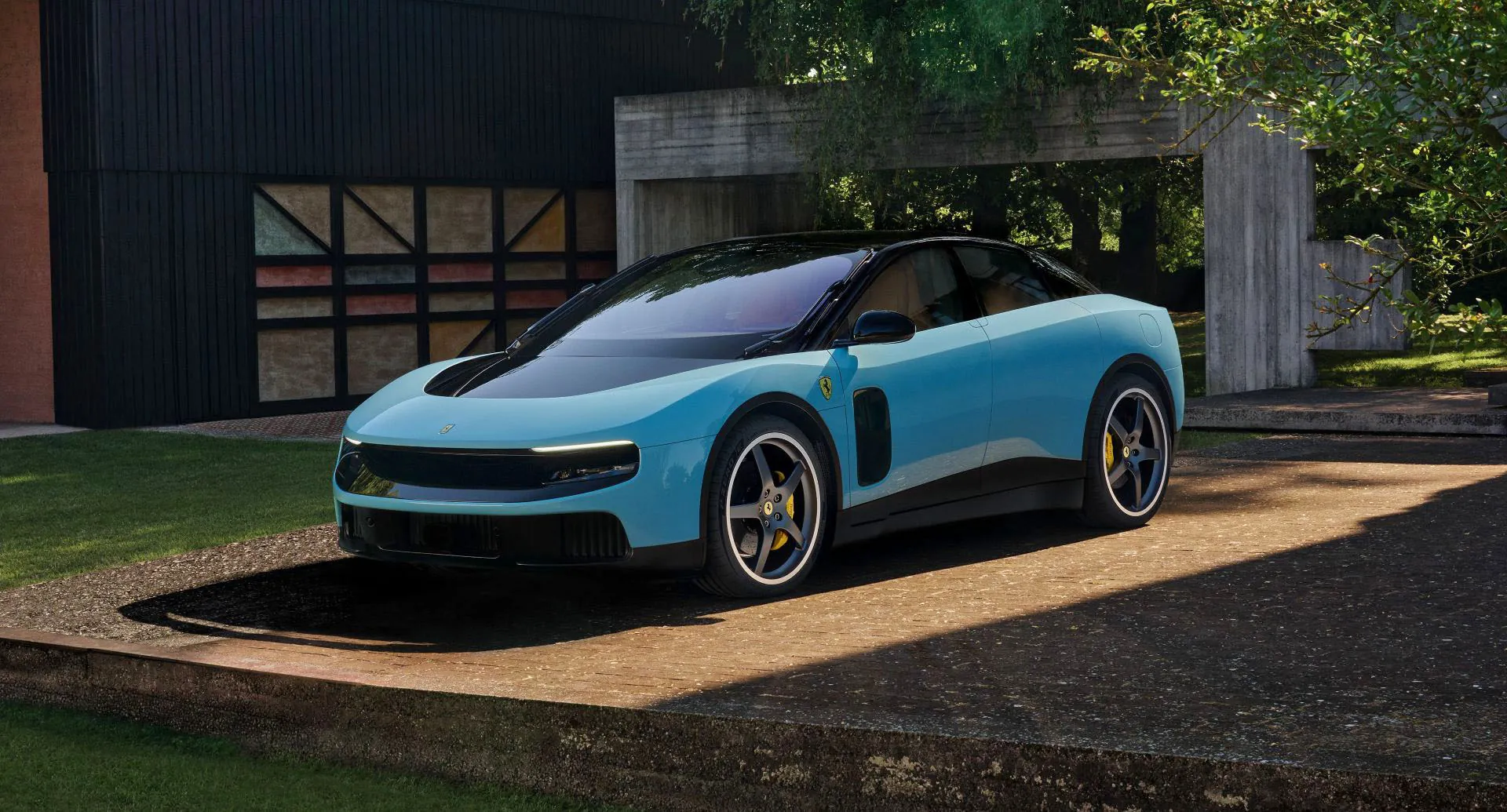
Ferrari’s highly controversial first electric vehicle, the Luce, is scheduled to officially launch in China this upcoming weekend. Initial reports from local automotive outlets claimed the entire Chinese allocation of exactly 88 units sold out immediately. But the true commercial status of the vehicle remains fluid as the July 3–5 debut approaches.
Conflicting recent reports from the Beijing Business Times indicate that Ferrari Beijing dealerships are still actively accepting new orders for the four-door electric sedan. Depending on the actual buyer demand following this weekend’s events, the Italian automaker may consider increasing the allocation for the Chinese market beyond the original 88 vehicles.
Key Details
- The Luce retails for 3,988,000 yuan (approximately $586,600) in China, making it roughly 7 percent cheaper than its European retail price.
- The sedan breaks two historical traditions for Maranello simultaneously: it is the brand’s first-ever fully electric vehicle and its first regular production four-door car.
- Former commercial chief Enrico Galliera explicitly denied unverified rumors that purchasing the Luce acts as a “loyalty test” to secure future hypercar allocations.
The Luce represents a severe departure from Ferrari’s established product strategy. Penned by former Apple design chief Jony Ive, the car debuted globally in May. Following its global unveiling, the car faced severe internet backlash for its plain four-door design and electric powertrain, contributing to a temporary 6 percent drop in the automaker’s stock price according to reporting from Electrek. That negative reception preceded a commercial executive shakeup within the company.
Despite the international criticism, the financial math for Chinese buyers shifts the vehicle’s appeal. Because the Luce operates exclusively as a battery-electric vehicle, it bypasses the heavy financial penalties typically applied to imported supercars. The Beijing Business Times reporting confirms the vehicle benefits from complete exemptions from China’s steep 40 percent engine displacement consumption taxes. It also circumvents prolonged large-city license plate registration delays by qualifying for local clean-energy incentives.
How the Luce Competes Against Domestic Brands
The $586,600 sedan enters a fiercely competitive regional market dominated by domestic high-performance EV alternatives like the Yangwang U9 and the Hyptec SSR. Those Chinese competitors offer equivalent or superior electric powertrains for a fraction of the cost.
However, industry analysts tracking the Chinese luxury sector note that Luce buyers are not cross-shopping specification sheets. The target demographic is paying a premium for the exclusive status of the Ferrari brand, insulating the automaker from the fierce price wars currently devastating the broader electric vehicle market in China. The immediate acceptance of orders in Beijing suggests that Maranello’s calculated pivot to an electric, four-door layout may secure a highly profitable niche in Asia.