
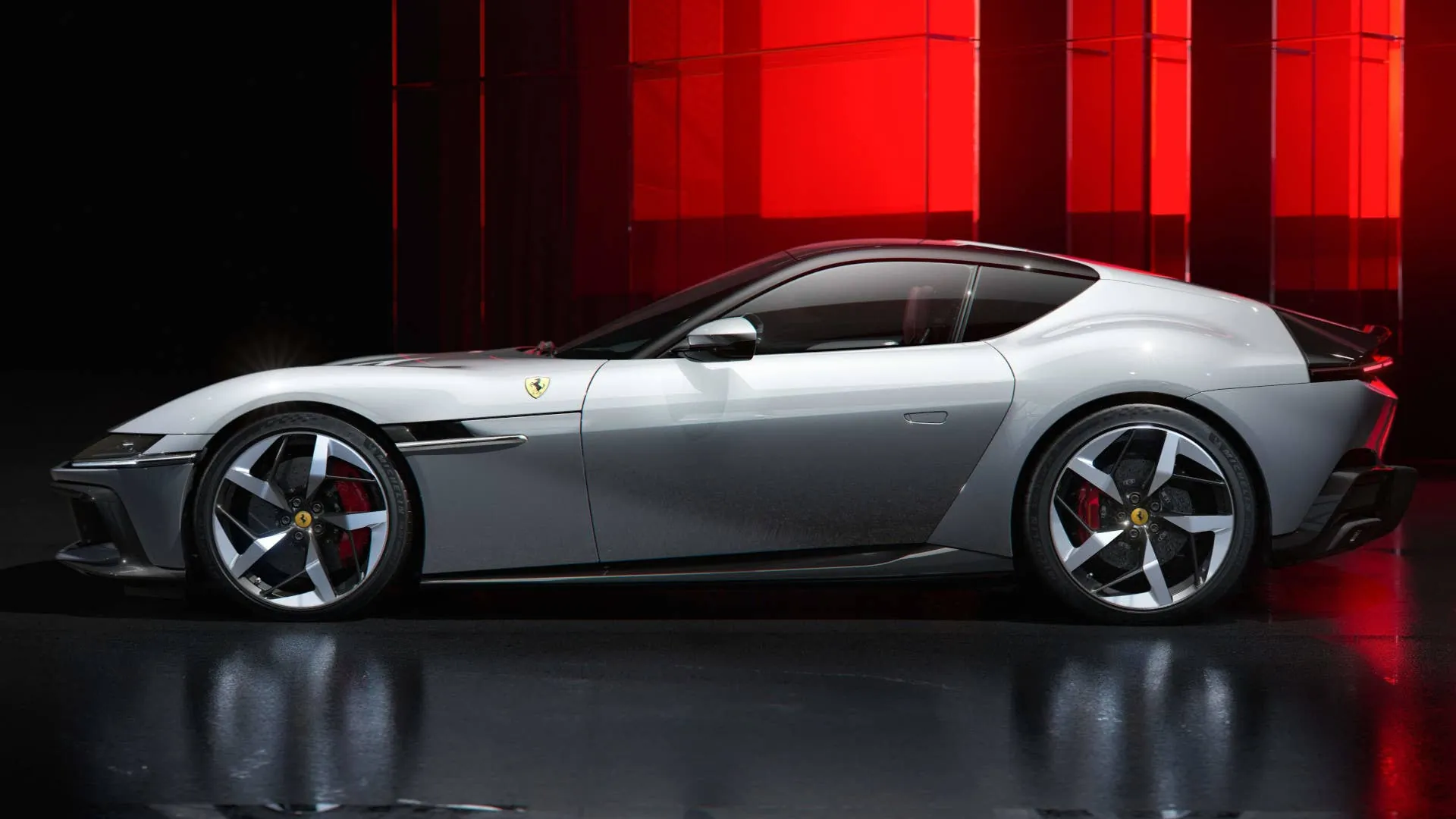
Ferrari is officially putting a physical clutch pedal back into a front-engined grand tourer. The Italian automaker just took the wraps off the 12Cilindri Manuale. It marks the first time in 14 years the company will sell a new car that lets the driver stall the engine.
The spec sheet is exactly what enthusiasts want. The car runs on an unchanged, naturally aspirated 6.5-liter V12 engine. It pushes out 819 horsepower and screams all the way up to 9,500 rpm. Production is strictly capped at 1,499 units globally.
But here is the engineering twist. This isn’t a traditional mechanical manual gearbox. Ferrari designed a “Manuale By-Wire” system from the ground up. You get the brand’s iconic open-gate aluminum shifter in the center console and a third pedal on the floor. However, your physical inputs do not move a mechanical linkage. The system converts your movements into electronic signals that dictate shifts on the car’s existing eight-speed dual-clutch transmission.
The engineers in Maranello went out of their way to avoid making it feel like an arcade game. The aluminum shifter relies on a network of sensors and physical kinematics to generate real mechanical resistance. You still get that satisfying metallic click when pushing into gear. The floor pedal requires actual leg force to operate. Drop the clutch too fast? The computer will deliberately cut the engine out and stall the car.
Ferrari built the €590,000 (roughly $672,000) analog V12 to reassure traditional collectors, according to a Reuters report tracking the strategic pivot and 2027 delivery dates. Just over a month ago, the brand revealed its first fully electric vehicle, the €550,000 “Luce”. That EV drew heavy criticism online from brand loyalists who hated the unconventional styling and the total lack of mechanical engine noise. The 12Cilindri Manuale acts as a very loud apology.
Why This Manuale By-Wire Strategy Makes Sense
Engineering a physical clutch for a digitized transmission solves a major headache for boutique supercar manufacturers. Global emissions and noise regulations make traditional manual transmissions extremely difficult to certify in high-horsepower applications. Dual-clutch systems shift faster, manage torque better, and keep the engine in optimal efficiency bands.
By simulating the analog experience over a modern DCT architecture, Ferrari gets to keep the regulatory compliance of an automatic while selling the tactile engagement of a manual. It bridges the gap. Drivers get the physical satisfaction of rowing their own gears, and the computer handles the emissions math in the background.