
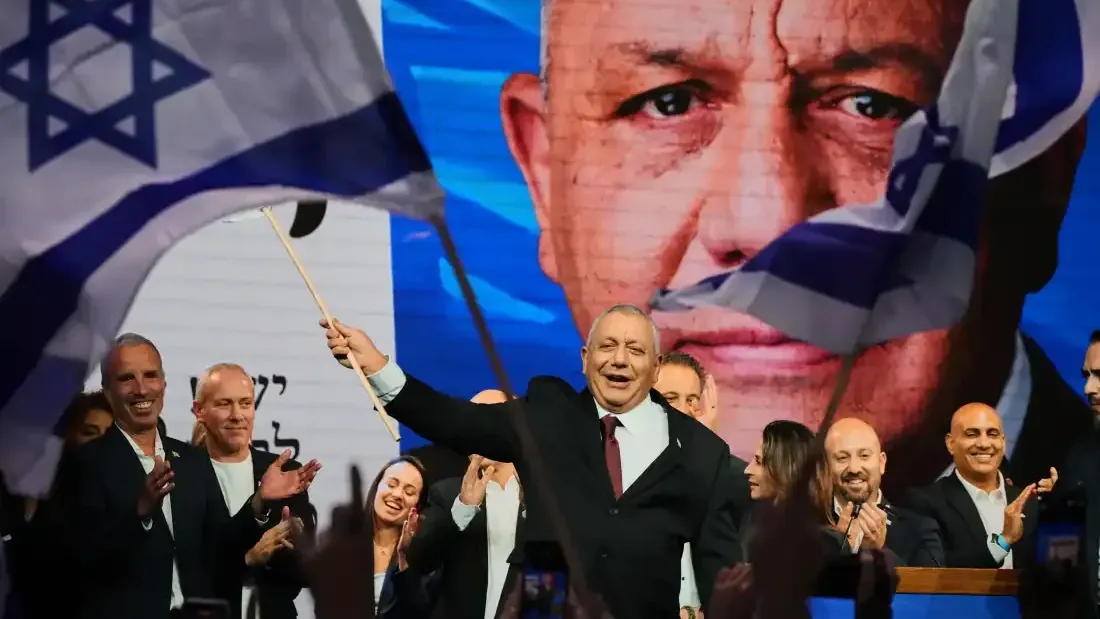
Israeli Prime Minister-designate Gadi Eisenkot and caretaker Prime Minister Benjamin Netanyahu ended two hours of unity government talks in Tel Aviv on Sunday, November 29, 2026, without reaching an agreement. Following their Sunday morning talks at the Kirya military headquarters, both parties pointed to wide remaining differences and scheduled no further meetings.
In a joint statement after the session, which began with a security briefing, Netanyahu’s Likud party and Eisenkot’s Yashar party described the discussions as businesslike while saying both sides sought to narrow wide gaps. According to The Times of Israel, no follow-up talks between Likud and Yashar were planned.
Eisenkot downplayed the prospect of joining a unity government with Netanyahu after the meeting, according to a Reuters report. Israeli media reports said Eisenkot told Netanyahu “there will be no further meeting” and indicated he remained committed to his coalition partners.
Coalition math ahead of the December 6 deadline
Without a Likud-Yashar agreement, Eisenkot must assemble a governing majority from a divided 120-seat Knesset before his initial mandate expires on December 6, or request a 14-day extension. Failure to form a coalition would deepen Israel’s political deadlock and increase the risk of another parliamentary election.
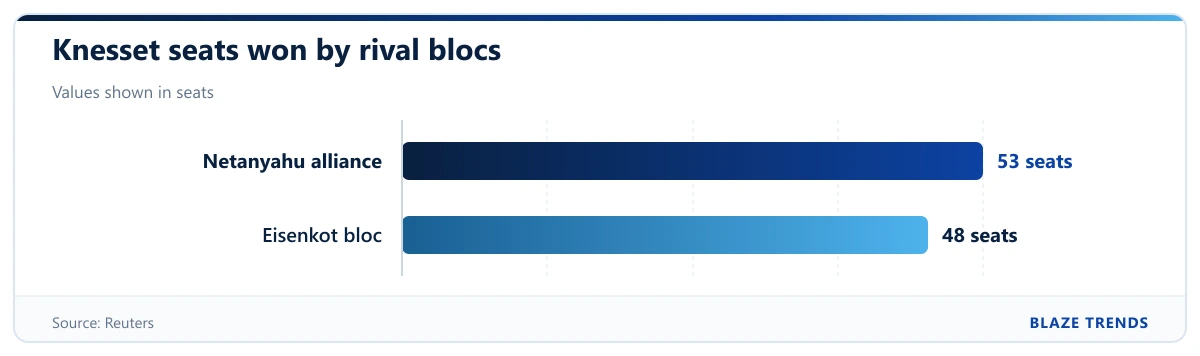
In the October 27 election, Netanyahu’s Likud and its alliance of far-right and ultra-Orthodox parties won 53 seats, while Eisenkot and his potential partners took 48 seats, leaving neither camp with a majority. President Isaac Herzog tapped Eisenkot in early November to form the next government.
Last week, Eisenkot signed coalition agreements with the left-wing Democrats, who hold 8 seats, and the right-wing Yisrael Beiteinu party, which holds 7 seats. On Saturday, November 28, Netanyahu tried to break the impasse by proposing a rotating unity government in which Eisenkot would serve first as prime minister before Netanyahu took over, according to The Guardian.
Reactions across both political blocs
Tensions surfaced quickly after the Sunday morning talks broke up. Likud minister Shlomo Karhi attacked Eisenkot in a Hebrew-language post on X, accusing him of preparing to rely on Arab lawmakers to build a government.
Among Eisenkot’s allies, Democrats leader Yair Golan posted on X after Sunday’s meeting that the public backed Eisenkot, adding, “Now is the time to form a government that will bring real change…”
Netanyahu’s rotation proposal had already divided Eisenkot’s camp before Sunday’s session. Former prime minister and B’Yachad chairman Naftali Bennett welcomed Netanyahu’s offer to let Eisenkot serve first and has been the only party leader in Eisenkot’s bloc to advocate a unity government with Likud.
Yair Lapid, Bennett’s No. 2 in B’Yachad, rejected Netanyahu’s proposal Saturday night, calling it a transparent trap from a leader who had broken past agreements with coalition partners. Yisrael Beiteinu chairman Avigdor Liberman also questioned why Bennett would trust a rotation pledge after rejecting a similar Netanyahu offer in 2021.
What happens next in the talks
After leaving the meeting with Netanyahu, Eisenkot met with Bennett on Sunday following more than three hours of separate coalition negotiations between teams from Yashar and B’Yachad. Likud had initially slated the Sunday morning Netanyahu-Eisenkot session for 10:00 local time at a hotel in Herzliya before the meeting took place at the Kirya in Tel Aviv.
With no new Likud-Yashar talks scheduled, Eisenkot’s path to a governing majority before December 6 depends on uniting his 48-seat bloc and securing outside backing from ultra-Orthodox Jewish or Arab parties, or seeking a 14-day extension to continue negotiations.