
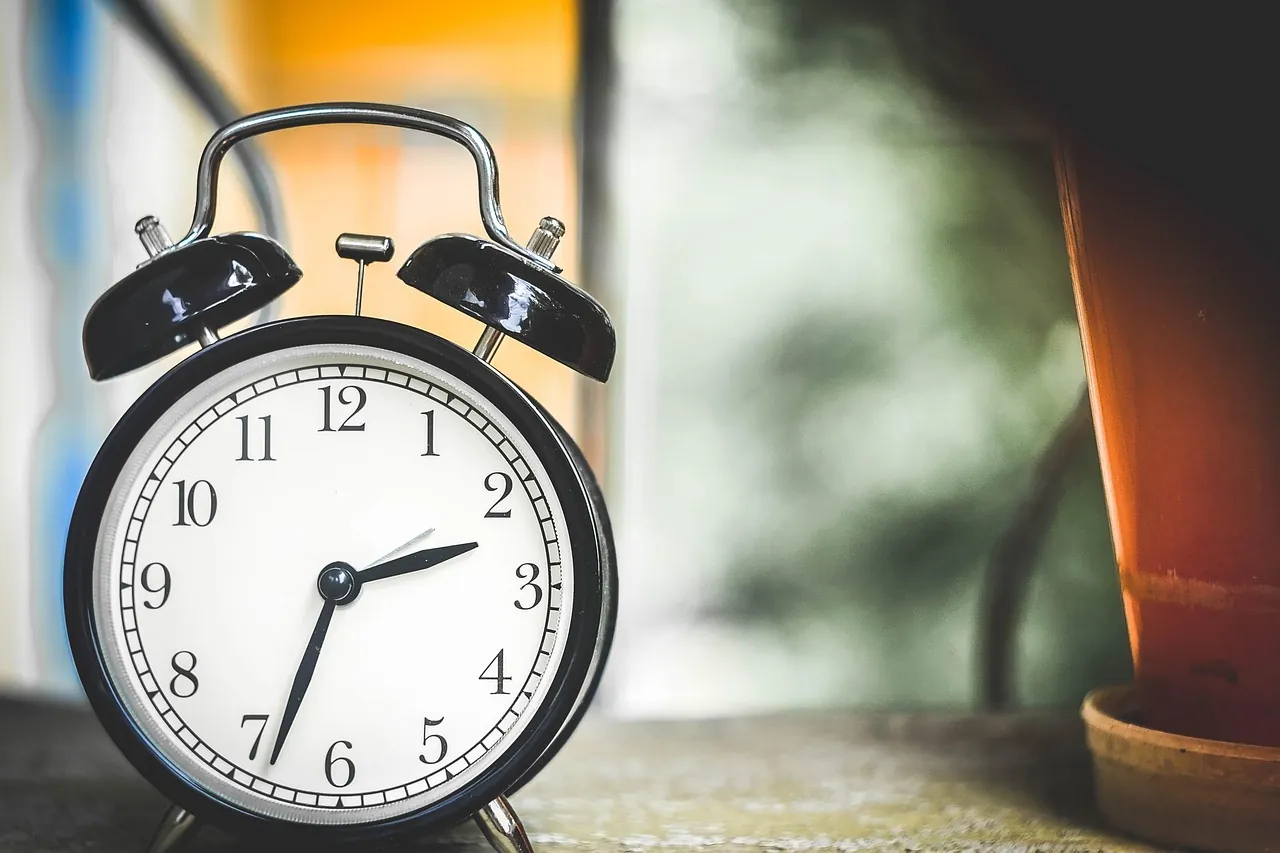
Daylight saving time ends across most of the United States at 2:00 a.m. local time on Sunday, Nov. 1, 2026, when clocks turn back one hour to 1:00 a.m. standard time. Millions of residents searching for daylight savings 2026 rules get an extra hour of sleep on Sunday morning, along with earlier sunrises and earlier evening darkness through the winter. Meanwhile, a House-passed federal bill to end the twice-yearly clock switch remains stalled in the Senate.
Under federal time rules overseen by the Department of Transportation and the National Institute of Standards and Technology, daylight saving time begins on the second Sunday of March and ends on the first Sunday of November. In 2026, the schedule started on March 8 and concludes on Nov. 1.
Most smartphones, computers and internet-connected devices adjust automatically at 2:00 a.m. People with analog wall clocks, watches and older kitchen appliances need to set them back one hour by hand.
Not every part of the country makes the switch. States can exempt themselves from daylight saving time and stay on standard time year-round without extra federal action, though shifting to permanent daylight saving time requires congressional approval. Hawaii, most of Arizona outside the Navajo Nation, and the U.S. territories of American Samoa, Guam, the Northern Mariana Islands, Puerto Rico and the U.S. Virgin Islands do not change their clocks.
Why the Sunshine Protection Act Is Stalled
Efforts to end the twice-annual clock change gained traction in the 119th Congress when the U.S. House of Representatives passed the Sunshine Protection Act (H.R. 139) on July 14, 2026. Introduced by Rep. Vern Buchanan, the legislation would move clocks forward one hour in March as usual and keep them there permanently, creating brighter winter evenings and later winter sunrises.
After clearing the House, the bill was sent to the Senate Committee on Commerce, Science, and Transportation, where it has stalled and is unlikely to pass this year, according to the Los Angeles Times. Supporters of permanent daylight saving time argue that extra afternoon light gives families and workers more daylight after school and work.
President Donald Trump has pushed Senate Republicans to pass the measure and end clock switching. In early October 2026, Trump urged residents in Arkansas to call what he said was the personal cellphone number of Republican Sen. Tom Cotton of Arkansas, accusing the senator of holding up the bill.
Cotton has opposed making daylight saving time permanent because it would force children to commute to school in the dark during winter mornings. Pointing to a prior federal attempt to adopt year-round daylight saving time that Congress later repealed, Cotton noted in a statement reported by CBS News that public backlash grew “once Americans experienced absurdly late sunrises in the winter.”
Sleep scientists and medical doctors have also pushed back against permanent daylight saving time, proposing permanent standard time instead. Those specialists say standard time aligns better with human sleep cycles and lowers health risks, while research indicates that darker morning commutes under permanent daylight saving time could increase vehicle collisions involving pedestrians.
When Does the Time Change Again in 2027
State-level attempts to stop changing the clocks have hit similar roadblocks. The United States first adopted daylight saving time under the Standard Time Act of 1918, and numerous campaigns to end the practice have stalled since. In California, voters approved a 2018 ballot measure allowing state lawmakers to pursue an end to clock changes, which would still require congressional sign-off, but several state bills to put the measure into effect have failed.
If the Senate does not pass the Sunshine Protection Act before the current Congress concludes in early January 2027, the legislation will expire and lawmakers will have to reintroduce it in the next session. Under current law, clocks will spring forward one hour again when daylight saving time resumes at 2:00 a.m. on Sunday, March 14, 2027.