
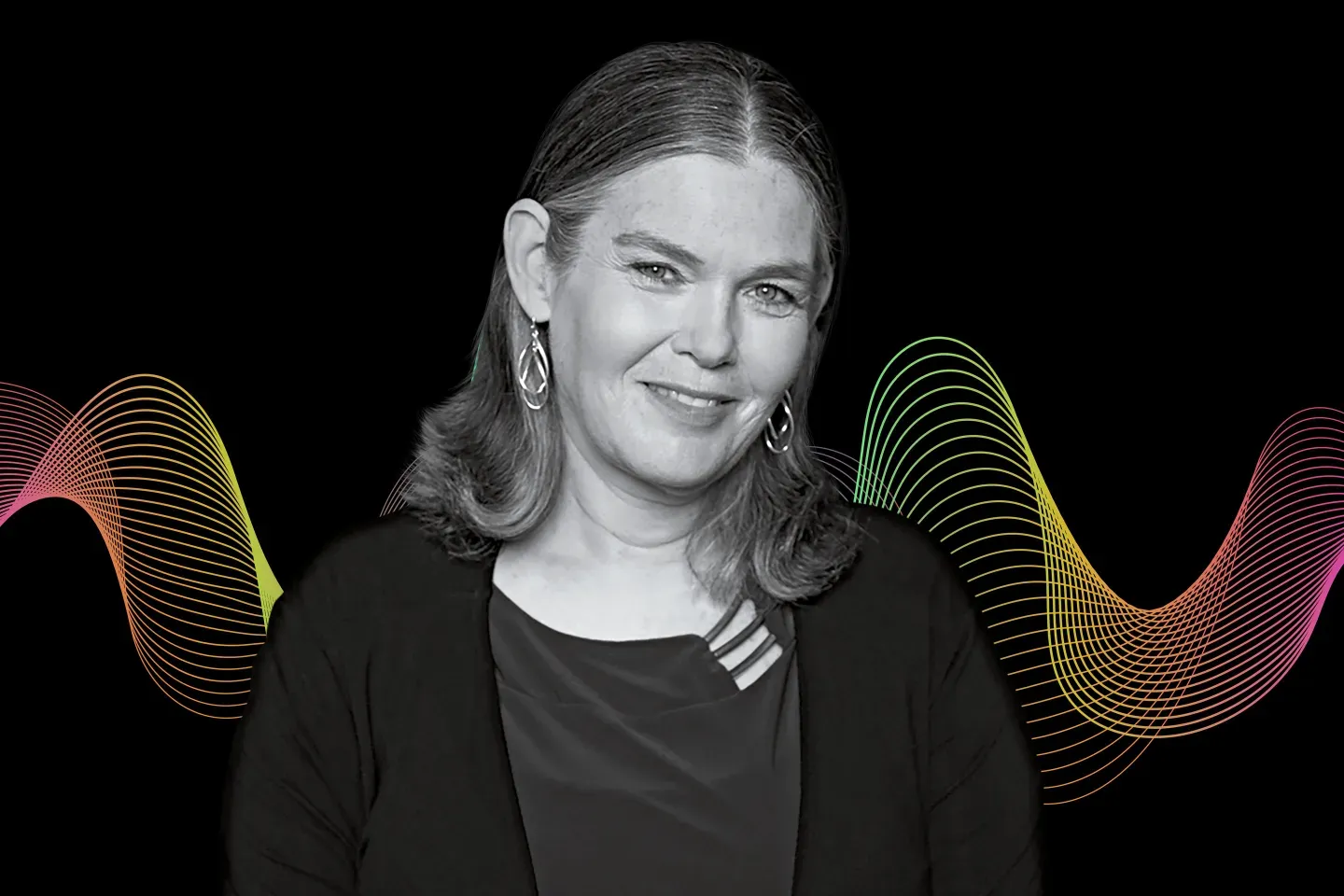
The global pharmaceutical sector is currently confronting astronomical financial costs and high failure rates in late-stage clinical trials, forcing a systemic shift toward artificial intelligence. In a June 20, 2026 interview, insitro CEO and Coursera co-founder Daphne Koller detailed how machine learning is actively transitioning from theoretical mathematics into a practical, predictive engine for human biology.
Koller traced her foundational computing roots back to writing BASIC code on monochrome PC-DOS monitors. Today, she directs her focus entirely on utilizing algorithms for complex medical research. Her company is actively chasing true “disease modification” in Amyotrophic Lateral Sclerosis (ALS) by using computers to identify microscopic biological patterns within human motor neurons.
From Probabilistic Models to Real-World Code
Before applying algorithms to pharmaceutical development, Koller spent 18 years at Stanford University building Probabilistic Graphical Models (PGMs). This highly specific mathematical framework allows computers to reason through noisy, uncertain biological data, shaping her academic history and helping drag machine learning out of fringe academic circles and into mainstream scientific utility.
Her drive to scale educational and technological frameworks globally previously led to the creation of Coursera. According to a Forbes interview published Saturday, Koller took a “leap of faith” when building the digital learning platform, which now hosts 150 million users distributed across career-oriented STEM students, lifelong learners, and high schoolers preparing for college.
That same instinct for massive scale is now pointing directly at the human genome. Bristol Myers Squibb (BMS) recently expanded its strategic collaboration with Koller’s firm to deploy these AI capabilities. The pharmaceutical giant just nominated two new therapeutic targets, designated ALS-2 and ALS-3, using the insitro Virtual Human platform. The system is actively testing novel ALS targets by evaluating human-derived cell data and isolated TDP-43 protein abnormalities.
How insitro’s Virtual Human Platform Alters Pharmaceutical R&D
Koller enthusiastically compares the current state of artificial intelligence to the invention of calculus. Just as calculus gave physicists the tools to calculate gravity and planetary motion, AI is finally giving biologists a fundamental predictive framework to understand human cells. It is incredibly fascinating to watch algorithms move from basic predictive text outputs to actively hunting down complex human diseases.
By using scalable machine learning technologies, companies like insitro can generate highly accurate biological hypotheses much earlier in the drug development lifecycle. This allows major partners like Bristol Myers Squibb to bypass the historically blind trial-and-error approach that inflates modern R&D budgets. As the technology matures, AI will likely become a mandatory diagnostic and discovery tool for every tier-one medical research facility in the world.