
China rules the global solar power scene. It makes nearly 90% of the world’s solar cells. But this massive control has led to a huge problem. Too much supply, prices crashing, and billions lost are now the harsh reality. Beijing is planning an industry “reset.” This aims to steady the market and help China keep its top spot.
Too Much of a Good Thing
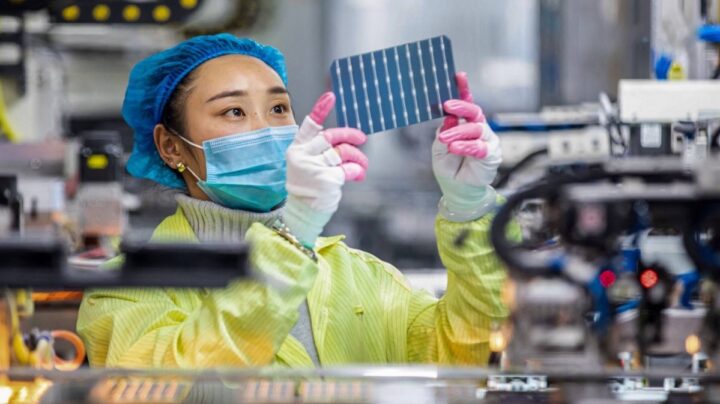
From 2020 to 2023, Beijing shifted money from real estate. It put these funds into “three new growth industries.” These included solar panels, electric cars, and batteries. This led to record-breaking output for solar cells. In 2024, the country made 588 gigawatts of solar cells. That’s more than double the global demand of 451 gigawatts, as reported by the Financial Times.
This flood of products sent prices crashing. Companies started selling their goods for less than they cost to make. This caused losses of over 60 billion dollars, which is about 55.5 billion euros. Polysilicon, a key raw material for solar cells, dropped to about 50 yuan per kilo. The five biggest solar companies cut 31% of their staff. This meant about 87,000 people lost their jobs.
Government Steps In
Efforts by the industry to limit production did not work. For example, a “self-discipline” agreement in 2024 failed to fix anything. So, China’s government stepped in directly. It created a fund of at least 50 billion yuan, which is around 6.9 billion euros. This money will buy up and close polysilicon production lines. The goal is to make prices stable again.
Some companies, like Daqo New Energy and GCL Technology, announced they would reduce some production. The Ministry of Industry also ordered closures of underused factories. They also made environmental rules tougher. These actions show how serious the government is about fixing the problem.
Global Tensions and Future Hopes
This solar adjustment has economic, political, and strategic importance. The low prices of Chinese solar exports created tension with the United States and Europe. Yet, Beijing keeps selling to developing nations through its Belt and Road initiative. It’s a tricky balancing act on the global stage.
Even with all the financial losses, the six largest companies made a big move. They spent 3.4 billion yuan, about 470 million euros, on research and development. This happened in the first half of 2025. This investment boosted solar cell efficiency from 20% to 30%. It shows they are still looking forward, despite current challenges.
The Hard Choice Ahead
Experts suggest cutting production capacity by 20% to 30%. This would make the industry profitable again. But this is a tough move for Beijing. Provincial governments care about local jobs and investment. The very strategy that built China’s solar dominance—mass production and low prices—now threatens to ruin it.
Beijing must decide if fierce competition will weaken its top companies. Or, it can accept a painful fix to save the industry. Economist Alicia García-Herrero notes, “They dominate in no other sector more than this one.” This highlights the unique importance of solar for China. This is why Beijing seems ready to “reset its sun,” even if it hurts. They want to stop their biggest success story from collapsing due to its own overflow.