
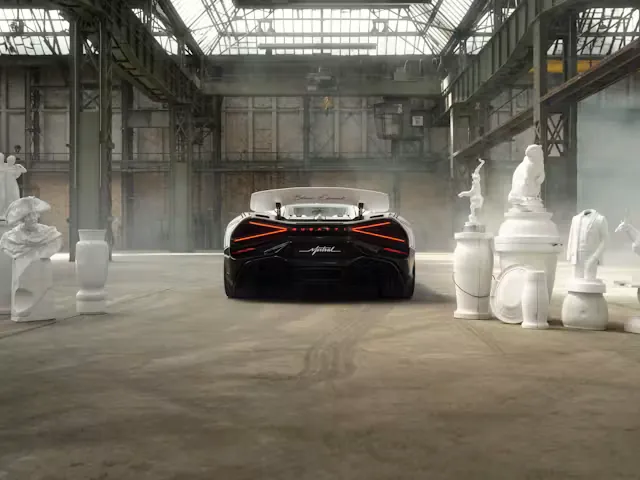
Bugatti just dropped the curtain on the W16 Mistral ‘Blanc Éternel’. This hypercar marks the absolute final chapter for the automaker’s legendary quad-turbocharged 8.3-liter W16 engine. But the real story isn’t just the horsepower.
The French brand partnered with Berlin-based ceramics maker Königliche Porzellan-Manufaktur (KPM) to embed real porcelain accents throughout the vehicle. You will find these ceramic details everywhere. They are set into the engine cover inlays, the EB emblem, the fuel caps, and even the center console.
The Analog Response to a Digital Build
The design process highlights an intense clash between modern computer modeling and old-school handcrafting. Bugatti engineers originally mapped out the Mistral’s silhouette digitally. They used a complex latticework of surfaces known as Non-Uniform Rational B-Splines, or NURBS.
But machines couldn’t finish the job. The intricate two-tone white and black livery had to be executed entirely by hand at the Bugatti Atelier. Workers spent hours on meticulous hand-taping and masking just to highlight the car’s aggressive aerodynamic angles. The result feels much more human than a typical hypercar build.
This specific aesthetic actually revives a 15-year-old partnership between the two companies. The brands previously collaborated on the highly acclaimed Veyron Grand Sport L’Or Blanc back in 2011, according to Road & Track, which confirms KPM’s luxury porcelain accents are integrated throughout the new vehicle’s design.
Why Kiln Firing a Hypercar Part is an Engineering Nightmare
Dropping ceramics into a car that exceeds 250 mph requires absurd manufacturing tolerances. KPM had to engineer the custom porcelain pieces to anticipate exactly a 17% shrinkage rate during the kiln firing process.
If the math was off by a fraction of a millimeter, the porcelain components simply wouldn’t fit into Bugatti’s carbon fiber mounts. The Berlin team had to calculate the exact post-fire dimensions before the clay ever hit the heat. That level of foresight turns a fragile luxury material into a functional, structural piece of automotive history.