
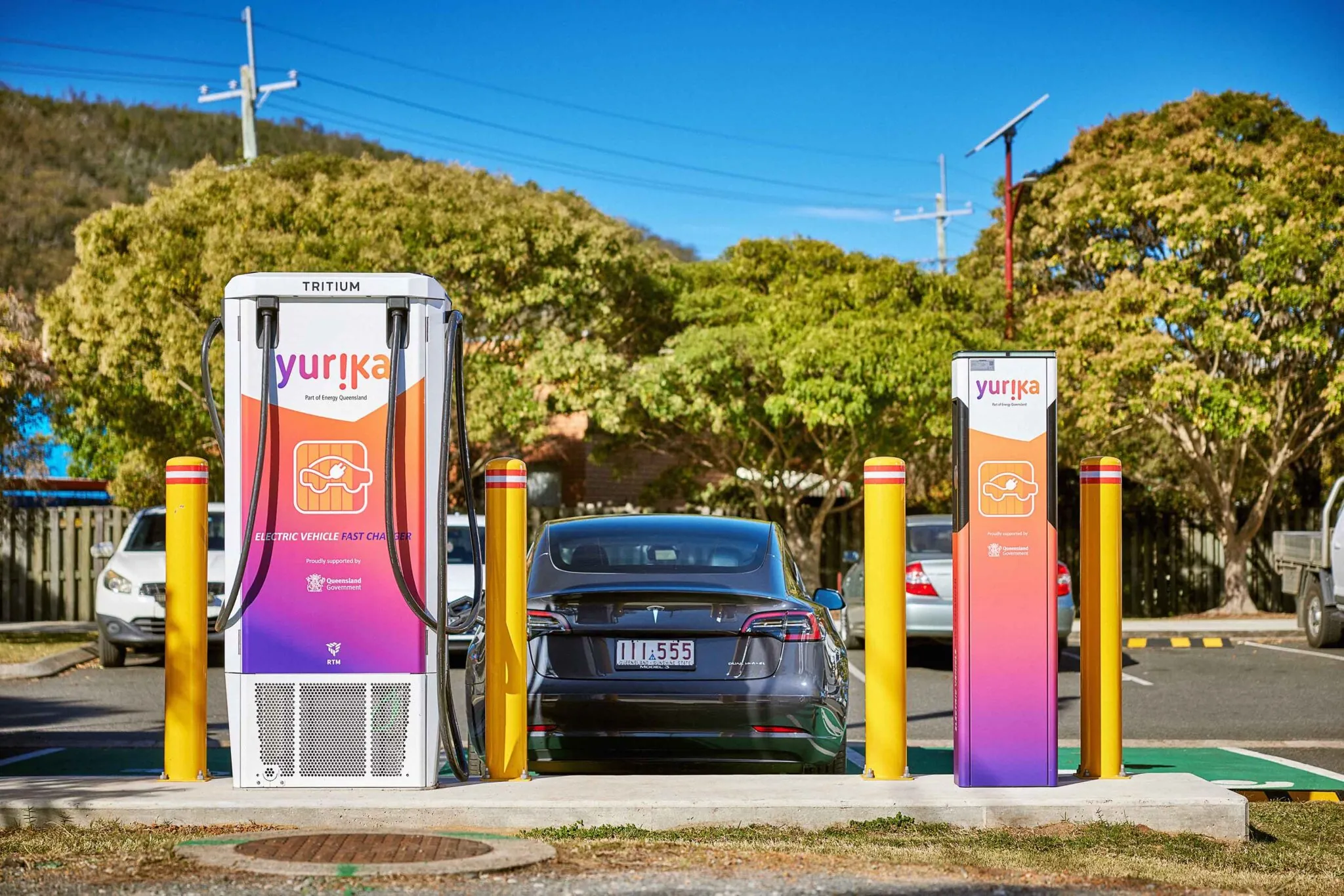
Australia is going electric much faster than anyone predicted. Battery-powered cars just grabbed a record 14.6% of all new car sales this past April. This sudden boom is happening because global fuel price spikes and a push for energy independence have finally convinced local drivers to ditch the petrol pump for the plug.
The federal government is now racing to keep up with this tidal wave of new drivers. Under the National Electric Vehicle Strategy, officials want to see fast chargers every 150km on major highways by the end of 2026. It is a massive task, but the goal is to make a road trip across the outback as simple as driving to the grocery store. According to The Guardian, the focus has shifted from just having enough range to making sure public chargers are fast, reliable, and powered by the sun.
The end of range anxiety and the rise of the 700km highway
For years, people worried about getting stranded in the middle of nowhere. But those fears are fading fast as battery tech improves. Many new models now boast ranges of 700km or more. Origin Energy says the real battle now is “charger rage” caused by slow speeds and broken equipment. Drivers do not just want a plug; they want a 15-minute top-up that works the first time they tap their card. To help this along, companies are looking into smart charging tech to balance the load on the grid.
Urban charging gets a pole-mounted makeover
Living in an apartment shouldn’t stop you from owning an EV. A new federal proposal aims to solve the “garage gap” by letting electricity companies put chargers on existing street poles and kerbsides. This would turn every neighborhood power pole into a potential fueling station. According to a report by WhichCar, these pole-mounted chargers are a cost-effective way to bring power to the 30% of Australians who do not have a private driveway.
New South Wales drops 100 million dollars on fast power
The state of New South Wales is leading the charge with a massive cash injection. They just updated their strategy with a 100 million dollar commitment to put ultra-fast chargers every 100km on highways. They also want a charger every 5km in busy city areas. This isn’t just a dream for the future; work is starting now in 2026 to make sure the infrastructure is ready before the next wave of electric SUVs hits the docks. The surge is real, and the grid is finally getting the upgrade it deserves.
How the Australian grid handles the 15,000-vehicle April surge
The sheer speed of this transition is forcing a total rethink of how we use electricity. In April alone, over 15,400 new EVs hit Australian roads. This isn’t a slow crawl anymore; it is a sprint. Network providers like JOLT are seeing their driver numbers jump by over 50% in a single month. This is a historic shift in transport energy. For the first time, we are seeing the majority of public charging stations being tied directly to renewable energy agreements. It means the cars aren’t just clean at the tailpipe; they are being fueled by the wind and sun, marking a total departure from the old fossil fuel era.