
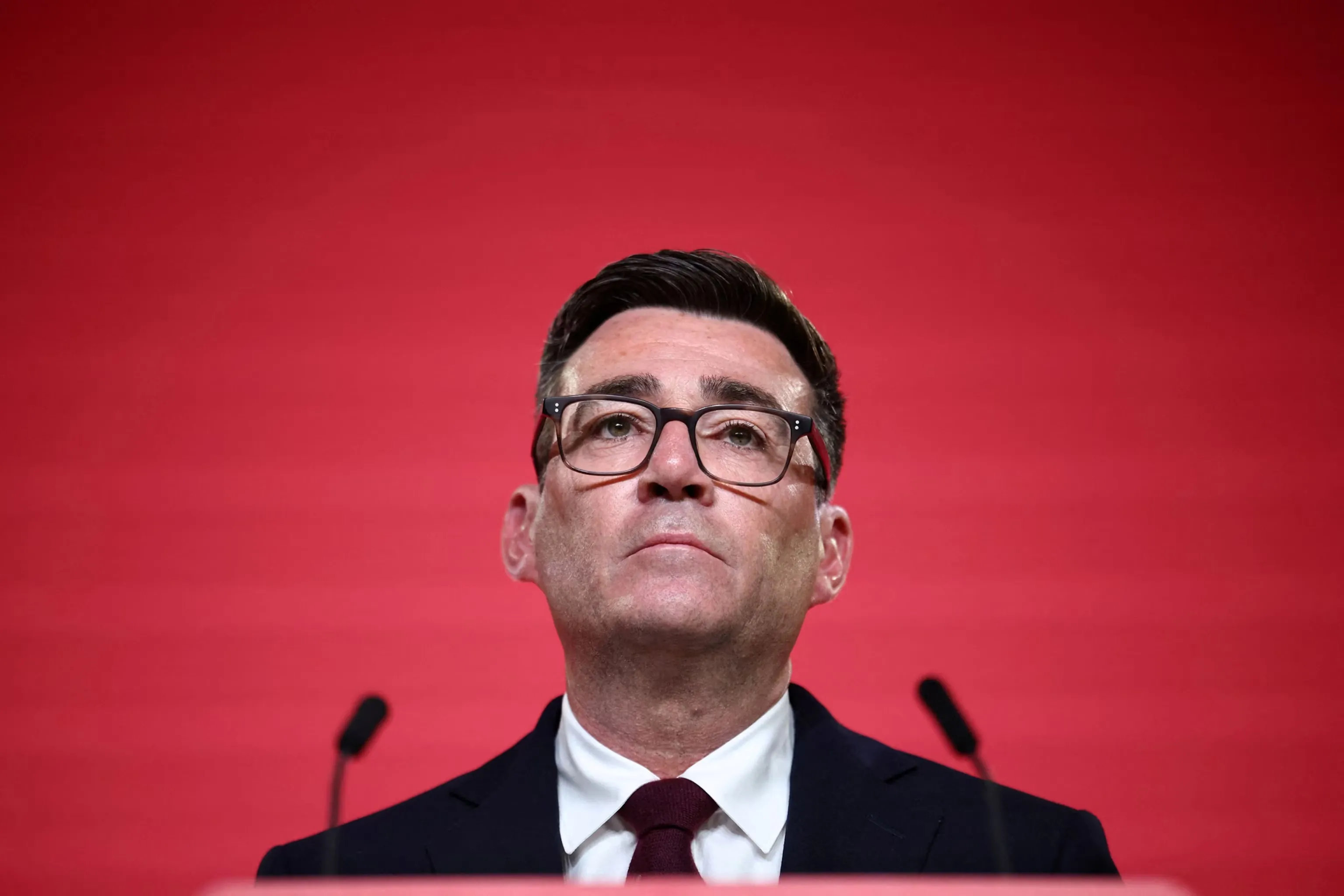
Andy Burnham officially became the Prime Minister of the United Kingdom on Monday, assuming office amid severe economic stagnation that forced the collapse of Keir Starmer’s government. The formal transfer of power occurred just after noon when Burnham kissed hands with King Charles III during a meeting at Buckingham Palace.
Burnham immediately headed to 10 Downing Street to deliver an address to the nation and begin forming a new government. He inherits a highly volatile political environment, becoming the seventh British Prime Minister in a decade and the fourth person to hold the office in less than four years.
The leadership change follows Starmer’s sudden resignation after less than two years in power. His premiership became untenable following a rapid crash in public approval ratings and catastrophic local elections for the Labour Party in May.
Burnham was declared the Labour Party leader on Friday, securing the backing of 379 out of 403 Labour MPs. The appointment follows his deliberate return to Parliament a month prior, where he won the Makerfield by-election after concluding his tenure as Mayor of Greater Manchester.
Promising to address the economic malaise, Burnham campaigned on a platform of devolving power away from Westminster to local leaders. A core component of his forthcoming agenda is to bring struggling privatized utilities, starting with Thames Water, back under public control to spur regional growth.
According to unconfirmed reports, Home Secretary Shabana Mahmood is expected to be named Chancellor of the Exchequer. Former Deputy Prime Minister Angela Rayner is also linked to a leadership role within the health department as Burnham finalizes his cabinet appointments today.