
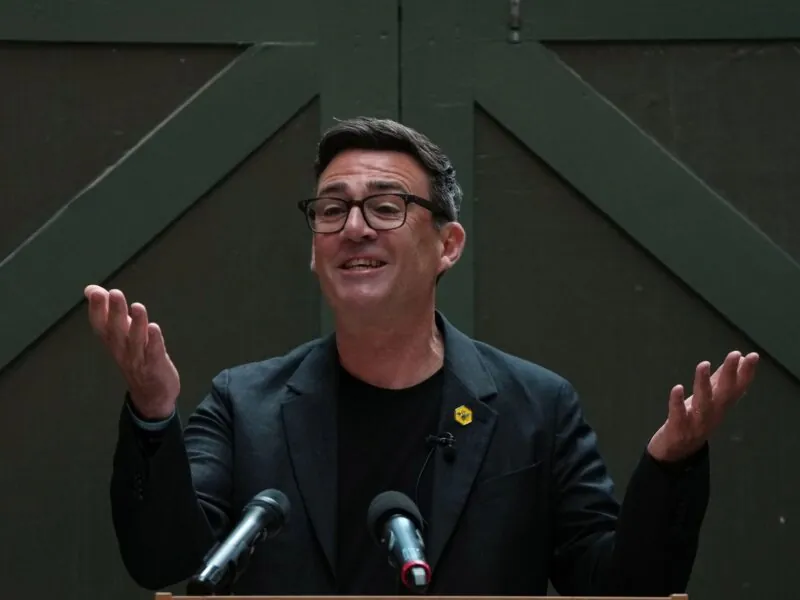
Andy Burnham, 56, is scheduled to officially become the United Kingdom’s 59th Prime Minister on Monday. He succeeds Keir Starmer, who will tender his resignation to King Charles III at Buckingham Palace following intense national backlash over the country’s two-decade economic stagnation, rising national debt, and a youth unemployment crisis.
Burnham, often nicknamed the “King of the North” during his tenure as mayor of Greater Manchester, secured the uncontested Labour leadership on July 17. The transition follows an unprecedented political maneuver where Burnham convinced a sitting Labour Member of Parliament to step down, allowing him to win a special election just four weeks ago and mount a rapid takeover.
What We Know
- Burnham is the seventh UK Prime Minister to take office in the past decade.
- He will formally accept the King’s invitation to form a government during the traditional “kissing hands” ceremony before delivering an inaugural speech outside 10 Downing Street.
- Nearly one million young people in the UK are currently classified as not in education, employment, or training (NEET).
Burnham’s return to Westminster after nearly a decade away was driven by plummeting support for the current government. Despite Starmer winning a landslide parliamentary majority in the 2024 elections, the right-wing Reform UK party maintained a lead over Labour in national polling for 18 consecutive months prior to this leadership change. That sustained political threat accelerated the transition, according to recent polling data and economic reports documenting the UK’s financial headwinds.
But the incoming administration faces immediate foreign policy friction. Burnham inherits an active diplomatic dispute with China stemming from the UK government fully nationalising the Chinese-owned British Steel plant in Scunthorpe.
Domestically, Burnham has framed his takeover as a definitive break from recent history. He characterized the transition as the most significant “change moment” in British politics in 40 years, deliberately drawing a comparison to Thatcher-era policies of the 1980s. To address regional inequality, he proposed moving executive operations outside of London by establishing a “No. 10 North” office. And his domestic agenda heavily features a historic public housing boom aimed at younger voters.
Still, internal party divisions are already surfacing over how to pay for those promises. Early policy indicators suggest Burnham will prioritize defence funding over welfare spending. He is also reportedly considering a dilution of the government’s “net zero” climate commitments by permitting new oil drilling operations in the North Sea.