
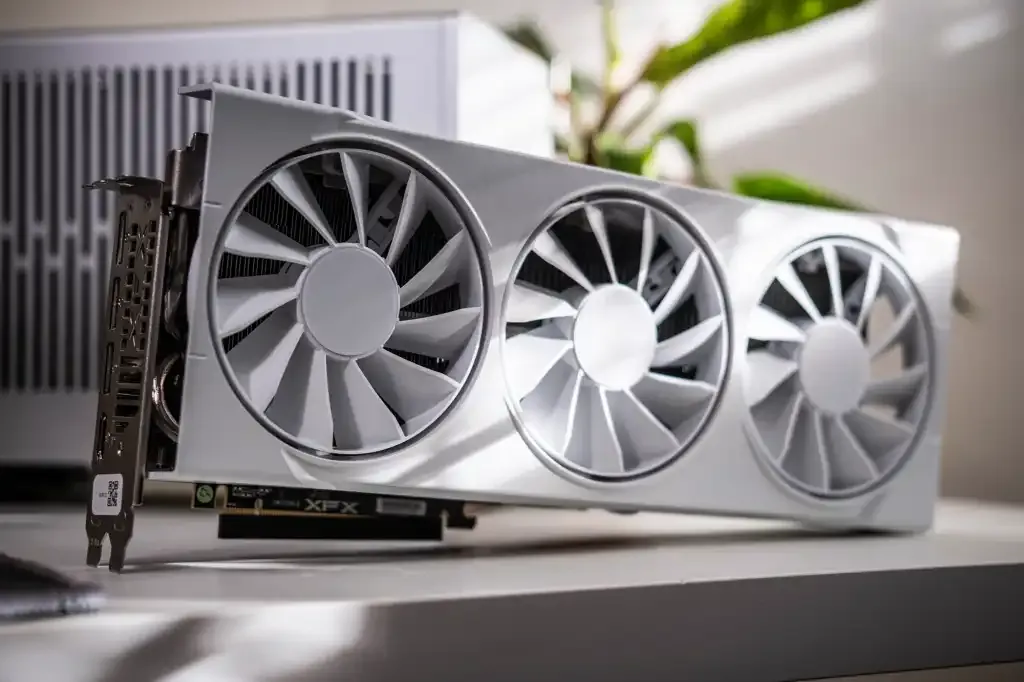
Nvidia held a suffocating grip on the desktop creation and local AI markets for years. If you wanted to run a massive language model at home or stream high-quality video without dropped frames, you bought a GeForce card. That default hardware tax is suddenly fading.
Recent software overhauls and hardware upgrades from AMD are erasing the historical divide between Team Red and Team Green. The shift has absolutely nothing to do with gaming frame rates. Instead, AMD is targeting the exact creator and developer niches where Nvidia’s CUDA framework and NVENC encoder established a virtual monopoly.
The most aggressive move comes through software. The platform is officially expanding beyond enterprise data centers to consumer endpoint devices running Windows, according to AMD’s official announcement detailing the ROCm 7 overhaul.
The update brings “day-zero” local model support to consumer Radeon hardware. AI developers can run generative models natively on AMD GPUs immediately upon release. That was Nvidia’s exclusive party trick for a decade. Now, ROCm 7 delivers up to a 4.6x average inference boost over previous versions. The popular ComfyUI Windows Desktop application just added official AMD ROCm support to streamline local image generation.
AI developers are rapidly getting priced out of high-VRAM Nvidia consumer GPUs. They need memory to run massive models locally. A 24GB Radeon RX 7900 XTX currently trades on the secondary market for roughly $800 to $850. That massive VRAM buffer allows home lab builders to run 32B parameter models and quantized 70B models for a fraction of the cost of an RTX 3090 or RTX 4080.
The new RDNA 4 architecture removes the final crutch for content creators. Cards like the Radeon RX 9070 XT—recently evaluated in the Tom’s Hardware 2026 best GPUs guide—finally added B-frame support to the AV1 video encoder.
This produces substantially cleaner streams at lower bitrates. Streamers get superior H.264 image quality at standard 1080p and 6Mbps settings. HEVC encoding sees an 11% visual uplift. Creators no longer have to default to GeForce hardware just to guarantee a clean Twitch broadcast.
The Collapse of the CUDA Software Lock-In
Nvidia built its trillion-dollar valuation on the back of CUDA. It forced independent developers and researchers to stay inside a proprietary software wall. AMD’s push to make ROCm highly functional on consumer Windows machines directly undermines that moat.
For the last five years, building a local AI workstation meant accepting Nvidia’s pricing structure. By delivering day-zero model support and fixing its hardware encoders, AMD has eliminated the major friction points that kept prosumers locked into GeForce products. When developers realize they can bypass the Nvidia premium and still get seamless local inference, the hardware market opens up entirely.