
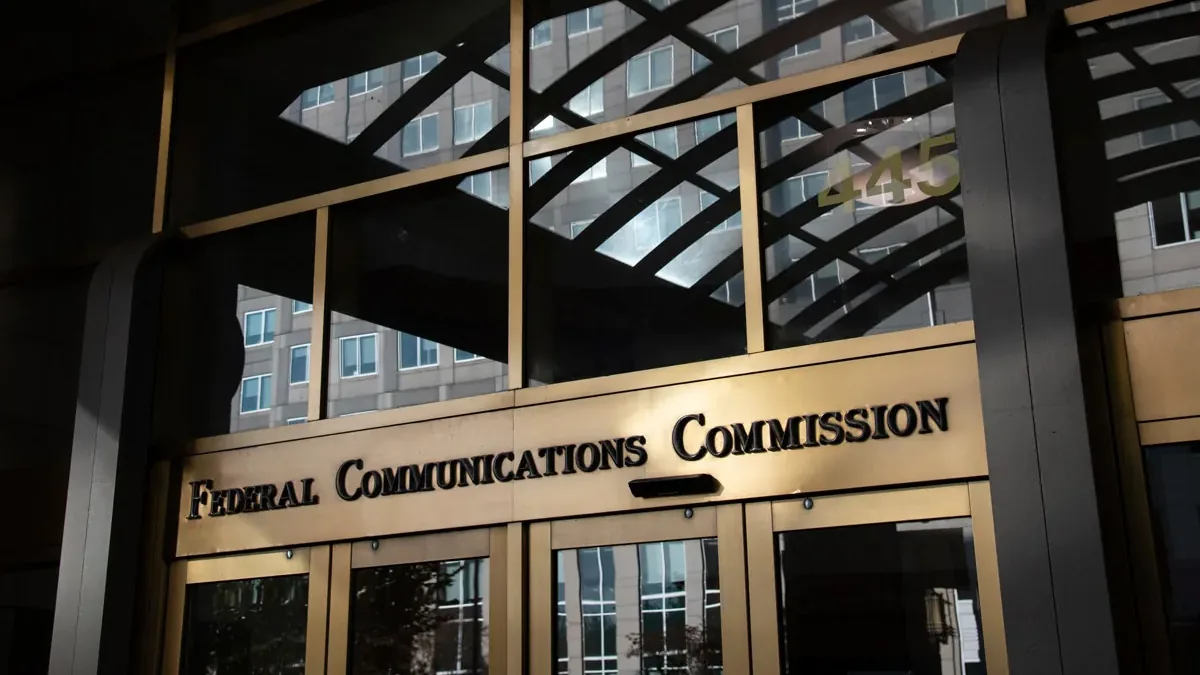
A federal judge in Washington, D.C., granted ABC and its parent company, Walt Disney, a preliminary injunction on Wednesday, November 25, halting the Federal Communications Commission’s early license renewal proceedings against eight ABC-owned television stations. U.S. District Judge Loren L. AliKhan also denied the FCC’s motion to dismiss the First Amendment lawsuit, finding that ABC is likely to succeed on its claim of unlawful retaliation.
The order immediately freezes a process that could have put eight major-market broadcast stations, including KABC in Los Angeles, KGO in San Francisco, KFSN in Fresno, and WABC in New York, at risk of losing their licenses years ahead of schedule. None of the eight stations faced normal license renewal until October 2028 at the earliest, with standard expiration dates running through 2031. “This is not a close case,” AliKhan wrote, concluding that the public interest favored court intervention.
An ABC News spokesperson said in a statement, “Today’s decision is an important victory for the First Amendment. We thank the court for its careful consideration.” An FCC spokesperson countered that the part of the decision granting Disney’s motion was wrong on the facts and the law under Supreme Court precedent. “The FCC looks forward to prevailing in full on this matter. We will continue to use our lawful authority to hold broadcasters accountable to their public interest obligations,” the FCC spokesperson said, according to The Guardian.
What the ruling says
“No one doubts that the Commission may enforce the law in the manner it sees fit,” AliKhan wrote in the opinion, adding, “But in doing so, Defendants may not retaliate against or punish Plaintiffs and other broadcast license holders for disfavored speech.” AliKhan added, “Given the extreme, indeed existential, nature of the possible penalty Plaintiffs face – loss of their broadcast licenses – the court concludes that early license renewal proceedings create a risk sufficient to chill a broadcaster of ordinary firmness.”
To show the proceeding had already affected ABC’s newsroom and programming decisions, AliKhan pointed to the network placing James Talarico’s guest appearance on Jimmy Kimmel Live on YouTube, outside the FCC’s broadcast jurisdiction, and livestreaming President Donald Trump’s July primetime speech out of concern over administration retaliation, according to Deadline’s report. AliKhan rejected the FCC’s explanation that the early review stemmed from difficulty obtaining documents in an investigation into Disney’s diversity, equity, and inclusion practices. “All told, the ‘significant mismatch’ between Defendants’ decision to order the proceedings when they did and their stated rationale for doing so presents an air of pretext the court will not ignore,” AliKhan wrote.
The FCC had argued that federal district courts lack authority to hear the dispute and that ABC had to complete the agency review before appealing to the D.C. Circuit Court of Appeals. AliKhan disagreed, ruling that ABC’s First Amendment retaliation claim sits outside the Communications Act’s statutory review process. AliKhan denied ABC’s broader request for an injunction barring the FCC from taking “any actions, formal or informal, to coerce or threaten Plaintiffs with sanctions in an effort to alter their exercise of editorial discretion,” ruling that courts cannot enjoin conduct that is “merely feared.”
How the FCC license dispute began
The FCC ordered the eight ABC stations to submit early renewal applications on April 28, 2026, citing a federal regulation, 47 C.F.R. §73.3539, that allows early reviews when essential to an investigation. Before that order, the agency had not initiated an early broadcast license renewal review in more than 50 years, Reuters reported. The directive came one day after President Trump posted on Truth Social urging ABC to fire Jimmy Kimmel over a skit that referred to First Lady Melania Trump as an “expectant widow.”
In the opinion, AliKhan noted that three co-hosts of The View, Kimmel, and ABC News reporters appear on the White House’s “media offenders” webpage, describing the sequence of statements by Trump and FCC Chairman Brendan Carr as no coincidence. “What is more, Chairman Carr has taken President Trump’s rhetoric as his marching orders,” AliKhan wrote, pointing to comments Carr made the same week he was tapped as FCC chair praising license revocation as a remedy. Since becoming chair in January 2025, Carr has also opened reviews of other broadcast networks and probed whether The View must comply with the FCC’s Equal Time Rule.
ABC and Disney filed the lawsuit, American Broadcasting Companies, Inc. v. Federal Communications Commission, on August 18, 2026, becoming the first major media company to challenge Carr’s broadcast inquiries in court and relying on the Supreme Court’s 2024 NRA v. Vullo decision barring officials from using regulatory power to punish disfavored speech. During a two-hour hearing on October 6, ABC attorney Beth Wilkinson argued that putting broadcast licenses at risk was akin to a “death penalty” for local stations. Following Wednesday’s ruling, FCC Commissioner Anna M. Gomez, the agency’s sole Democratic-appointed commissioner, praised the outcome and described the FCC as a “paper tiger” whose threats fail when broadcasters defend their rights, according to The Guardian.
What happens next in court
Under AliKhan’s order, ABC and Disney must post a $1 bond while the preliminary injunction remains in effect. The FCC must submit a compliance report to the court by December 2, 2026, and both sides must file a joint proposal outlining next steps in the litigation by December 9, 2026, according to LateNighter’s report.