
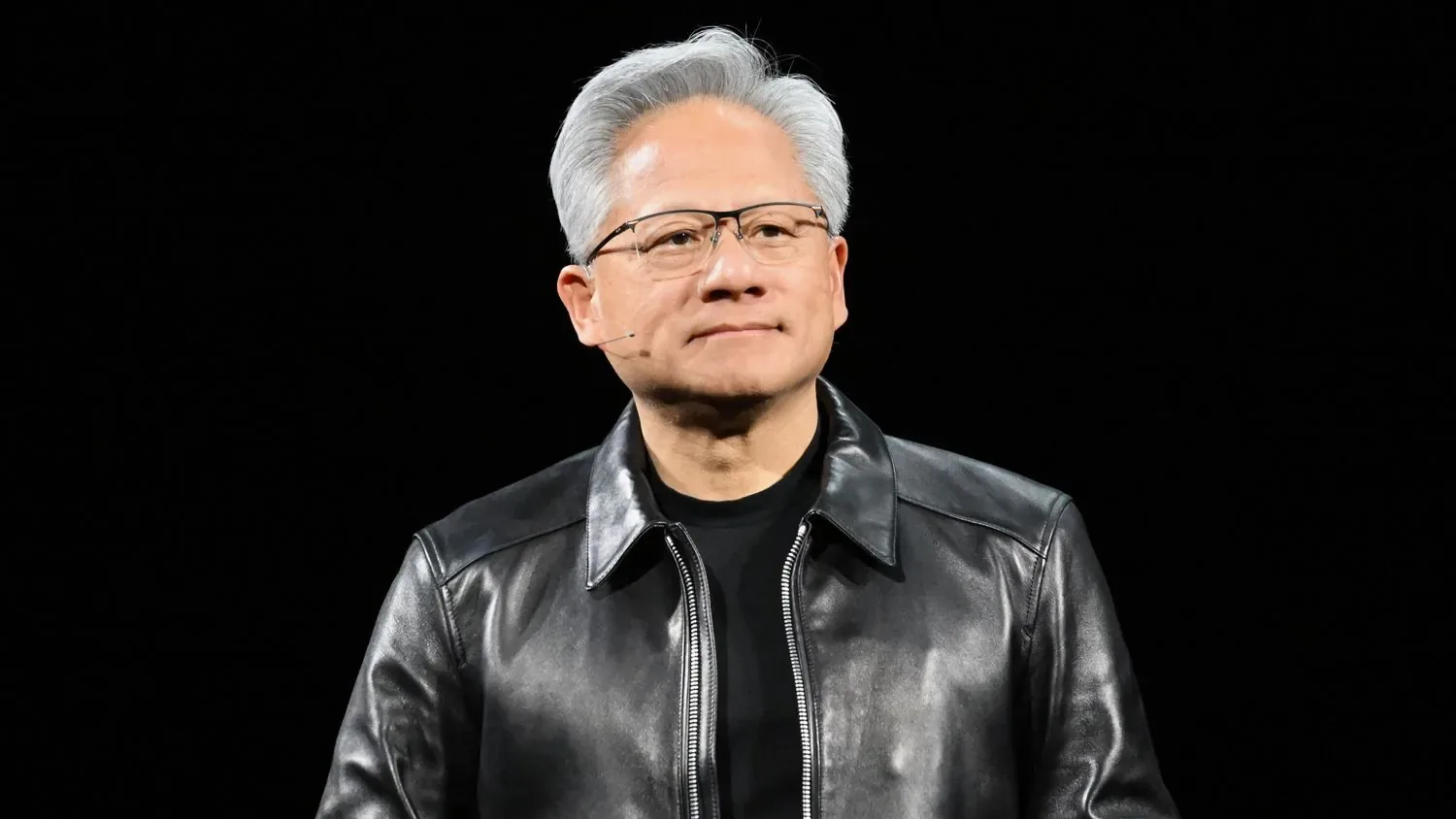
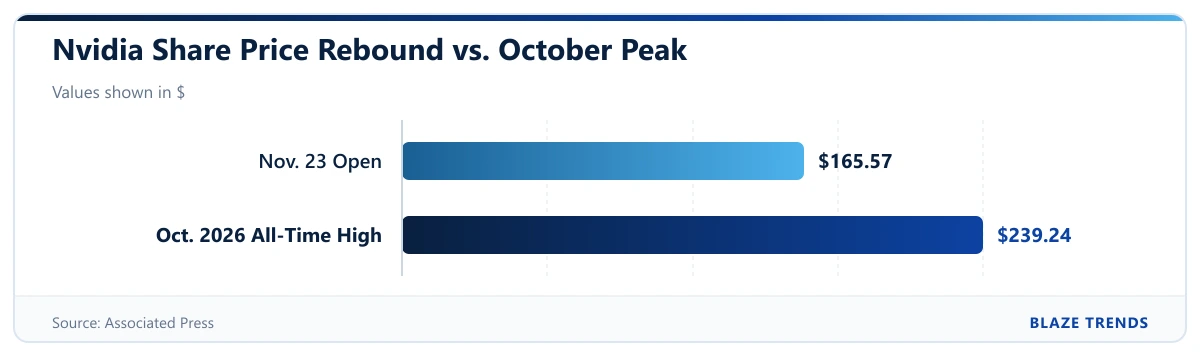
Nvidia shares surged 33% to $165.57 at Monday’s opening bell after the chipmaker’s board voted unanimously to reinstate co-founder Jensen Huang as president, chief executive officer, and a board director. The Nov. 23 decision, effective immediately, reverses the board’s position less than two weeks after Huang resigned following his admission of an affair with a woman suspected of being a Chinese spy.
For investors, employees, and tech customers who rely on Nvidia’s artificial intelligence processors, the sudden reversal ends 11 days of leadership uncertainty at the company. Even with Monday’s jump, the stock opened $73.67 below the $239.24 all-time high it reached in October 2026, according to the Associated Press. Quoted by The Guardian, eToro market analyst Sam North said, “Jensen Huang’s return underlines how much of the AI trade still rests on one man.”
Under Nvidia’s official announcement, Harvey C. Jones remains chairman of the board while interim CEO Colette Kress returns to her continuing role as executive vice president and chief financial officer, a shift also confirmed in a company securities filing reported by CFO Dive. Early Associated Press headlines stated Huang was returning as chairman as well, though Nvidia’s release and AP’s updated report list Jones as board chairman.
In its Monday statement published by Fortune, the board said directors voted unanimously after meetings with Huang satisfied them regarding his candor and ability to lead, and after input from senior U.S. government officials left them confident his return poses no national security risk. “The Board believes Jensen is the right person to lead NVIDIA, and that his reinstatement is in the best interests of our stockholders, employees, partners and customers,” Jones said in the statement.
Huang said he was honored to return and takes the responsibility “with the greatest humility and renewed commitment,” thanking Jones, Kress, and Nvidia’s executive staff for leading the company during the brief period of disorder. “I am also deeply thankful to our employees, shareholders, leaders across the industry and partners around the world for their extraordinary support,” Huang said in his statement. “Above all, I am grateful for the love and support of my family. I can’t wait to get back to work.”
White House and industry pressure
President Donald Trump took credit for pushing the board to change course. Speaking to CNBC on Monday, Trump said, “I believe my intervention was very important,” adding, “The board decided to do what we wanted them to do.” He declined to say whether he called into the board meeting, telling CNBC, “Basically, I was represented at the board.”
Trump also said he spoke with Huang on Sunday night and communicated with the board directly and indirectly, according to Forbes, while Nvidia’s board statement did not name the president and cited only input from senior U.S. government officials. Trump said his administration assured Nvidia there were no national security concerns about Huang’s return and relayed that Attorney General Todd Blanche confirmed the government “does not possess evidence that he has engaged in any unlawful conduct.” Writing on Truth Social on Monday, Trump stated, “The NVIDIA Board of Directors has made the correct and proper decision to return Jensen Huang to the position of CEO.”
Pressure also came from Silicon Valley before Monday’s vote. Tesla CEO Elon Musk joined an open letter signed by 165,000 others urging Huang’s return, according to The Guardian, and Paul Graham wrote online that everyone in tech thought the board had made a mistake, Fortune reported. Arm Holdings CEO Rene Haas, whom Nvidia had approached as a potential successor, signed a new contract keeping him at Arm through 2033, The Guardian reported.
How the 11-day exit unfolded
Huang resigned on Nov. 12 following reports of his extramarital affair with Alice Huang, whom U.S. officials suspected of being a Chinese spy, alongside accusations involving U.S. chip export controls. On that same day, Nvidia named Kress interim CEO and appointed Jones as its first board chairman.
Five days later, on Nov. 17, the board created a National Security and Export Control Oversight Committee and stated it did not intend to reinstate Huang, NPR reported. That refusal held for six days even after Huang offered to return to the company.
Investigations and congressional testimony ahead
Huang’s reinstatement does not close the reviews surrounding Nvidia. NPR reported Monday that the company’s internal investigation continues, and Trump wrote on Truth Social that Nvidia should continue reviewing its compliance with U.S. export controls to meet its legal obligations.
Lawmakers are also scheduled to question Nvidia’s leadership next week. According to The Guardian, Huang agreed to testify before congressional committees on Dec. 1, followed by a closed-door transcribed interview with Nvidia General Counsel Tim Teter on Dec. 2, with committee chairs Reps. Brian Mast, John Moolenaar, and Rick Crawford saying, “We look forward to hearing from Jensen Huang and Tim Teter on their roles in a potential breach of our national security,” while a Senate Banking spokesperson told CBS News last week that Huang also agreed to testify publicly on a date not yet set.