
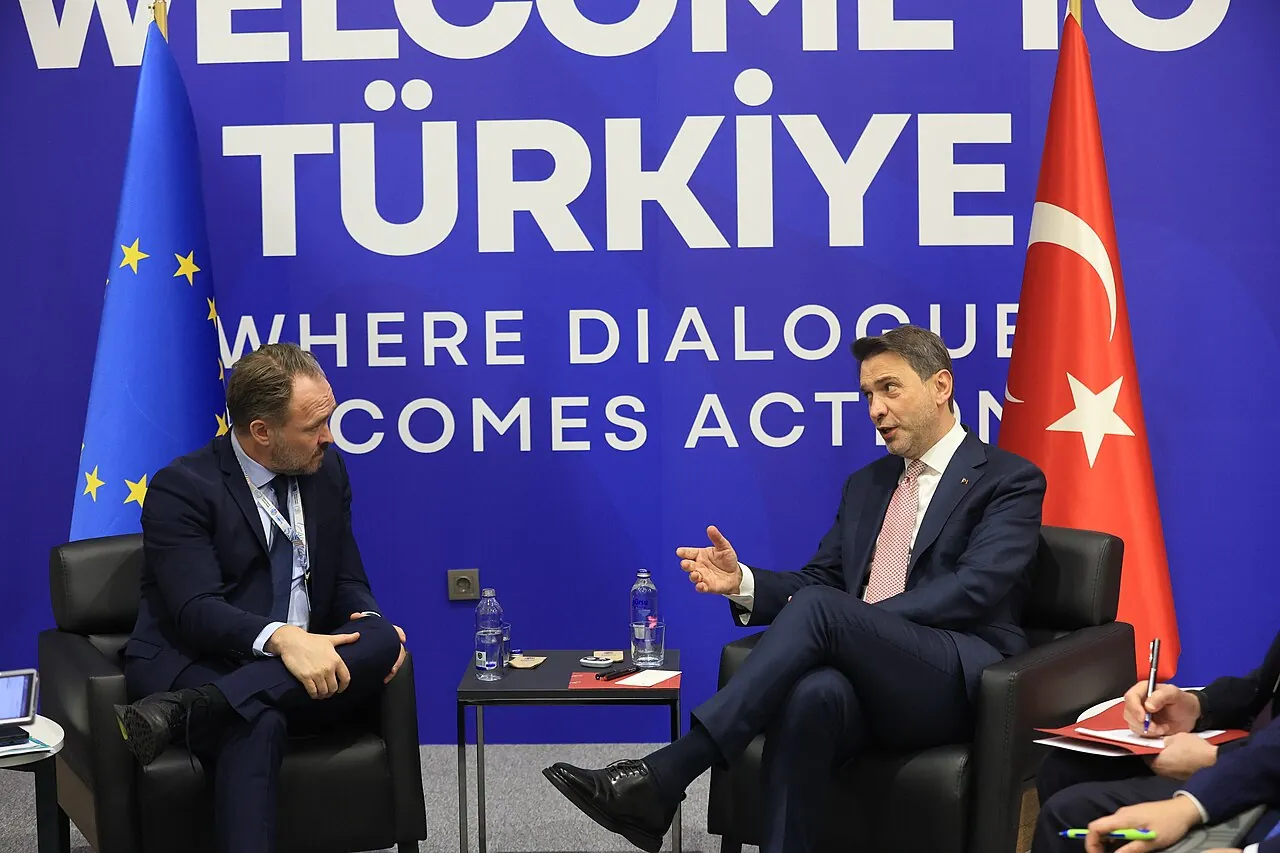
United Nations COP31 climate talks in Antalya, Turkey, broke down on Sunday, Nov. 22, 2026, without adopting a main agreement after the European Union, the United Kingdom and several developing nations rejected the final draft text. Delegates balked at the proposed Antalya pact because it left out any commitment to transition away from fossil fuels.
The conference had been scheduled to run from Nov. 9 to Nov. 20 before spilling two days into overtime, making it the longest UN climate summit on record. It is also the first time since the 2009 Copenhagen talks that a UN climate conference failed to adopt a consensus main agreement, according to Reuters and AFP.
Turkey’s environment minister and COP31 President Murat Kurum told the closing plenary that there was no consensus on the text and declared the draft cover decision had not been adopted, Reuters reported. Kurum later left the stage while country representatives continued delivering floor statements, according to AFP.
“There is nothing to do, we did all that we could. Since there are 196 countries, they will make the decision and we will respect their decision,” Kurum told delegates, according to AFP. He added, “There will be no new text from now on.”
How the final draft divided delegates
Turkey and Australia, which shared the summit’s presidency, published the final draft in the early hours of Sunday after days of deadlock. More than 130 countries had pushed for language backing a transition away from fossil fuels, according to The Guardian, yet the Sunday draft omitted fossil fuels altogether.
Ireland’s Minister for Climate, Environment, Energy and Transport Darragh O’Brien, who helped lead EU negotiations during Ireland’s rotating EU presidency, told CNN that the bloc would not endorse an agreement “that does not even mention fossil fuels.” UK Secretary of State for Energy Security and Net Zero Miatta Fahnbulleh also voiced disappointment over the inability to reach consensus, according to ITV News.
The rejected Antalya pact invited governments to electrify their economies, urged limiting warming above the Paris Agreement’s 1.5°C threshold and included provisions on carbon capture and storage technology. It also called on wealthy nations to provide adaptation finance to poorer countries without setting a specific dollar target for tripling those funds by 2035.
| Country or Bloc | Stance on Antalya Pact | Position Reported at Summit |
|---|---|---|
| European Union and United Kingdom | Rejected draft | Objected to the omission of fossil fuel language |
| Norway, Panama, Marshall Islands, Vanuatu and Belize | Rejected draft | Opposed the final text during the closing plenary |
| Saudi Arabia | Backed CCS text | Defended the inclusion of carbon capture and storage |
| Africa group, China and Pakistan | Did not object | Held reservations but did not block the draft |
| United States | Did not participate | Stayed away after exiting international climate action under President Donald Trump |
Divisions over leadership and finance
Friction over the talks had built well before Sunday’s closing session. When negotiations entered overtime on Friday, Nov. 20, Brazil’s national secretary for climate change, Aloisio Lopes Pereira de Melo, told reporters, “At this point, no one is happy,” according to The Guardian.
Former Irish president and former UN climate envoy Mary Robinson faulted the summit’s handling before the final breakdown. “There isn’t the sense of urgency to address these issues. That to me is very frustrating,” she told The Guardian, adding, “We have co-presidents who haven’t really been stepping up and giving that leadership.”
Turkey and Australia split the COP31 presidency under a November 2025 compromise at COP30 after both nations bid to host, leaving Kurum as summit president in Antalya and Australian Climate Change and Energy Minister Chris Bowen to chair formal negotiations. Before the meeting, the joint presidency promoted voluntary 2035 targets that included raising electricity’s share of final global energy demand from just over 20% to 35%.
On the plenary floor Sunday, the Philippines told delegates that developing countries cannot meet climate goals without adequate financing from wealthy nations. Canada and Fiji said they still wanted to continue discussions on oceans and on strengthening future UN climate talks.
What the breakdown leaves unresolved
Because UN climate agreements require consensus, the rejected Antalya pact carries no formal standing, according to the World Resources Institute. The research group described the result as a failure of political leadership that left developing nations without a dollar target for tripling adaptation finance.
Amnesty International also criticized the rejected draft for omitting both fossil fuels and the International Court of Justice’s 2025 advisory opinion on states’ climate obligations. While CNN and ITV News described the conference as having collapsed without a deal, The Guardian reported that the presidencies avoided a complete halt to summit business by passing separate side decisions, including a just transition framework to help workers in high-carbon industries shift to low-carbon economies.
According to the UNFCCC draft text dated Nov. 19, 167 parties had submitted updated nationally determined contributions, or national climate plans, by Nov. 18, 2026, while global peak warming remained projected to exceed 1.5°C above pre-industrial levels. Under existing UN rules cited in that document, countries still face a Dec. 31, 2026 deadline to submit biennial transparency reports, and Ethiopia is scheduled to host the next annual summit, COP32, in Addis Ababa in late 2027.