
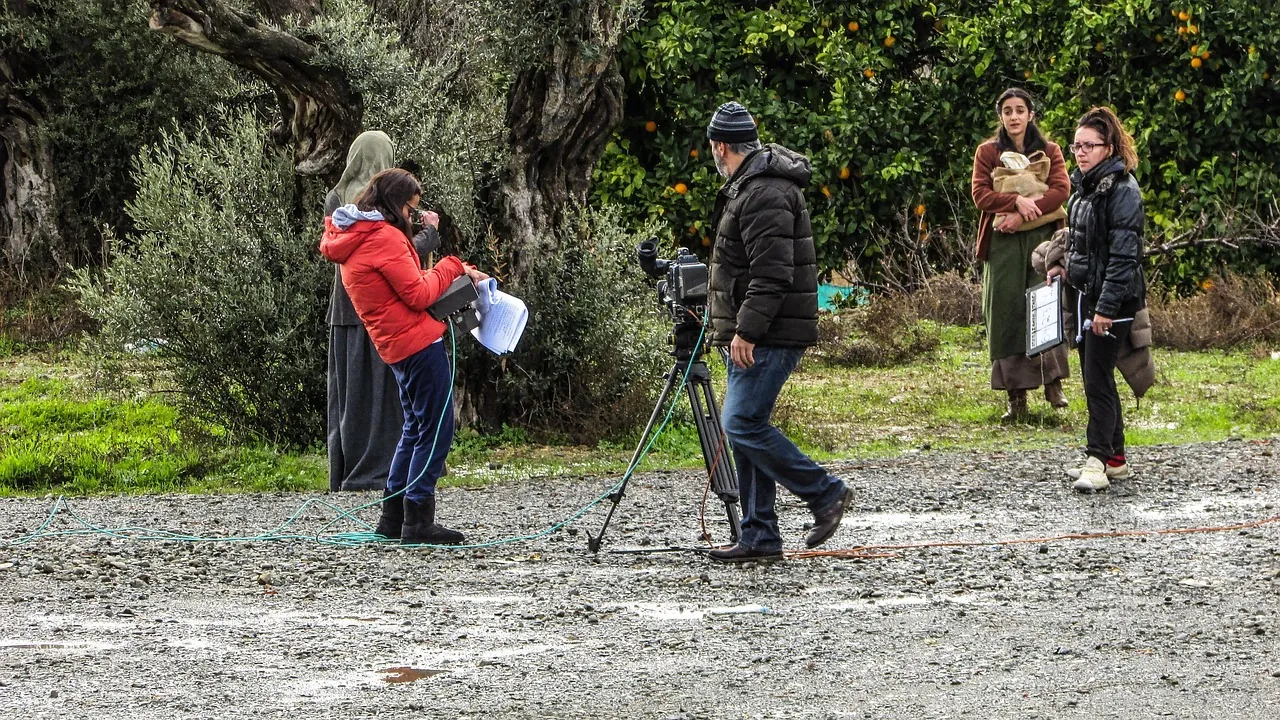
In the United States, television network pilot season runs from January through April, when broadcast networks cast, film, and test standalone sample episodes of prospective shows for their autumn prime-time lineups. The entire development calendar builds toward the third week of May, when network executives head to New York City for the annual Upfronts to announce their new series orders and sell commercial airtime to advertisers in advance. Even though streaming platforms order shows year-round, legacy broadcasters still use this spring testing cycle to evaluate scripts, cast chemistry, and focus-group scores before paying for a full season.
How does the broadcast development funnel work from June to May?
A traditional US broadcast network such as NBC, ABC, CBS, or Fox operates on an 11-month development calendar built around fall premieres and seasonal advertising budgets, according to production timelines from Film & TV Law (2019) and No Film School (2026). Only a tiny fraction of pitched ideas survive all five stages of the funnel.
- From June through October, writers and producers pitch series concepts in brief meetings with network development executives. According to 2024 industry figures from City Headshots NYC, each major US broadcast network hears roughly 500 pitches during this summer window.
- In November and December, each network buys around 70 full-length pilot scripts from those pitches and supervises rewrites (City Headshots NYC, 2024; No Film School, 2026). Under the Writers Guild of America Minimum Basic Agreement (as of 2026), a studio holds exclusive rights to produce an original television pilot script for four years from delivery, or 30 months for programs 60 minutes or shorter that are not in active development, plus three years of series exclusivity from the date the pilot airs.
- In January, network executives review the completed scripts and greenlight the strongest candidates for production. A major broadcast network historically orders around 20 pilots per cycle (City Headshots NYC, 2024), though modern broadcast slates are often smaller, such as the eight pilots NBC ordered for the 2026 to 2027 season (Hidden Remote, 2026).
- Between February and April, showrunners hire a director, director of photography, and production designer to shoot and edit the sample episode in production hubs like Los Angeles, New York City, Atlanta, Toronto, and Vancouver (City Headshots NYC, 2024; HowStuffWorks, 2024). Finished cuts are screened for focus groups to measure audience interest.
- During the third week of May, each network selects roughly four to eight pilots for series orders and presents the trailers to sponsors at the New York Upfronts (Film & TV Law, 2019; City Headshots NYC, 2024). Those May pickups launch writers’ rooms in late May and June so episodes are ready for autumn premieres, when major advertisers such as carmakers spend heavily on new-season commercial inventory (Staff Me Up, 2025).
What do different network pilot orders and formats mean?
When a network buys a project in January, the contract specifies how much financial risk the network is taking on. According to Backstage’s pilot order breakdown (2019) and Television Academy glossary definitions (2022), network deals fall into five main commitment tiers.
| Order Type | What the Network Commits To | Financial Penalty if Dropped |
|---|---|---|
| Pilot production commitment | Pledges to film a pilot episode at a later date | Modest contractual penalty paid to the studio or creator |
| Cast-contingent order | Approves the script, but filming depends on casting network-approved lead actors | No production obligation if approved talent cannot be secured in time |
| Pilot order | Issues an official greenlight to cast, crew up, and film the test episode | Larger financial penalty than a production commitment if the network backs out |
| Put pilot | Agrees to both produce and broadcast the pilot episode on the network schedule | Substantial penalty to the studio and creators if the network fails to air it |
| Straight-to-series order | Skips the standalone test pilot and orders a multi-episode first season immediately | Full season commitment or major buyout fee |
Scripts ordered for spring filming also take one of two structural shapes (Wikipedia, 2026). Most broadcast projects are premise pilots, which introduce how the central characters meet and establish the rules of the world so the network can air the pilot as the first episode of the series. Other shows shoot a proof-of-concept pilot, which drops viewers further into the storyline to demonstrate what a typical weekly episode looks like, a format used on series such as Remington Steele and Lassie (Wikipedia, 2026).
How do pilot casting and network test deals work for actors?
Once a script gets a January greenlight, casting offices work on a compressed schedule. According to veteran casting directors Lisa Beach and Deborah Barylski, cited by Secret Actor Society (2026), assembling a pilot cast takes four to 10 weeks, with 200 to 500 actors auditioning for every series regular role.
Actors typically start by submitting remote self-tapes through digital casting systems like Eco Cast before advancing to in-person or virtual callbacks with the showrunner and producers (Casting Networks, 2026). If producers want to keep an actor in the mix, casting issues an availability check, often called a pin or a date hold. A common misconception among newer performers is that a pin or hold means they booked the part; Casting Networks (2026) notes that a hold simply verifies that your shooting dates are clear while executives narrow down their finalists.
The final hurdle is testing for the studio and the network. Before you are allowed into the room or onto the soundstage for a network test, your agent and lawyer must negotiate and sign a binding multi-year series regular contract (Secret Actor Society, 2026). On US broadcast television, these test options have historically locked actors in for six or seven seasons if the series gets picked up (BizParentz Foundation, 2018). Under SAG-AFTRA television contracts (2026), studios hold an exclusive pilot option on testing actors until the May pickup deadline, governed by union holding fees, exclusivity money breaks, and caps on how many season options a studio can attach to shorter episode orders.
What happens after a pilot is picked up or passed on?
When a broadcast network orders a pilot to series at the May Upfronts, it usually orders an initial run of 13 episodes, which the network can extend to a 22-episode full season if autumn Nielsen ratings are strong (HowStuffWorks, 2024). If executives like the concept of a pilot but want to change lead actors or retool the tone after focus-group testing, the production team reshoots part or all of the episode before the fall premiere. After CBS filmed the original pilot for Gilligan’s Island, the network recast three main roles, aired the second produced episode as the series premiere, and edited footage from the original pilot into a later flashback episode (Wikipedia, 2026). Similarly, NBC rejected the original Star Trek pilot, The Cage, before commissioning a second pilot titled “Where No Man Has Gone Before” and ordering the show to series (Wikipedia, 2026).
Viewers often assume every pilot that gets filmed eventually airs on television, but roughly three-quarters of US broadcast pilots go unsold and are never broadcast (Wikipedia, 2026; City Headshots NYC, 2024). Networks occasionally air a two-hour unsold drama pilot as a standalone television movie to recoup part of the production budget (Wikipedia, 2026). When a network passes on a half-hour or one-hour pilot and lets the cast options expire, the actors keep their pilot paychecks and resume credits and are free to take new jobs.
Star power does not guarantee a series pickup. In NBC’s 2026 pilot slate, the network filmed eight pilots featuring established television leads and picked up four for its 2026 to 2027 schedule: two dramas (The Rockford Files and Line of Fire) and two comedies (Sunset P.I. and Newlyweds), according to Hidden Remote (2026). As reported by TV Insider in October 2026, NBC passed on the other four pilots, turning down the Dick Wolf-produced medical-examiner drama What the Dead Know starring Taylor Schilling, the profiler drama Key Witness starring Emily Deschanel, and Jill & Ginger, a comedy starring Jane Lynch and Katey Sagal that used the classic studio setup of single-camera and multi-camera sitcoms. During the same 2026 cycle, CBS passed on The Tillbrooks and ABC declined Do You Want Kids? (TV Insider, 2026).
A rejected pilot is not always dead forever. If the producing studio retains the rights, it can shop a passed pilot to rival networks or streaming services; Staff Me Up (2025) points out that the psychological thriller You was originally developed and filmed as a pilot for Lifetime before becoming a global hit on Netflix.
Why streaming changed television network pilot season
Subscription and ad-supported streaming platforms such as Netflix, Prime Video, and Disney+ do not build their release calendars around a single September premiere week or traditional May Upfront ad sales. As a result, streaming development happens year-round, and platforms frequently skip standalone test pilots in favor of straight-to-series orders or mini-writers’ rooms that write several episodes before deciding whether to build sets and hire a full crew (Child Actor 101, 2024; The Up-To-Date Actor, 2026).
That shift has shrunk the overall volume of spring pilots. According to figures compiled by the BizParentz Foundation (2018), US broadcast and cable networks produced 132 pilots in 2011, including 83 from the four major broadcast networks, before dropping to 85 broadcast pilots by 2015. The 2023 WGA and SAG-AFTRA strikes pushed studios to trim pilot slates even further in favor of year-round straight-to-series deals, while remote self-taping permanently ended the old requirement for out-of-state actors to relocate to Los Angeles from January through April just to audition (Child Actor 101, 2024; The Up-To-Date Actor, 2026).