
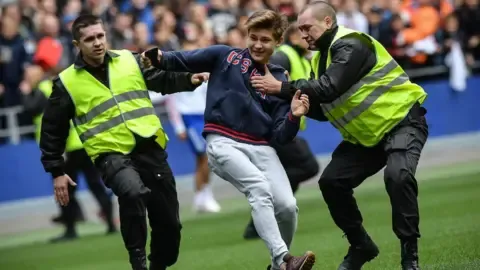
Fans gather at sporting events in massive numbers. Operators dismantle unauthorized demonstrations quickly—a harsh reality that organizers simply won’t compromise on. Security evicts attendees instantly. Franchises just refuse to tolerate disruptions that interfere with the specific event they are responsible for.
How Event Security Protocols Work
Rules matter. Major League Soccer actively prohibits fans from displaying signs for political campaigns. For government issues, the league bans symbols entirely. Banners with commercial messages are confiscated instantly.
Spectators must never throw objects onto the grass. The written policy explicitly prohibits language that targets individuals based on national origin. And without a valid credential, MLS blocks entry onto the field track—a restricted zone.
Why Venues Enforce Mass Ejection Directives
Franchises enact severe penalties against deliberate violators. Immediate ejection without a refund happens instantly. Venues routinely revoke ticket privileges to maintain control over massive crowds. So management bars repeat offenders for a minimum of six months to a full year.
Separate areas isolate rival groups. Franchises quickly distance themselves from unexpected activity—much like the unendorsed political rallies seen in other leagues. English stadiums completely banned alcohol consumption in stands with pitch views. Behind the scenes, barriers block rowdy crowds from accessing broadcast equipment.
When The Olympic Charter Applies to Athletes
Rule 50.2 of the Olympic Charter strictly prohibits political propaganda at Olympic sites. But the International Olympic Committee recently shifted its firm stance against all demonstrations. They now permit limited expression. On the field of play, protests happen before competition actually starts.
Competitors cannot protest during medal ceremonies. Targeted protests remain completely forbidden against specific countries. To maintain fairness, athletes must ensure their actions don’t disrupt their competitors’ concentration. Organizers generally tolerate protests that address human rights issues.
Famous Rule Violations from Major Games
- The 1968 Olympic Games: Tommie Smith and John Carlos executed “The Human Rights Salute” in Mexico. On the podium, both men stood shoeless to emphasize black poverty. Smith wore a black scarf. His teammate left his tracksuit unzipped. Olympic officials—according to historical data on sports diplomacy incidents—immediately evicted Smith and Carlos from Mexico.
- The 2019 Sudanese Soccer Matches: A soccer match transformed into a congregation point for massive crowds. Outside Al-Hilal’s stadium, citizens protested the government of President Omar al Bashir. Fans shared amateur videos on Twitter. Viral clips soon showed crowds that whistled loudly in the dusty streets.
Common Misconceptions About Crowd Dynamics
Event operators mandate staggered times to prevent mass incursions. Designated gates handle heavy traffic to manage crowd movements. Through stadium loudspeakers, public announcements route attendees directly to marked exits.
Trained personnel actively direct confused crowds during sudden outbursts. Safety protocols explicitly shield attendees from bodily harm. As outlined by experts, stadium safety protocols depend entirely on staff responses to localized threats. And FIFA defines security specifically as the protection of stadium staff from outside threats.