
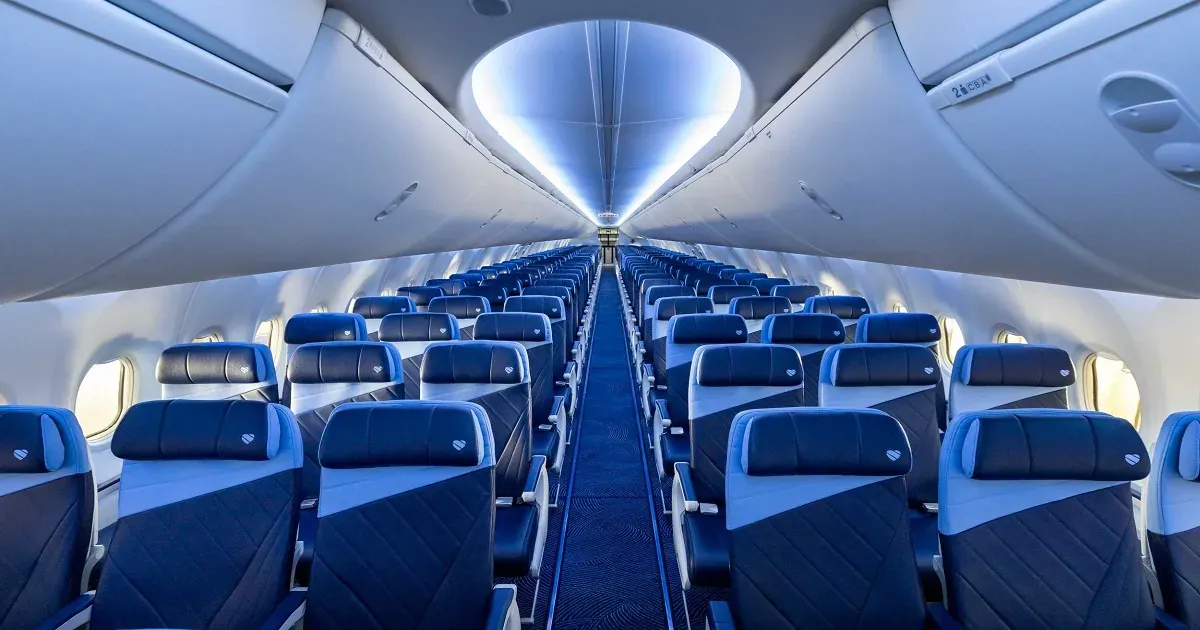
The US Federal Aviation Administration issued a formal regulatory proposal on Monday. And the stakes are entirely physical. The US warns hundreds of Boeing jets may require seat safety inspections immediately. Regulators discovered that track-mounted passenger seats across the 737 MAX fleet weren’t secured properly to the cabin floor.
Mechanics work fast. But the scale is massive. The aft fitting shear plungers on these specific track-mounted seats fail to engage properly. Severe turbulence could rip these assemblies completely loose. A detached chair blocking the aisle during an emergency evacuation creates a fatal bottleneck.
Boeing actually flagged this exact mechanical flaw months ago. The aerospace manufacturer issued voluntary guidance to airline operators in December 2025. That document—the Boeing Special Attention Requirements Bulletin 737-25-1927 RB—urged maintenance crews to check the seat plungers. Now, the government wants to make those checks federal law.
The proposed Airworthiness Directive targets 453 US-registered aircraft. Impacted models include the 737-8, the 737-9, and the high-density 737-8200 variants. Each jet holds up to 69 track-mounted seat assemblies. Crews need approximately one hour to fix each faulty track, according to a detailed report by Business Standard. They don’t need replacement parts to complete the job. If inspectors find an unseated plunger, they must fix it before the plane flies.
Codifying Seat Safety Inspections Amid the Alaska Airlines Fallout
The FAA no longer trusts Boeing to self-regulate. This aggressive regulatory posture traces directly back to the Alaska Airlines door-plug blowout in early 2024. That mid-air structural failure destroyed the agency’s faith in Boeing’s internal quality assurance.
Federal regulators routinely convert the company’s internal bulletins into mandatory directives today. Chief Executive Officer Kelly Ortberg inherited a manufacturing pipeline crippled by these exact oversight delays. Fixing a shear plunger only takes an hour. Grounding 453 aircraft to verify those plungers creates a massive logistical headache for domestic airlines. And the US mandate usually forces foreign regulators to ground their active fleets next.
The world currently relies on nearly 2,300 Boeing 737 MAX jets.