
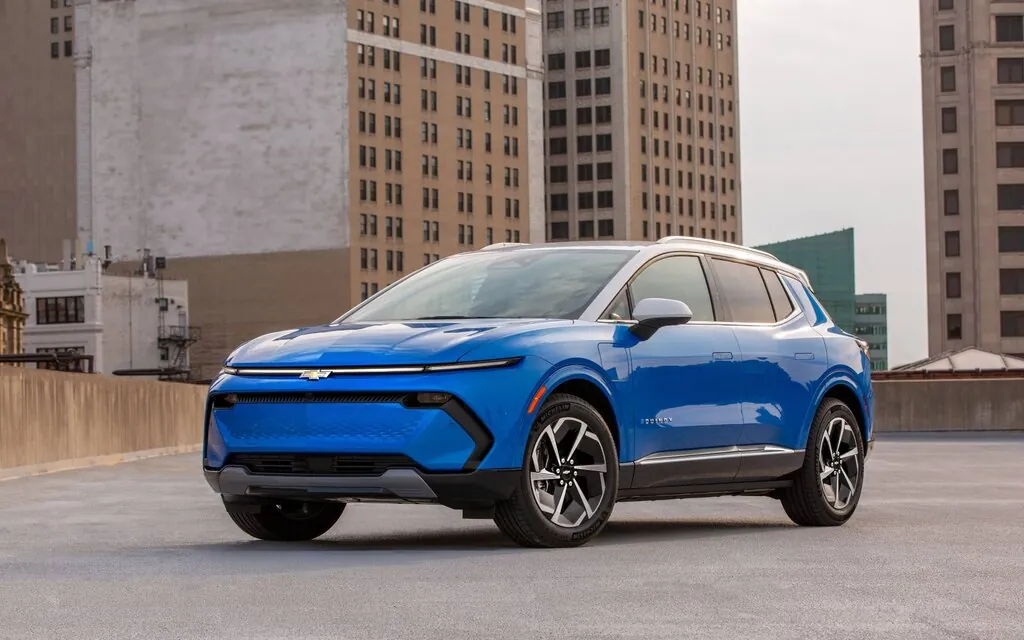
The Chevrolet Equinox EV dominated the American market last year, trailing only the Tesla Model Y and Model 3. But that sales streak vanished after a $7,500 tax credit expired in September. Equinox volume crashed 41% year-over-year through the first half of 2026. Now the former leader sits in fifth place. Toyota and Hyundai recently updated their competing models—moves that pushed the Chevy further down the charts.
General Motors knows The Chevy Equinox EV is due for an update: Here’s what could change to reverse the sales collapse. The current crossover starts at $34,995. Front-wheel-drive configurations offer an EPA-estimated range of 319 miles. All-wheel-drive versions hit 307. Those figures remain highly competitive. The actual bottleneck lies deep within the BEV3 architecture. Customers constantly complain about the 150kW DC fast-charging limit. It feels incredibly slow compared to the 350kW speeds reserved for heavy trucks like the Hummer.
A hardware reboot is actively underway. Chevrolet plans to abandon the crowded BEV3 platform entirely. The automaker will transition the crossover to a BEV-N architecture in late 2028 or early 2029—a timeline detailed in a report from Car and Driver. Engineers expect the 2029 model to deliver improved efficiency alongside a new software stack. A Chevrolet spokesperson refused to confirm the leaks. “We cannot comment on future product plans,” the representative said.
Buyers won’t wait until 2029 for every upgrade. The 2027 Equinox EV will finally ditch the legacy hardware. General Motors plans to install a native NACS port directly on the assembly line. The factory modification eliminates the need for an adapter when connecting to a Tesla Supercharger. And that convenience is exactly what many drivers have actively asked for.
Why the BEV3 Platform Limits High-Volume Growth
Early strategies created a fundamental flaw. GM built the BEV3 architecture across an enormous fleet—underpinning the Chevy Blazer EV, Cadillac Lyriq, Cadillac Optiq, Honda Prologue, and Acura ZDX. Shared parts saved millions in initial costs. But the 150kW charging cap simply became a permanent liability across the entire lineup.
Sales crashed hard. Toyota and Hyundai realized budget-conscious buyers still demand premium speeds. The recent drop proves early adopters will abandon brands selling outdated technology. So GM must accelerate the BEV-N rollout to survive the segment.