
A decade ago, consumer servers just held family photos on basic storage drives. Now, a single enthusiast rig often hosts Kubernetes nodes, smart home automation, and multiple Linux virtual machines simultaneously. And that shift forces a difficult choice. Systems engineers must decide what they want to build their entire foundation on.
Bare-metal Linux installs dominated the space for years. But community consensus is changing. System builders are abandoning single-OS setups for Type-1 hypervisors like Proxmox Virtual Environment. They discovered traditional foundations crack under the pressure of remote management. Multi-application scaling just breaks them.
The Bare-Metal Breaking Point
Transitioning to virtualization often requires a complete hardware tear-down. Tech analyst Rich Edmonds at XDA-Developers recently rebuilt his home servers from scratch, documenting the OS setup he wishes he had started with. He originally bypassed Proxmox for Ubuntu Server because he knew Debian well. The analyst eventually dismantled that initial configuration. Edmonds positioned Proxmox front and center as a true home-based data center.
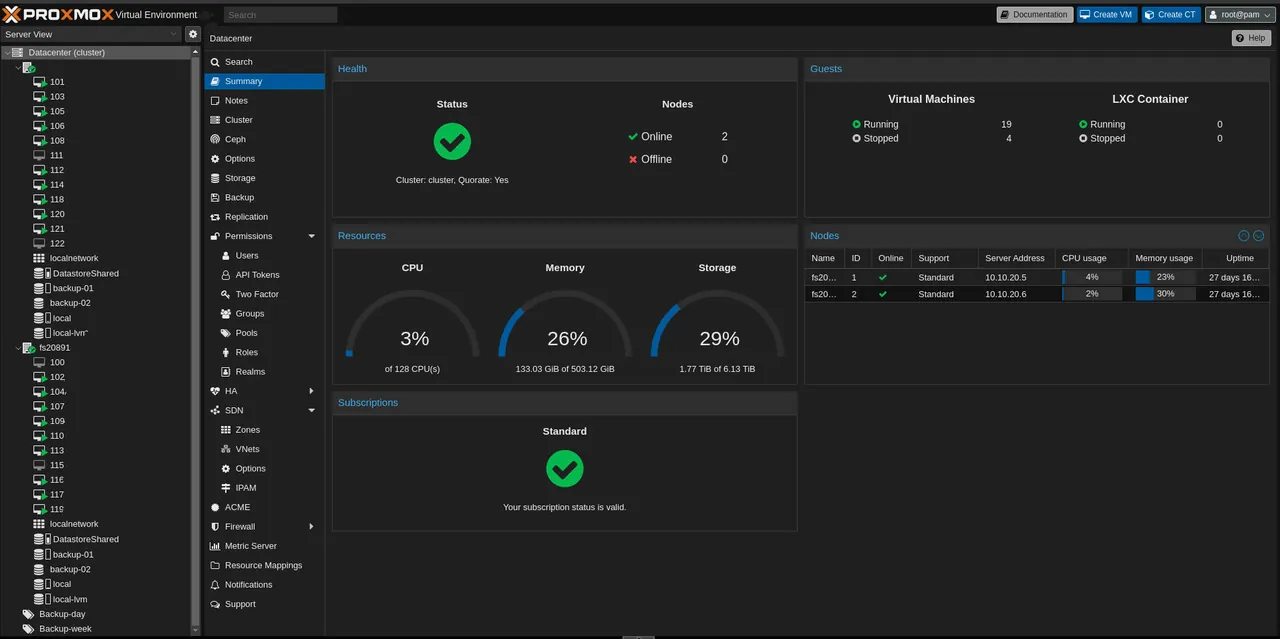
Deploying Docker containers directly on Ubuntu Server works perfectly well for lightweight tasks. Structural cracks appear when administrators attempt to manage those systems remotely. Edmonds noted his bare-metal Ubuntu configuration lacked a functional web interface. SSH remains a powerful command-line tool. It’s just incredibly cumbersome for quick management adjustments on touch-screen devices. So, Proxmox solves that friction directly with its web management console.
Builders previously treated compute servers and network-attached systems as strictly separate machines. Proxmox bridges that gap. It manages data storage and rapidly provisions virtual machines simultaneously. TrueNAS can still handle multi-terabyte storage arrays across a network. Proxmox now acts as the centralized hub tying all self-hosted applications together for those looking to escape the cloud.
Shifting Away from Beginner Storage
The migration wave extends far beyond seasoned Debian users. A large subset of long-time enthusiasts are actively migrating away from Unraid as they upgrade their physical hardware in 2026. They’re prioritizing virtualization flexibility over beginner-friendly storage administration.
Managing multiple nodes previously required a strict cluster setup. That barrier fell on July 20, 2026, when developers launched Proxmox Datacenter Manager version 1.0. The first-party software allows administrators to control multiple standalone nodes from a single unified interface.
Veterans still advise caution for absolute beginners. Systems engineers like LearnWithIrfan often recommend novices spend their first three months learning fundamental networking on a bare-metal Ubuntu rig. Proxmox abstracts the core networking mechanics. Beginners actually need to understand those details before deploying virtual environments.
Proxmox Datacenter Manager Fundamentally Alters Homelab Scaling
Scaling a home network across multiple physical machines required configuring a strict quorum prior to this update. That clustering requirement heavily punished users running asymmetrical hardware. The new management tool eliminates that friction entirely.
Administrators can now execute cross-node container migrations without forcing every machine into a unified cluster—a move that offers enterprise orchestration with hardware forgiveness. That direct challenge disrupts bare-metal Linux foundations. The market is rewarding flexibility. Bare-metal server installations are struggling to keep pace.