
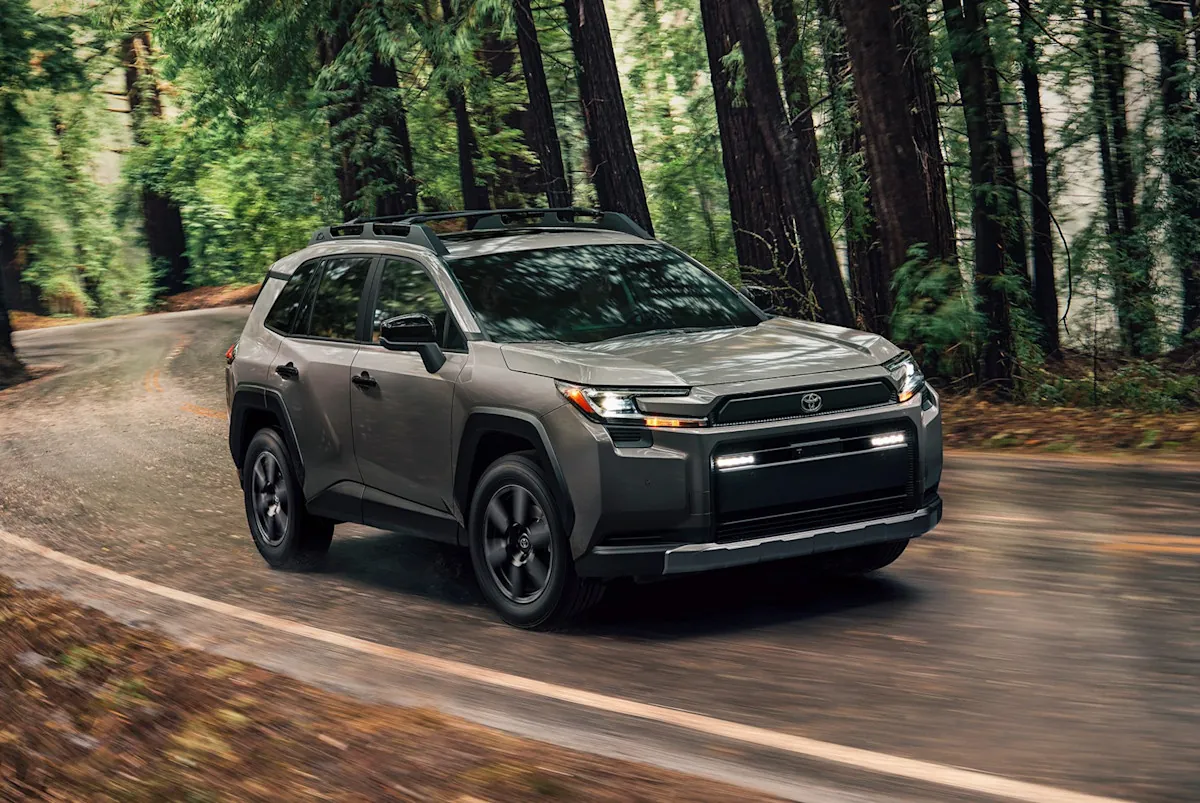
The 2026 Toyota RAV4 Hybrid Woodland Edition promises rugged trail capability right from the factory. It packs an authentic 8.5 inches of ground clearance and specialized off-road tuning. You expect it to handle steep dirt inclines and deep mud without breaking a sweat.
But the reality of its electronic all-wheel-drive architecture tells a different story. Under prolonged heavy load, the rear electric motor hits a thermal wall and overheats. The system’s software immediately kicks in to protect the hardware from damage. It cuts power to the rear axle completely. The crossover instantly reverts to front-wheel drive and leaves you stranded until the electric motor cools down.
This thermal-protection shutdown mechanism stems from the RAV4’s fundamental engineering. The hybrid system lacks a traditional driveshaft connecting the front engine to the rear wheels. It relies entirely on an independent electric motor mounted directly on the rear axle. Yash Bajaj documented this exact limitation during an extreme off-road torture test of the 2026 Woodland Edition for The Fast Lane Car.
The setup works perfectly fine for rainy commutes or light gravel roads. The rear-axle motor design prioritizes high fuel efficiency rather than sustained trail crawling. This architectural choice gives vehicles with traditional, mechanically driven mechanical AWD advantages—like the Subaru Forester or Mitsubishi Outlander—a distinct edge under sustained off-road stress.
Cooling problems actually extend beyond just the rear motor. Owners of 2023–2026 RAV4 models frequently report trouble with the cabin air intake filter for the hybrid battery. This vent easily clogs with pet hair and dust. Once blocked, the restriction triggers hybrid battery cooling vent issues and sudden temperature spikes. The restriction accelerates overall battery degradation.
Electronic AWD Systems Force Buyers to Choose Between Efficiency and Endurance
Automakers face tightening emission targets across the globe. Traditional AWD systems carry heavy driveshafts and transfer cases that drag down fuel economy. The shift toward e-AWD systems solves the efficiency problem while maintaining marketing claims of all-weather traction.
Look at it this way: buyers must now scrutinize spec sheets differently. You cannot assume an AWD badge guarantees prolonged mechanical endurance. If you plan to tackle deep mud or steep, sustained off-road climbs, you need a physical mechanical linkage. The software-dependent setup in the RAV4 Hybrid excels in the city. It just requires realistic expectations when the pavement ends.