
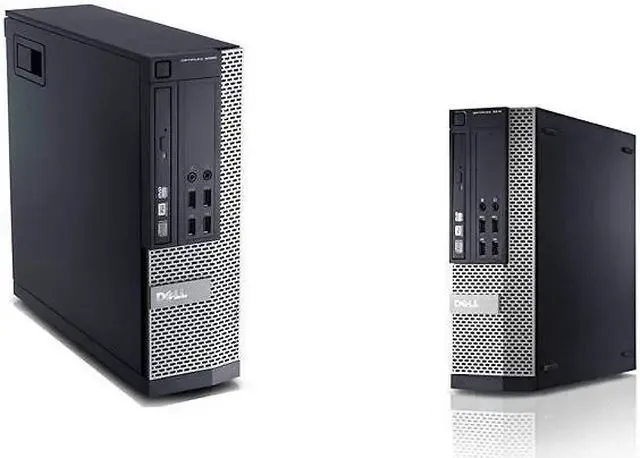
Forget the shiny new hardware. Small form factor office PCs are quietly taking over the home server market. Corporate IT departments are dumping thousands of perfectly functional Dell, HP, and Lenovo machines onto secondary markets like eBay right now. These older computers offer massive hardware expansion capabilities, and they cost a fraction of a modern Mini PC.
Single-board computers previously dominated this space. Enthusiasts love them for lightweight network tasks. A basic Pi-hole installation or a Tailscale node runs effortlessly on a tiny circuit board.
But that hardware quickly hits a ceiling.
Tech reviewer Samir Makwana at XDA Developers highlighted this exact bottleneck on Sunday. Makwana noted that his single-board computer completely ran out of headroom during typical use. He explained that these tiny boards struggle immediately when tasked with running Jellyfin media servers or complex Docker stacks.
The solution sits inside discarded corporate cubicles. Instead of buying a massive, deafening enterprise server rack, enthusiasts are grabbing used small form factor (SFF) office PCs. These machines usually feature 7th or 8th-generation Intel processors.
They easily outcompete popular commercial Mini PCs from brands like Beelink and Minisforum in one critical category: physical expansion. Used office PCs give you actual physical drive bays. You get extra RAM slots. They even include accessible PCIe slots for dedicated network cards or low-profile GPUs.
Microsoft’s Windows 11 Hardware Cutoff Floods the Secondary Market
The sudden availability of these machines is not a coincidence. It is a direct reaction to Microsoft’s strict hardware requirements for Windows 11.
Microsoft officially excluded most 7th-generation and older Intel CPUs from the Windows 11 upgrade path. This rigid policy forced corporate IT departments into massive, premature hardware refresh cycles. Businesses are currently decommissioning perfectly functional 7th-gen machines in bulk to stay compliant with enterprise security standards.
They dump these unsupported computers on eBay for extremely low prices. Hardware enthusiasts then scoop up the discarded desktops to run lightweight Linux distributions. This massive corporate refresh cycle effectively subsidizes the entire home lab community.