
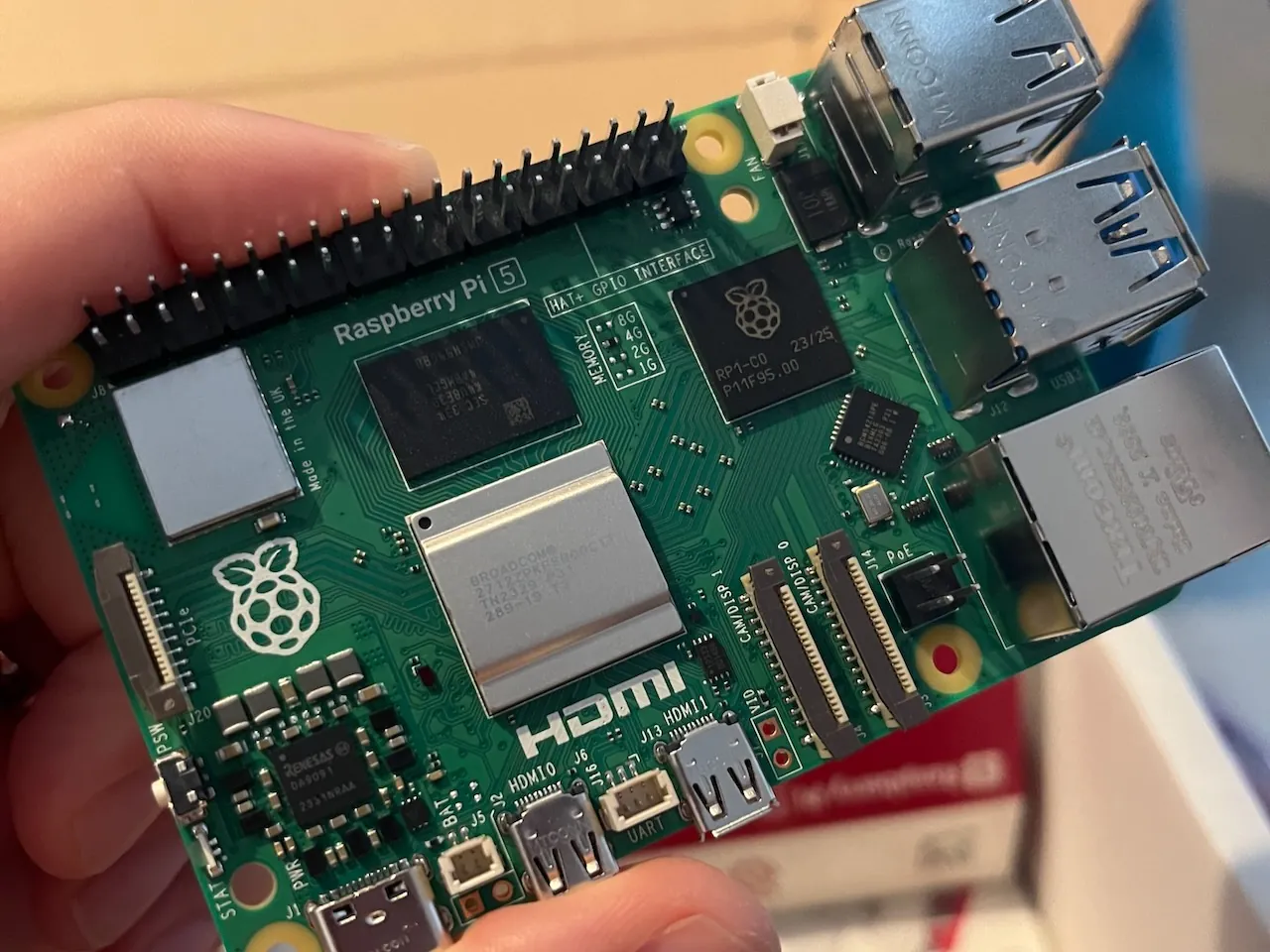
Desktop PC cases usually dominate your desk. But a new community project shrinks that footprint down to just 10 centimeters. Working under the handle u/Zapador, a hardware maker designed a detailed miniature version of the popular Fractal North enclosure. It’s custom-fitted to house a Raspberry Pi 5 single-board computer.
This build abandons the standard plastic aesthetic of most DIY cases. Instead of printing fake timber, Zapador cut real wood for the front panel. He stained and oiled the strips to match the original desktop tower. Along with the wooden accents, the tiny case features a functional power button, a yellow indicator LED, and a PVC mesh top.
Inside the chassis, the layout mimics a full PC. It accommodates a 60mm Argon Thrml tower cooler. To handle storage, the creator integrated a Pimoroni NVMe Base Duo. Zapador even designed a faux graphics card made of clear PETG. Sporting a laser-engraved decal that reads “RTX 7090 Ti”, this fake GPU serves an actual functional purpose. It routes video output from the Pi 5’s dual micro HDMI ports to the back of the case.
Scaling down this specific chassis has an established history. Back in July 2024, Fractal Design officially released 3D printing files for a simplified “Project: North Pi” case following a viral Computex showing. That official version relied entirely on basic 3D-printed plastic.
Instead of using that plastic model, Zapador bypassed the official design to create a half-scale replica. For this new 2026 iteration, builders must print roughly 50 unique parts. Assembly is highly complex. According to a detailed breakdown of the build, the process requires contact adhesive, epoxy, and custom ribbon cables. Full step-by-step instructions aren’t currently available. However, makers can download the design files and parts list from Printables. Simplified options exist for builders who want to skip the wood paneling and the RGB lighting.
Mixed Materials Push the Maker Community Forward
Traditionally, DIY hardware enclosures prioritize fast printing times and cheap filament. This half-scale build forces a different approach. By integrating laser-cut wood and custom cable routing, the project blurs the line between a quick desktop hobby and premium manufacturing.
Builders must source materials beyond basic PLA plastic. Because of this shift, hardware hobbyists must learn secondary skills like woodworking and resin casting. Pure 3D printing handles the structural frame, while traditional crafting provides the finish.