
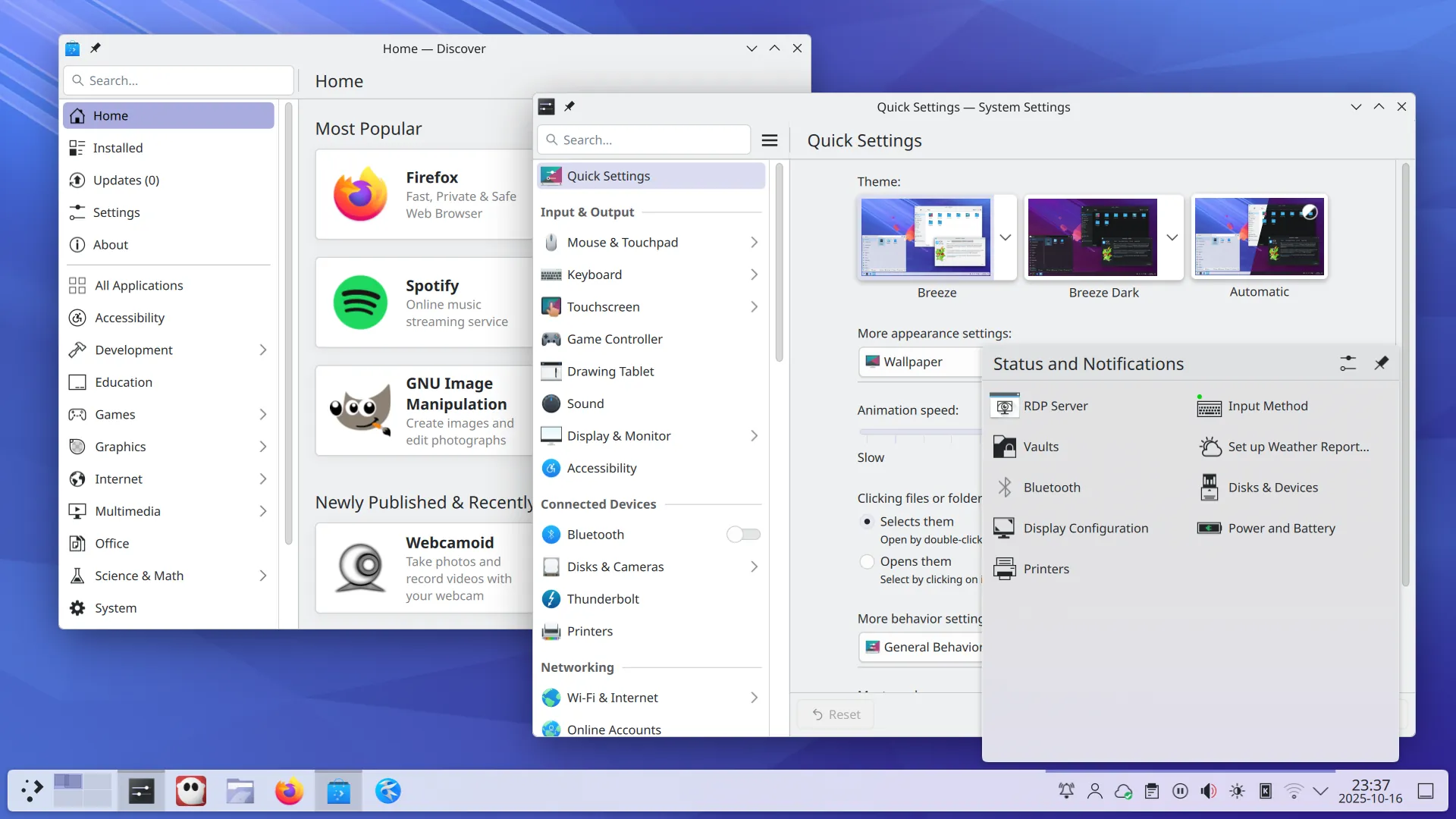
The upcoming KDE Plasma 6.8 release will automatically lock physical screens when a remote desktop connection ends. It’s a long-awaited security fix that stops unauthorized users from accessing an open session once a remote IT worker disconnects.
The KDE development team announced the new remote desktop behavior alongside several quality-of-life updates aimed at a mid-October 2026 launch. The changes include memory upgrades for the Plasma Login Manager and visual overhauls for the software center.
Developer Nick Haghiri built the automatic lock mechanism to solve a known vulnerability. Before this update, a disconnected remote session could leave the physical computer screen unprotected. Now, when the last remote client disconnects, the native server automatically secures the host machine. A new connection simply unlocks it again.
System administrators can now deploy Plasma’s remote protocols natively without installing third-party security software.
The update also tackles visual clutter. The Discover app will now visually group downloads to separate active updates from files that are still waiting in the queue. You will also notice this organizational approach on the login screen. The Plasma Login Manager, programmed by Oliver Beard, will start remembering which session type each user account picked last. This stops people from having to manually toggle options on shared computers, a detail confirmed by the recent XDA report.
The KDE community revealed these additions on Saturday through an official development blog.
The 6.8 release coincides with a major architectural shift for the Linux desktop environment. KDE is removing the legacy X11 session entirely. Future installations will strictly require Wayland. To support this transition, developer Vlad Zahorodnii created a new command-line tool called kscreenctl. It officially replaces the old kscreen-doctor utility for managing display settings.
The Final Push for Native Corporate Adoption
The decision to bake automatic locking directly into the remote desktop server removes a major hurdle for corporate IT departments. Historically, organizations running Linux fleets had to rely on independent software or complex tunneling setups to ensure a disconnected session didn’t expose physical hardware to office intruders.
By building this at the system level and enforcing Wayland natively, KDE Plasma is closing the administrative security gap between open-source environments and Windows’ proprietary Remote Desktop Protocol. System administrators get tighter control over hardware, and they don’t have to deploy extra background services to get it.