
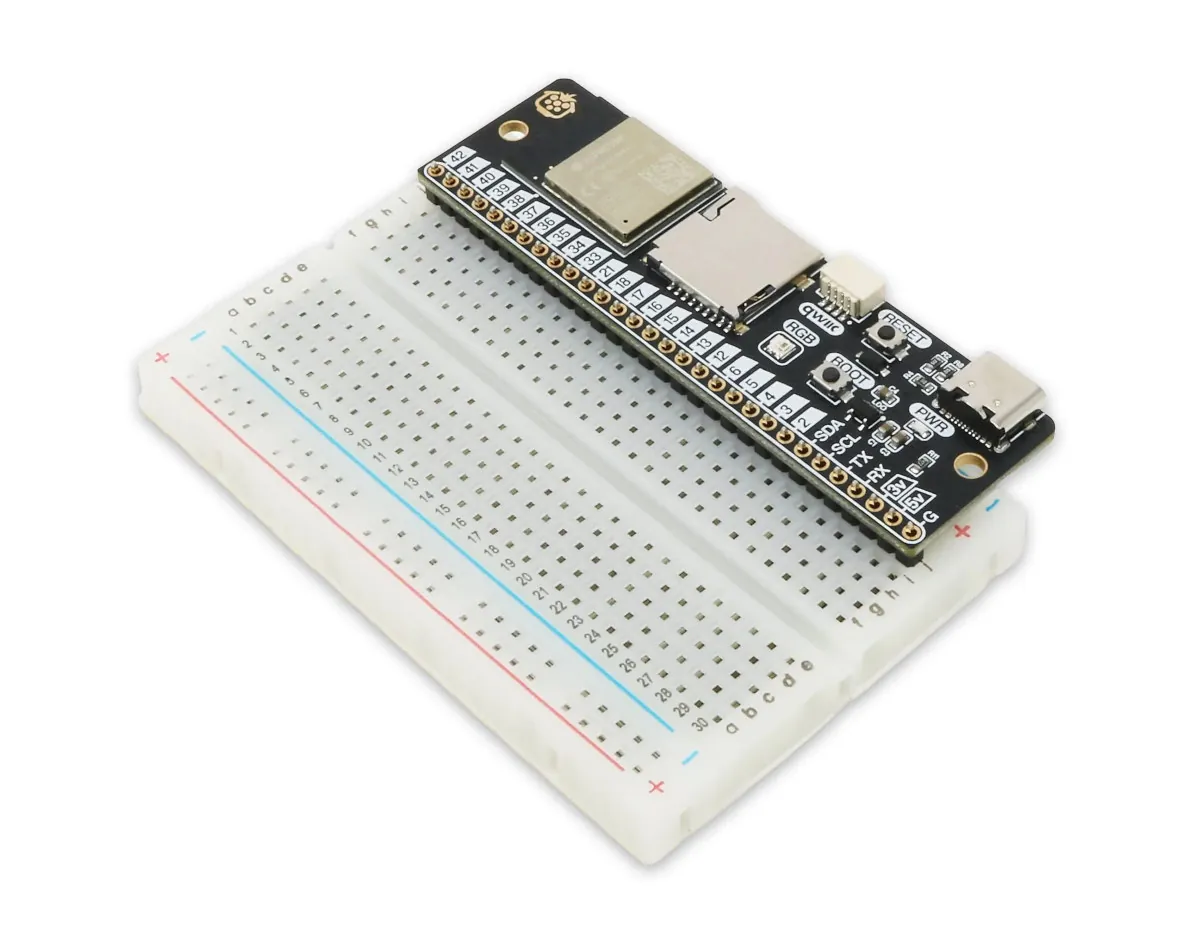
High-speed cameras that can see light moving across a room usually cost millions and belong in physics labs. But Reddit user doubleyow engineered a custom setup that achieves 10 billion frames per second using an off-the-shelf ESP32S3 microcontroller.
You cannot natively record continuous video at that speed with basic hardware. Instead of taking full pictures, the system samples a single pixel at a time. A custom nanosecond laser repeatedly pulses at up to 10KHz.
The creator routed the sensor output through a 10-bit delay IC phase shifter. This allows the ESP32 to record specific pixels at exact moments. The system then stitches these individually recorded pixels from thousands of identical laser pulses into a single video, according to a detailed technical breakdown.
The hardware took 11 months to design and cost roughly 250€ in components. Generating one 240p resolution video at 10 billion FPS takes approximately one hour to scan pixel-by-pixel. That patience pays off.
This composite technique expands on previous light recording feats.
YouTuber AlphaPhoenix, also known as Brian Haidet, successfully filmed light at 2 billion FPS using a photomultiplier tube and an oscilloscope. The ESP32 approach pushes the frame rate higher while using standard microcontroller architecture.
The Shift in Accessible High-Speed Imaging
This project proves that high-speed imaging is becoming a software problem rather than a pure hardware problem. Makers are bypassing traditional bandwidth limits through repeated pulses and phase shifting.
If you want to replicate this, the barrier to entry is no longer budget. The real cost is the patience required to write the synchronization code and wait an hour for a tiny render. Consumer microcontrollers are now fast enough to coordinate nanosecond operations, bringing complex physics experiments into home workshops.