
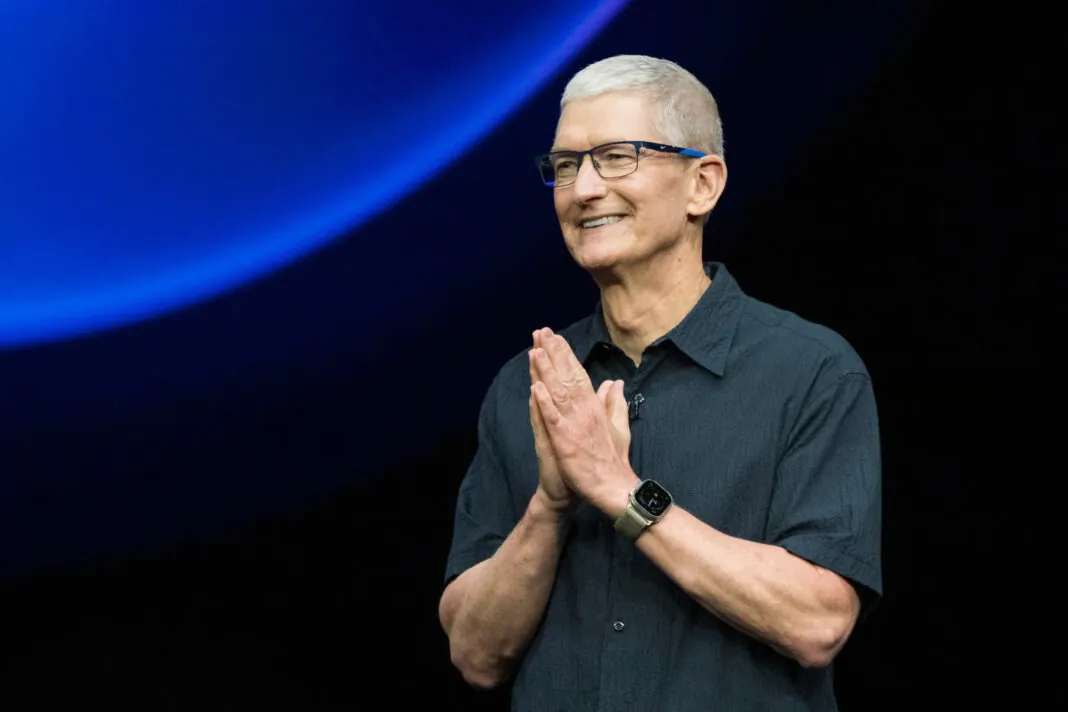
A severe memory shortage is forcing a direct confrontation between America’s largest tech company and its premier semiconductor manufacturer inside the White House. Apple executives, including CEO Tim Cook, formally petitioned President Trump and his commerce secretaries this week for permission to buy memory chips from sanctioned Chinese suppliers. They want to install components from ChangXin Memory Technologies (CXMT) and Yangtze Memory Technologies (YMTC) into products manufactured for markets outside the United States.
Micron is aggressively fighting the proposal.
CEO Sanjay Mehrotra directly warned the administration that greenlighting Apple’s request would devastate domestic silicon production. The dispute places the federal government in a difficult bind. Officials must weigh the economic cost of inflating consumer electronics against the national security mandate of isolating Chinese technology.
The supply chain squeeze isn’t an accident. Memory prices quadrupled in recent months. Manufacturers like Micron, Samsung, and SK Hynix aggressively redirected their foundry capacity away from consumer electronics to build high-bandwidth memory for enterprise data centers. This hard pivot starved the consumer market.
You can already feel the downstream effects in your wallet. The capacity crunch forced Apple to quietly raise retail prices across multiple hardware lines by $100 to $500 in late June, according to an industry pricing alert detailing the Pentagon’s 1260H list and the resulting AI data center shift. Apple claims tapping Chinese suppliers for international units is the only way to stabilize its manufacturing costs.
But doing business with these specific suppliers crosses established red lines. Both CXMT and YMTC sit firmly on the Pentagon’s 1260H list, which identifies corporations maintaining alleged ties to the Chinese military apparatus. YMTC also operates under restrictions on the Commerce Department’s Entity List.
Micron argues that allowing a major American buyer to source subsidized Chinese hardware undermines years of careful trade restrictions. The Boise-based chipmaker took its case directly to Commerce Secretary Howard Lutnick and Treasury Secretary Scott Bessent, setting up a broader geopolitical conflict over strict US sanctions. Mehrotra insists that American manufacturers cannot compete if massive buyers like Apple route their international spending to state-subsidized rivals.
The Consumer Hardware Toll of the AI Boom
This Oval Office dispute exposes a fracture in global hardware production. For decades, consumer electronics dictated semiconductor output. Now, consumer gadgets are treated as secondary priorities behind enterprise AI infrastructure.
If the White House denies the waiver, Apple has no alternative supplier with the scale to fill the gap. That reality guarantees consumer hardware prices will remain inflated indefinitely. If the administration approves the waiver, they effectively punch a large loophole into their own trade blockade. That signals to the rest of the industry that national security restrictions are negotiable when consumer inflation runs too hot.