
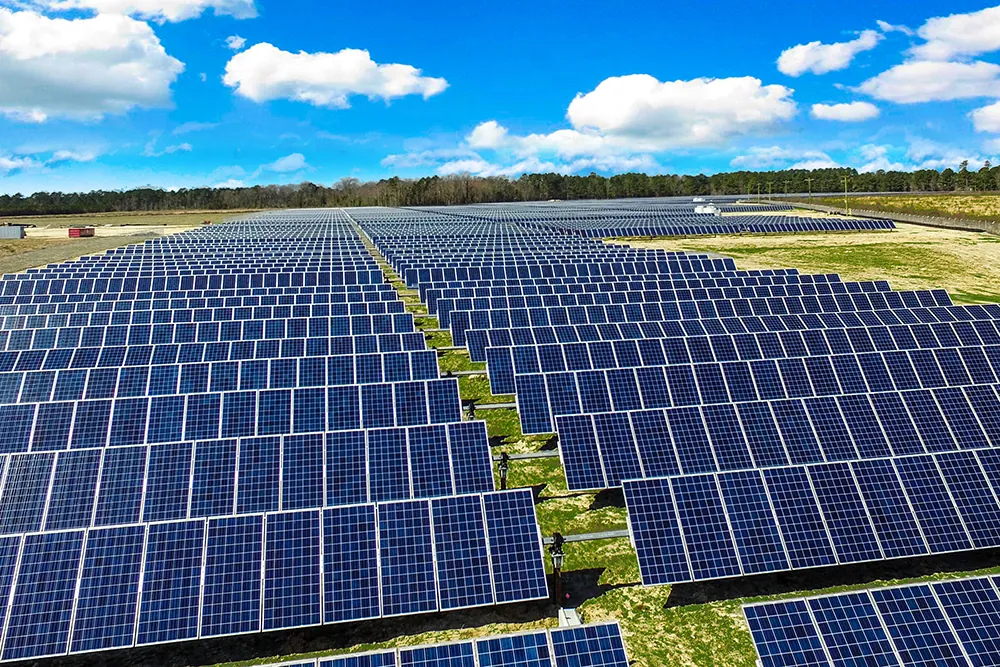
The US power grid crossed a major threshold in May. Solar power officially generated more electricity than both coal and wind on a monthly basis.
Data from the US Energy Information Administration (EIA) confirms the shift. Utility-scale and small-scale solar installations combined to produce 47,147 GWh of electricity during the month. That output pushed past coal, which generated 45,119 GWh, and easily cleared the 41,157 GWh produced by wind turbines.
This isn’t just a one-month fluke. The exact May 2026 GWh figures highlight a broader structural change in how the country gets its power. The SUN DAY Campaign aggregated the EIA numbers to show that wind and solar combined actually produced 57% more electricity than US coal plants during the first five months of the year.
Are fossil fuels completely dead? Not quite yet, but their footprint is shrinking fast.
During the first five months of 2026, renewable energy sources generated 10.1% more electricity than they did during the same window last year. They accounted for over 30% of US electricity overall. Meanwhile, electrical output from US coal facilities dropped 10.9% in that exact same span. Nuclear and natural gas plants saw sluggish growth, rising just 1.3% and 2.5% respectively.
The math here comes down to raw hardware deployment. Between June 2025 and May 2026, developers added almost 28 GW of utility-scale solar capacity to the grid. They also installed 16,551.8 MW of utility-scale battery energy storage to capture that power.
That wind and solar capacity expansion completely dwarfs legacy power systems.
Hardware Additions Will Accelerate the Coal Phase-Out
The gap between renewables and fossil fuels will keep widening. Planners expect solar, wind, and battery storage to add 83 GW of new capacity by May 2027. If you look at the legacy side of the grid, total fossil fuel and nuclear power capacity will actually drop by nearly 4.7 GW over the next 12 months.
This data proves that the grid transition is happening at the construction level. Over the past year, coal capacity fell by 2,235.6 MW and nuclear capacity dropped by 27.6 MW. Natural gas capacity did rise by 6,289.0 MW, but that growth is a fraction of the renewable additions. As massive battery storage projects come online to solve solar’s intermittency issues, the financial case for running legacy coal plants will only get worse.