
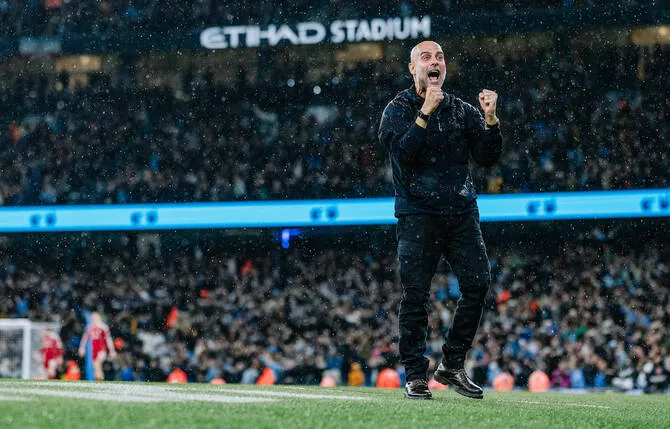
Pep Guardiola has formally turned down the Italian Football Federation’s offer to take over as the national team’s head coach. He communicated his final decision to executives on Thursday night. Guardiola cited a need to step away from the intense workload of management following his decade-long tenure at Manchester City.
The refusal leaves the four-time world champions searching for a leader after they failed to qualify for the expanded 2026 World Cup. That failure prompted Gennaro Gattuso to resign. Guardiola told the federation his choice was based on personal reasons, walking away from a nation currently reeling from its third consecutive World Cup absence.
FIGC Technical Director Paolo Maldini and advisor Leonardo pushed hard to secure the Catalan manager. The executives spent three days meeting in Barcelona to outline a comprehensive “Azzurro project.” The pitch extended well beyond managing the senior squad. They proposed a complete structural overhaul of the Italian football system starting at the youth levels.
But the pitch failed.
FIGC President Giovanni Malagò and the federation board were prepared to shatter their standard budget limits to land Guardiola. They offered a €10 million annual salary. That figure required an exceptional budget adjustment, though it still fell short of his previous €20 million compensation in England. The board had already watched Carlo Ancelotti reject a parallel approach to honor his current contract with Brazil.
FIGC Exhausts Elite Targets as Focus Shifts to Domestic Candidates
Guardiola’s rejection forces Italian football executives to execute a backup plan. They cannot spend their way out of this collapse. Italy has now missed three consecutive World Cups in 2018, 2022, and 2026. The nation had previously gone 60 years without missing the tournament.
The federation must now fall back on familiar domestic options. With Ancelotti and Guardiola officially out, the FIGC’s candidate shortlist has pivoted exclusively to Antonio Conte, Roberto Mancini, and Andrea Pirlo to manage the rebuilding phase.