
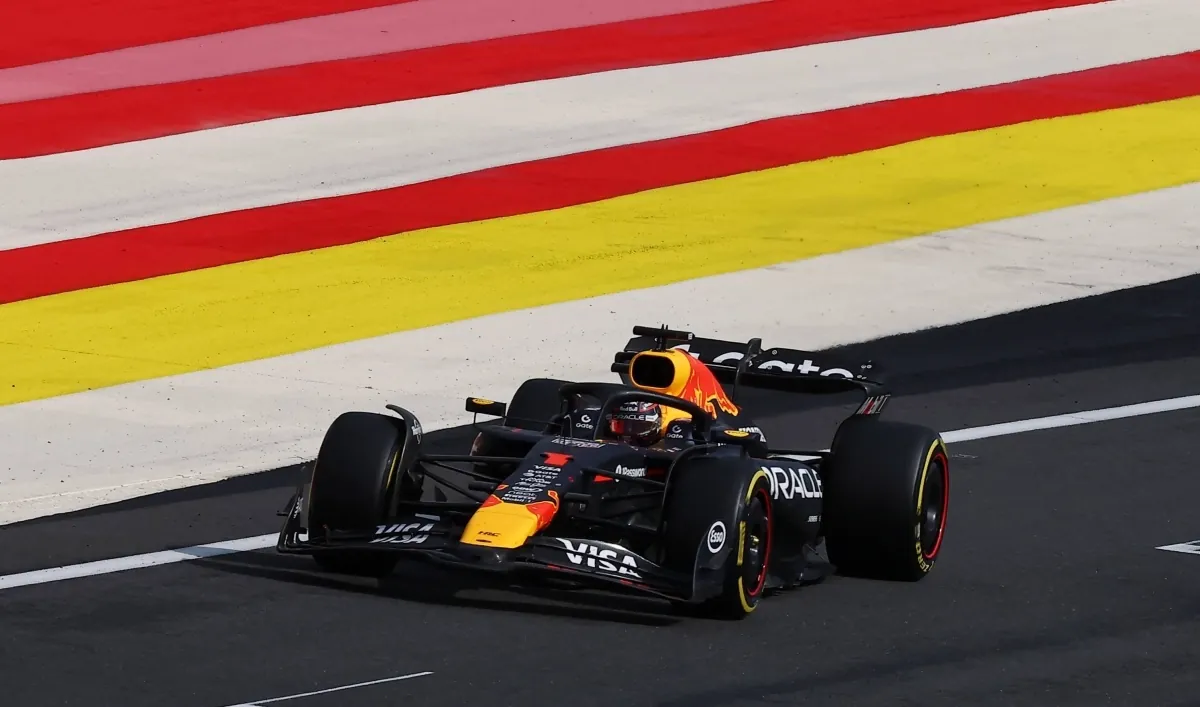
Formula 1 cars corner at speeds that break the normal rules of physics. They achieve this extreme velocity through a concept called aerodynamic downforce. As the car pushes forward, its highly engineered wings and sculpted floor tunnels manipulate the passing air, forcing it to push the vehicle downward into the track surface. This acts like an invisible weight. By pressing the tires harder into the asphalt, downforce multiplies the mechanical friction of the rubber, allowing drivers to steer through tight corners at speeds that would instantly throw a standard passenger vehicle off the road.
How the Physics of Downforce Actually Works
Every racing team focuses heavily on aerodynamics because mechanical grip alone has limits. A car’s mechanical grip comes from its physical weight pressing down on its tires. However, if you simply add heavy metal weights to a car to gain more grip, you increase the vehicle’s inertia. A heavier car is harder to accelerate, harder to brake, and violently wants to continue moving in a straight line when you try to turn.
Aerodynamic downforce solves the inertia problem. It adds dynamic weight without adding physical mass. At typical highway speeds, an F1 car generates enough downforce to equal its entire static weight, according to engineering breakdowns by Mercedes-AMG F1. As the car continues to accelerate, the downforce load increases exponentially. Near top speed, the aerodynamic pressure pushing down on the tires can equal three to four times the actual weight of the machine.
While the front and rear wings are the most recognizable parts of the car, they only tell part of the story. The vast majority of a modern F1 car’s downforce is generated out of sight. Engineers utilize Bernoulli’s Principle under the floor to create a powerful suction effect. By shaping the underside of the chassis into Venturi tunnels, they force the incoming air into a smaller space, which causes it to rapidly accelerate. This fast-moving air creates a low-pressure zone beneath the car. The higher-pressure air moving over the top bodywork then crushes the car downward into that low-pressure vacuum.
Why Teams Rely on Aerodynamic Grip
To understand why this is necessary, you have to separate mechanical grip from aerodynamic grip. In incredibly slow corners, like the famous hairpin turns at street circuits, the cars rely mostly on mechanical grip. The air is simply not moving fast enough over the wings to generate meaningful suction. In these moments, the grip comes entirely from the suspension setup and the sticky rubber compound of the tires.
High-speed sweeping corners are entirely different. Here, mechanical grip is heavily supplemented by aerodynamic grip. The process of generating this high-speed cornering ability follows a distinct sequential mechanism:
- Airflow Compression: As the driver approaches a high-speed corner, the vehicle’s sheer forward velocity rams air into the front wing elements and the underbody Venturi tunnels.
- Dynamic Load Generation: The aerodynamic surfaces deflect the air upward while the floor accelerates air backward, instantly generating thousands of pounds of invisible vertical load on the chassis.
- Friction Multiplication: This vertical load crushes the tire sidewalls and forces the rubber deeply into the microscopic pores of the asphalt track.
- Lateral G-Force Tolerance: With the tires effectively pinned to the ground, the driver can turn the steering wheel aggressively. The immensely amplified tire friction easily counters the lateral G-forces attempting to slide the car outward, resulting in an impossible cornering speed.
Famous Engineering Milestones in F1 History
The pursuit of aerodynamic perfection has defined the sport for decades. In the late 1970s, Lotus revolutionized racing with the introduction of their 78 and 79 chassis models. These cars pioneered the use of “ground effect” aerodynamics. Instead of relying solely on massive top wings that created heavy drag, Lotus engineers shaped the entire floor of the car into inverted wing profiles. They then sealed the sides of the floor with flexible skirts that dragged along the ground. This trapped the low-pressure air beneath the car, generating incredible cornering speeds and forever changing how racing cars were designed.
Today, teams constantly alter their car setups depending on the track they are visiting. Every piece of aerodynamic downforce inherently creates drag, which is air resistance that limits a car’s top speed on the straights. Because of this drag penalty, setup philosophies swing wildly between events.
The Circuit de Monaco features tight, slow corners with very few straightaways. Teams bring their largest, most aggressive wing packages to Monaco to prioritize absolute maximum downforce and braking stability. Conversely, the Monza circuit in Italy is dominated by massive, high-speed straights. For this race, teams strip their cars down. They run extremely flat, low-profile wings to shed aerodynamic drag, willingly sacrificing their cornering grip to achieve raw top speed.
The 2026 Active Aero Overhaul
For years, Formula 1 engineers struggled with the ultimate compromise: a car built for immense cornering speed was forced to act like a parachute on the straights. The drag penalties were unavoidable.
That changed completely with the 2026 technical regulations. To combat drag while maintaining high-speed cornering safety, the rulebook mandated full-time Active Aero systems on both the front and rear wings. This dynamic technology completely replaced the older Drag Reduction System (DRS).
The new Active Aero setup operates in two distinct states. Through complex turns, the car defaults to “Corner Mode,” keeping all wing flaps fully deployed to generate peak downforce for maximum tire grip. Once the driver exits the turn and accelerates down a straight, the system transitions into a low-drag mode. The wing flaps physically flatten out, instantly shedding air resistance and allowing the car to accelerate to a much higher top speed. Because relying on moving aerodynamic parts can be dangerous, the governing body implements strict safety lockouts. At highly technical street circuits, the active systems are often locked into Corner Mode permanently, ensuring drivers do not suddenly lose downforce heading into a wall.
Common Misconceptions About Going Too Slow
There is a persistent myth among casual racing fans that if a driver takes a corner too slowly in an F1 car, they will instantly spin out and crash because the wings “stop working.” This is entirely false. If a car travels slower through a turn, it naturally requires less friction to change direction. It does not suddenly fall off the track.
However, driving an F1 car too slowly does create a very real hazard related to tire temperature. F1 racing slicks are designed to operate within an extreme heat window. If a driver idles around the track, the tires rapidly cool down. Cold rubber turns hard and slick like plastic. Once the tires drop out of their ideal operating temperature, the car loses all of its mechanical grip, making it incredibly difficult to control.
Another major challenge associated with massive downforce generation is the “dirty air” phenomenon. When a heavily winged car carves through the atmosphere at high speed, it leaves a chaotic, turbulent wake of air in its path. If a pursuing driver attempts to follow closely behind, their car enters this dirty air. Because the trailing car’s wings are suddenly starved of clean, fast-moving air, they experience a severe reduction in aerodynamic load. This sudden loss of suction makes the trailing car slide uncontrollably, historically making close-quarters overtaking through high-speed corners one of the most difficult maneuvers in all of motorsport.