
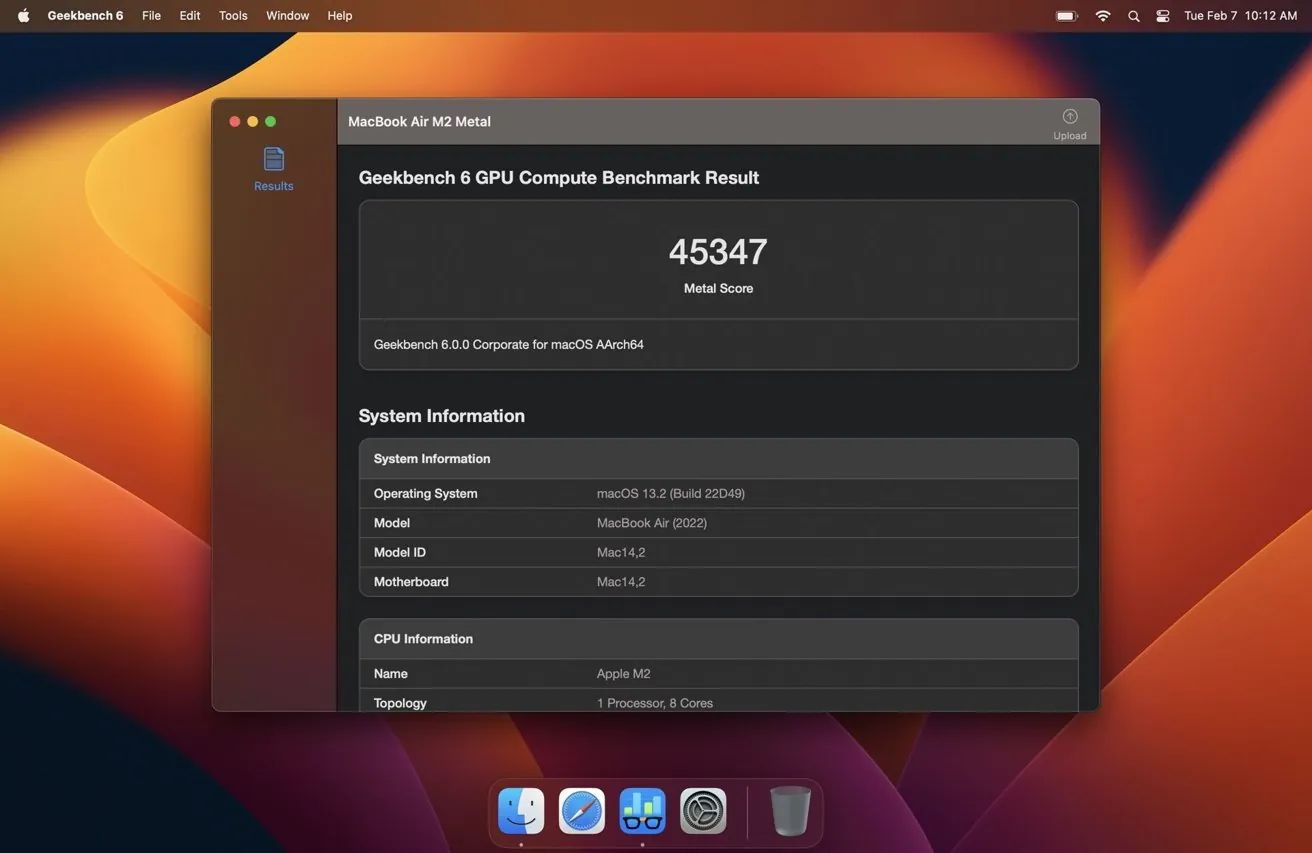
Primate Labs just dropped Geekbench 7, completely overhauling how the industry measures CPU and GPU performance across macOS, Windows, iOS, Android, and Linux. The synthetic numbers hardware reviewers and enthusiasts are used to seeing are officially obsolete. Because of drastic changes to data sets and testing criteria, these new scores are entirely incompatible with Geekbench 6 and cannot be compared directly.
The primary target of this update is how modern processors handle multi-core workloads. In the past, synthetic benchmarks would often artificially spread single-threaded tasks across multiple processor cores to generate a higher aggregate score. Geekbench 7 stops that behavior completely. Tests will now only run in multi-threaded mode if the real-world application it models actually utilizes multiple threads.
This structural change alters the testing pipeline significantly:
- Single-Core Lockdown: Workloads like the HTML5 browser test and Game Physics are now restricted strictly to the single-core evaluation section.
- Machine Learning Focus: The revamped GPU benchmark hammers heavy content creation tasks, specifically testing real-time video filtering, background blur, RAW image processing, path tracing, and image synthesis.
- Nvidia CUDA Returns: After being absent, Nvidia’s proprietary CUDA API is officially supported again, running alongside OpenCL, Vulkan, and Metal.
The software suite is also catching up to modern streaming and video conferencing demands. The testing methodology introduces real-world AV1 video codec playback, Opus audio compression, and OpenAI’s Whisper speech recognition model, according to hardware industry reports evaluating the new multi-core application behavior.
AMD Baseline Dethrones Intel as AI Workloads Take Over
Geekbench 7 forces a direct re-calibration of the current hardware hierarchy. Primate Labs established a new 2,500-point reference baseline using a Lenovo Legion system running an AMD Ryzen 7 7700 processor. That completely replaces the previous Intel Core i7-12700 standard utilized throughout the Geekbench 6 lifecycle.
This shift, combined with the intense focus on image synthesis and machine learning, directly benefits Nvidia and AMD hardware setups that lean heavily on CUDA and AI-specific accelerators. By pushing tasks like background blur and audio compression to the forefront, the update acknowledges that raw single-thread speed no longer dictates modern computing efficiency. Hardware manufacturers will now have to optimize for practical AI workloads rather than raw synthetic output.