
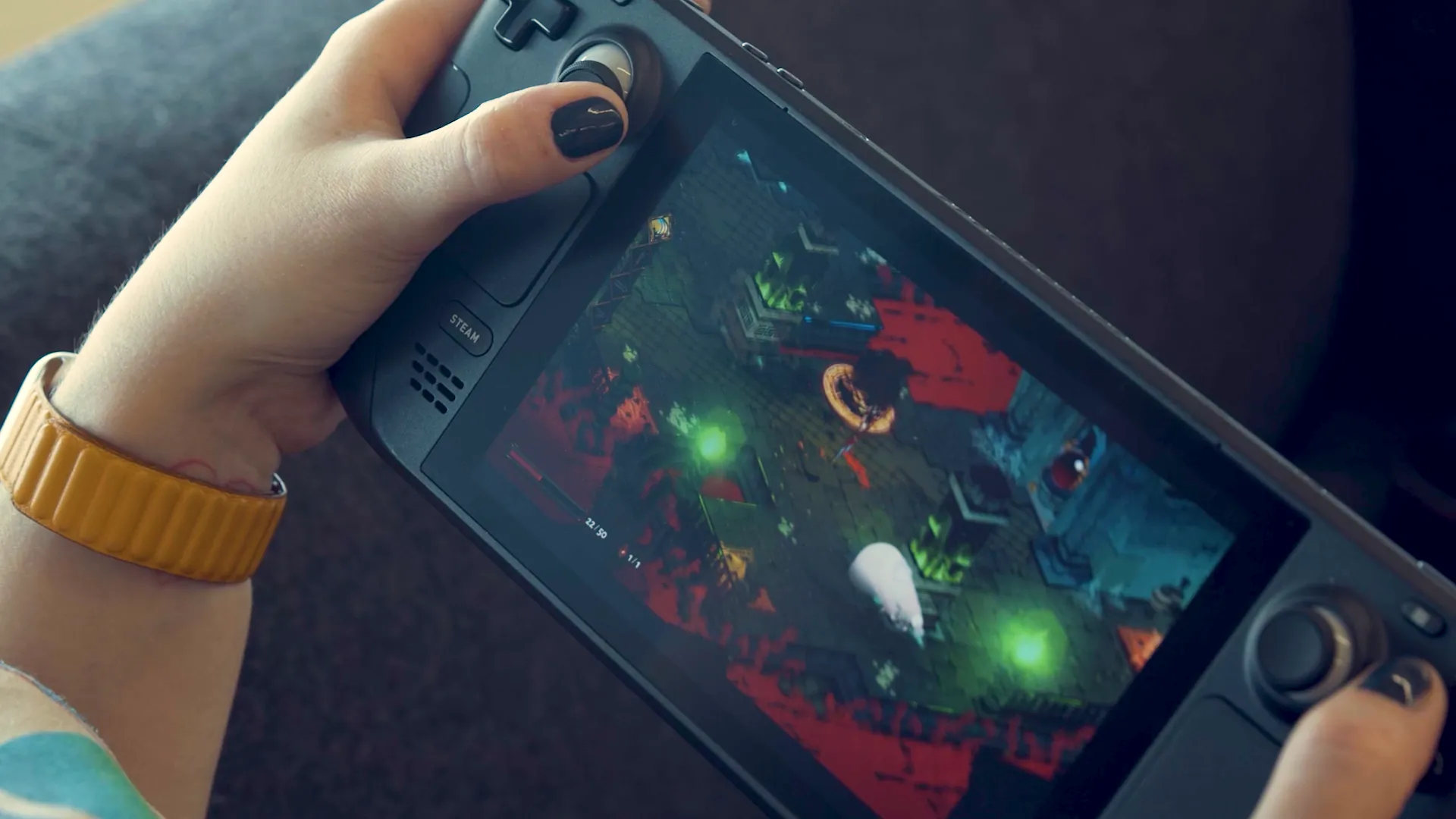
The Linux gaming community isn’t waiting for official manufacturer updates. Modders just forced AMD’s newest FSR 4 upscaler to run on the Steam Deck. The handheld’s older RDNA 2 architecture currently lacks official support for the technology.
They didn’t rewrite the graphics drivers. The workaround relies entirely on open-source middleware. Users are routing the handheld’s graphics calls through an injection tool to unlock the machine-learning visual enhancements.
The method centers on OptiScaler. This software intercepts temporal upscaling requests from games running DLSS 2, XeSS, or earlier FSR versions. It then acts like a switchboard operator. It redirects those calls straight into the FSR 4 backend.
Players use the Decky Framegen plugin to bypass traditional DLL file edits. The installation takes just a few button presses through the Decky Loader menu.
But there are hard limitations. The injection only functions on DirectX 11 or 12 games. Vulkan titles will fail to load.
It also carries a serious security catch. Games protected by kernel-level anti-cheat software will instantly flag the middleware. Running OptiScaler in those multiplayer environments guarantees a ban. The injection also breaks notoriously sensitive engines. Capcom’s RE Engine struggles heavily with the modification.
The hardware itself creates a bottleneck. The Steam Deck’s custom APU lacks the FP8 silicon acceleration required to run FSR 4 at its full potential. The system falls back to a standard processing model. Developers plan to release an optimized INT8 model on the OptiScaler roadmap. That specific update should boost frame generation performance on the aging hardware.
Proton Experimental Upgrades Target the Upcoming Steam Machine
Valve recently integrated the technology into Proton Experimental updates. But they deliberately bypassed the Steam Deck during this software deployment. The company established a direct AMD partnership to optimize the upscaler specifically for the RDNA 3 architecture powering the unreleased Steam Machine.
They need that machine-learning efficiency. The upcoming console must hit strict 4K 60fps targets in the living room. The original Steam Deck simply lacks the silicon to run the tech natively. That hardware gap forced the community to build their own bridges.