
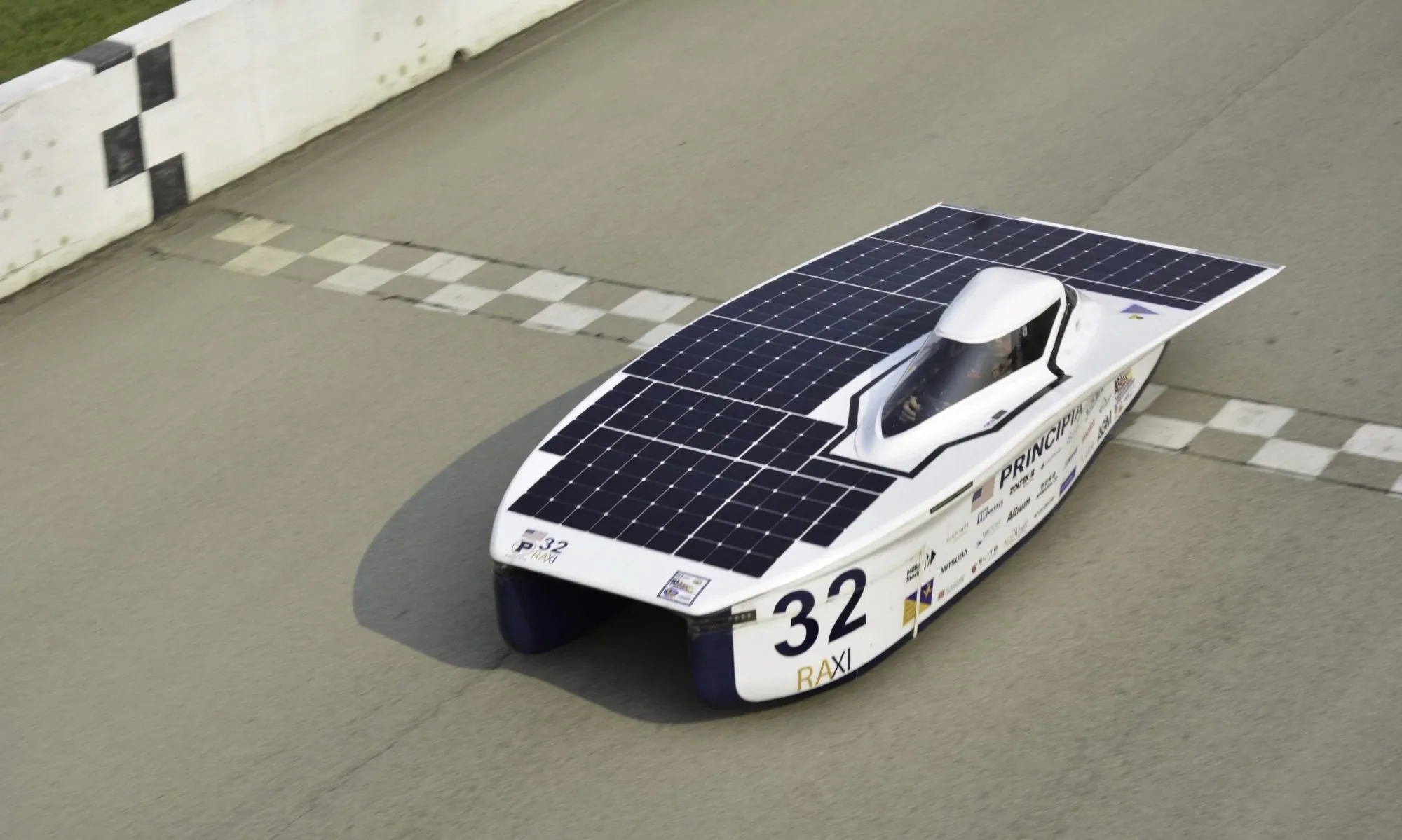
Principia College is bringing a fight to the 2026 Electrek Formula Sun Grand Prix. Starting July 21, the small liberal arts school will roll out its 11th-generation solar car—named “Ra” after the Egyptian sun god—to compete against 41 other collegiate engineering heavyweights. The track event kicks off Tuesday, with teams undergoing strict safety and quality scrutineering ahead of the main qualifier.
The stakes are high. This week’s closed-circuit sprint is the mandatory gateway to the American Solar Challenge (ASC). That 1,500-plus mile endurance run begins on July 25, stretching from the Twin Cities down to Amarillo, Texas.
What We Know
- The Venue: The track portion takes place in Minnesota, as confirmed by a local news report covering the Brainerd International Raceway event.
- The Competition: Record turnout brings 42 teams this year, including defending champions and international powerhouses like MIT, the Netherlands’ Delft Solar Team, and Florida Poly’s Phoenix Racing.
- The Underdog Factor: Principia took second place overall at the 2024 FSGP and returns as a serious threat.
But here is the strangest detail about Principia’s 2026 campaign. The college is currently in the middle of phasing out its only engineering program. Despite that internal policy shift, the 31-year-old solar car team—originally founded in 1995 by Dr. Joe Ritter—continues to operate at an elite level. They are quite literally racing against the clock, and they are doing it with custom-built solar tech, as highlighted in a recent Electrek profile.
How the Route 66 Centennial Changes the 2026 Solar Race
The cross-country portion of this year’s competition carries a unique historical weight. The official route traces the Great River Road before linking up with Historic Route 66. Because 2026 marks the 100th anniversary of Route 66, the ASC is officially designated as a Centennial Project.
This isn’t just a scenic detour. The specific itinerary, mapped out in Principia’s press release, forces these prototype vehicles onto the same aging highways that defined the combustion engine era. Testing advanced solar arrays and battery telemetry on 100-year-old American infrastructure provides exactly the kind of harsh, real-world data that automakers need to improve consumer EVs.