
International sports tournaments operate under the heavy direction of global politics. Government diplomacy directly decides host nations, determines which athletes get banned, and dictates where billions of dollars go. You might think the World Cup or the Olympics exist in a bubble of pure athletic competition. They do not. Hostile foreign policies frequently result in formal bans by international governing bodies, while successful tournaments allow nations to build global prestige and test diplomatic ties. The athletic events we watch on screen are just the final physical manifestation of years of intense political maneuvering behind the scenes.
How The Rules Of Geopolitical Bans Work
When international relations break down, sports federations step in to rewrite the participation rules. Governing bodies enforce strict exclusions against nations engaging in aggressive military actions. Following the invasion of Ukraine, Russia and Belarus received comprehensive bans that locked their official national teams out of major events, including the 2026 Winter Olympics in Milan-Cortina. These exclusions instantly reshape the competitive bracket before a single game is played. Geopolitical risk heavily affects industry stakeholders who finance these tournaments, forcing governing bodies to act quickly to protect the financial stability of the event.
But what happens to the individual players from those excluded nations? Federations often implement a strict compromise known as the “Individual Neutral Athlete” (AIN) designation. To navigate the tension between global politics and individual athletic careers, eligible players from sanctioned countries undergo intense screening. They must prove they have no military affiliation and no history of supporting the conflict. If they pass, they are allowed to compete. The catch? They get no national identity. They wear neutral uniforms, hear no national anthem if they win, and display no flag.
Why Nations Use Tournaments For Soft Power
Governments bid for these events because they offer immense soft power and cash. Soft power is the ability to influence global perception through appeal rather than military force. A strong showing at a tournament changes how the world views a country. The Democratic Republic of Congo used the global stage to highlight its athletic talent, shifting public focus away from domestic conflicts and public health crises. It is a highly effective way to rebrand a nation in real time.
Then there is the financial windfall. A government’s decision to host hinges on a balance between domestic needs and international prestige. According to The Conference Board, a successful tournament yields incredible economic returns. For example, a U.S.-hosted World Cup routinely generates estimates of well over six billion dollars in economic activity. That kind of return factors heavily into the political calculus of bidding for an event.
Hosting brings severe risks, too. If a host nation suffers from economic strain or political instability, bringing a mega-event to town can spark serious civil unrest. During the 2014 World Cup in Brazil, citizens staged widespread protests across the country. They directed their anger at the extreme costs of the new stadia, local corruption, and police brutality. A tournament meant to showcase national pride instead broadcasted deep domestic fractures to a global audience.
Famous Examples From Global Competitions
Political actors have weaponized tournament participation for decades. Withdrawing from an event is the oldest play in the political playbook. The historic U.S. Olympic boycott of the 1980 Moscow Games was executed directly by the Carter administration because of the Soviet invasion of Afghanistan.
And yet, sports also possess a unique capacity to open diplomatic channels where traditional methods fail entirely. In the early 1970s, a U.S. table tennis team’s interactions with Chinese athletes sparked “ping-pong diplomacy.” This unexpected athletic exchange helped pave the way for formal relations between the United States and communist China. Similarly, Nelson Mandela famously used the 1995 Rugby World Cup to symbolically unite a deeply fractured, post-apartheid South Africa. He recognized that a shared athletic victory could foster deep domestic healing.
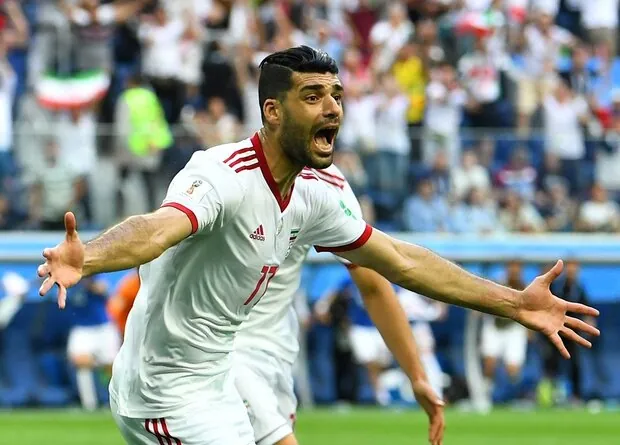
Athletes also utilize the international stage to protest their own governments. At the 2022 World Cup, members of the Iranian national team refused to sing their national anthem before a match. This public display of solidarity with anti-regime protestors in their home country demonstrated how players frequently turn a standard broadcast into a platform for political expression.
The Hidden Impact On Player Contracts And Safety
Geopolitics directly alters the global sports labor market. When athletes from sanctioned nations face travel restrictions, their pool of potential employers dramatically shrinks. This creates a monopsony situation—meaning international leagues become the only buyers in town for that talent. This lack of competition significantly lowers the athletes’ bargaining power and concentrates control entirely in the hands of the leagues.
This instability pushes many athletes into highly dangerous situations. Research on the global sports labor market reveals that geopolitical conflict exposes the athletic world to the shadow economy. Athletes experiencing delayed salaries or disrupted careers due to international sanctions become highly vulnerable targets. Transnational crime groups and match-fixing syndicates frequently prey on these economically desperate players.
Common Misconceptions About Adversary Matchups
Casual fans often assume that major international tournaments are packed with direct clashes between active political enemies. That is mathematically false. Direct matches between active geopolitical adversaries are statistically rare. Leading into the 48-team field of the 2026 World Cup, potential adversary pairs consistently account for a fraction of a percent of all possible matchups.
When adversaries do actually meet on the field, the results are deeply imbued with political meaning. The 1998 World Cup match between the United States and Iran provided a rare moment of goodwill in an otherwise deeply antagonistic relationship.
Another misconception is that organizations like the International Olympic Committee (IOC) and FIFA operate above the political fray. These governing bodies consistently face intense geopolitical pressures that challenge their founding principles of political neutrality. They are routinely forced to make highly sensitive rulings that expose the absolute impossibility of maintaining total autonomy from global politics.
Key Takeaways
- Travel bans crush player leverage: Sanctions restrict the global mobility of athletes, shrinking their employment options and leaving them highly vulnerable to match-fixing syndicates and predatory contracts.
- Hosting is a calculated financial gamble: Nations bid on mega-events to secure billions in economic activity and project soft power, but they risk triggering severe domestic protests if local infrastructure costs anger the public.
- Enemy matchups are extremely rare: Despite the expansion of tournament brackets, direct on-field clashes between active geopolitical adversaries account for a tiny fraction of a percent of all possible tournament games.