
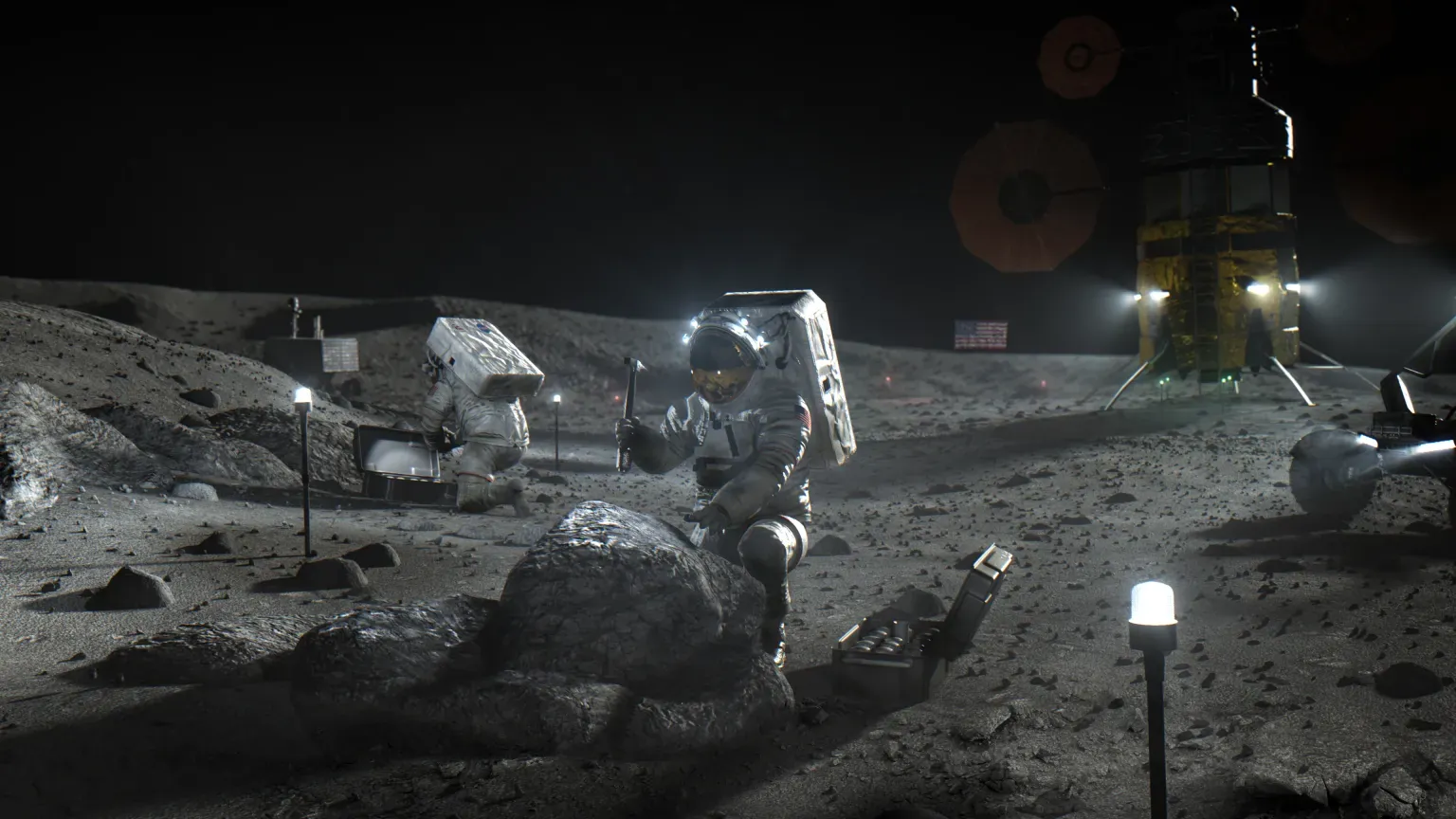
A recent analysis from the NASA Office of Inspector General (OIG) has identified a significant gap in the agency’s 2028 Artemis lunar landing blueprints. Currently, NASA has no capability to rescue astronauts who might become stranded on the Moon.
If a crew faces a life-threatening emergency or their lunar lander capsizes upon touchdown, there is no prepositioned backup spacecraft, emergency surface rover, or oxygen-equipped habitat available for shelter or escape.
The primary driver for accepting these elevated operational risks is geopolitical pressure. The accelerated timeline to achieve a lunar touchdown is heavily influenced by a White House Executive Order and the pressing need to outpace China, which is executing a parallel drive to put its own astronauts on the lunar surface before 2030.
This rushed schedule introduces new physical dangers, particularly given the geography of the target landing zone. Historically, the Apollo missions touched down on the relatively smooth, flat plains of the lunar equator using compact vehicles. The Artemis program, however, targets the lunar South Pole. This region features treacherous, boulder-strewn, and heavily cratered terrain.
This uneven topography poses a serious tipping hazard for the commercial landers contracted by the agency. Both SpaceX’s 171-foot-tall Starship and Blue Origin’s 53-foot Blue Moon lander face strict tilt-tolerance limits, according to a detailed report by Spaceflight Now regarding the specific tip-over risks and technical gaps outlined by the OIG. A rough touchdown on an unexpected incline could easily exceed those limits and capsize the vehicle.
How the Shift to Enormous Commercial Landers Complicates Lunar Rescue
The transition from the government-built Apollo modules to privately developed, large-scale landers fundamentally changes the safety equation for lunar exploration. During the Apollo era, the lunar modules were small enough that a redundant system or a rapid abort sequence was theoretically manageable. Today, the sheer physical size of vehicles like the SpaceX Starship means that sending a quick backup is logistically impossible.
These next-generation landers are designed to carry significant cargo and multiple crew members, which makes them tall and top-heavy compared to their 1960s predecessors. Because the lunar South Pole is permanently shadowed in many areas, identifying a perfectly flat landing pad from orbit is highly difficult. If a lander exceeds its tilt tolerance by even a few degrees on a hidden boulder, the resulting structural failure would trap the crew instantly.
The clear takeaway from the OIG report is that the current Artemis architecture relies entirely on the primary lander functioning perfectly. Until NASA and its commercial partners can establish permanent, independent surface infrastructure—such as prepositioned habitats or secondary escape vehicles—early Artemis crews will be operating without a safety net.