
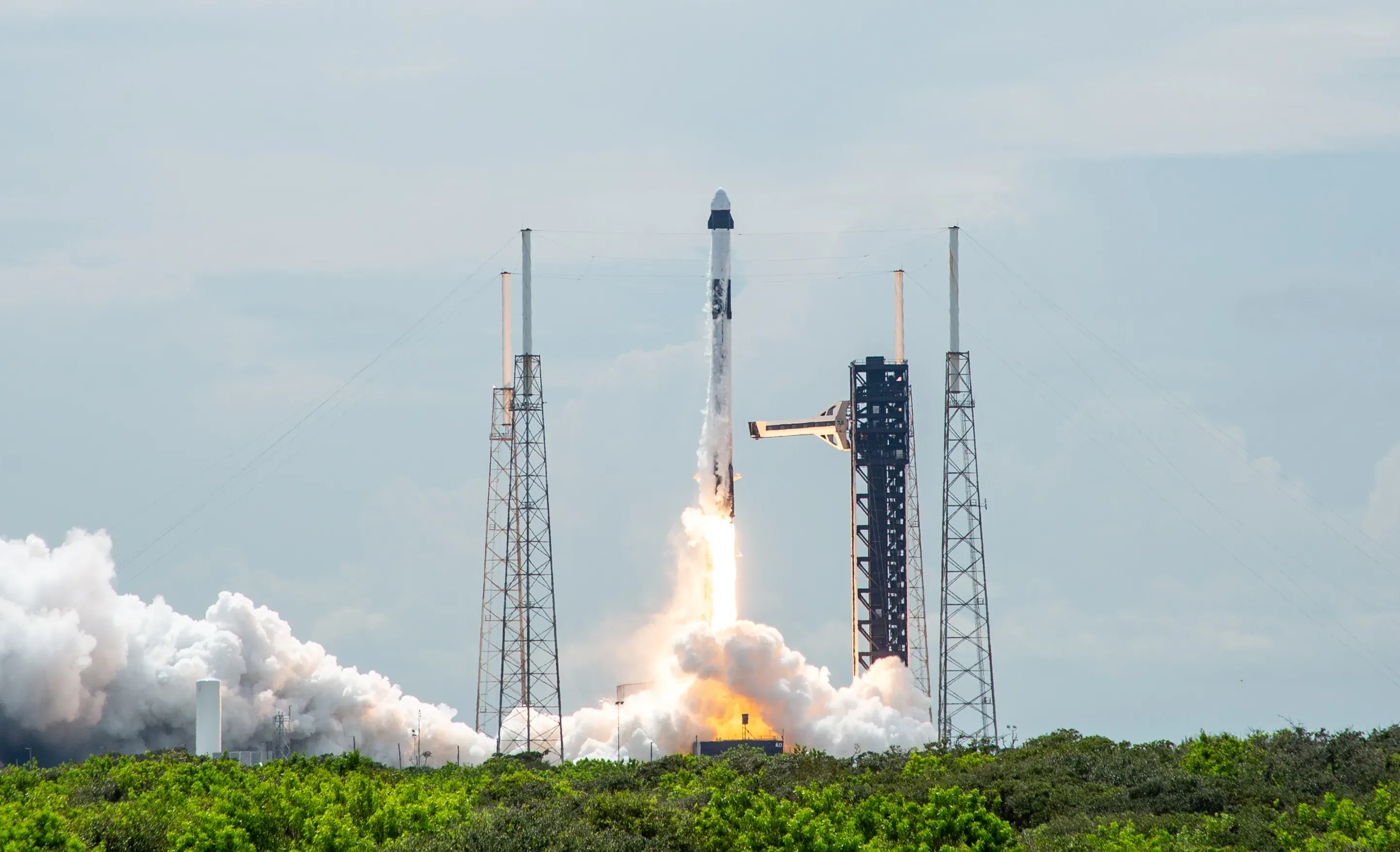
Modern rocket launches protect human lives and ground infrastructure using two highly specialized automated safety systems. If a huge booster veers off its designated trajectory, an Autonomous Flight Termination System (AFTS) instantly detonates the vehicle over safe zones like the ocean to protect the public. For missions carrying astronauts, a secondary Launch Escape System (LES) acts as a highly reactive lifeboat, detecting catastrophic failures in milliseconds and physically ripping the crew capsule away from the failing rocket.
That is the short answer. The reality of making a multi-ton cylinder of volatile fuel safe is fascinating. Spaceflight relies on extreme speed and controlled fire. When that control slips, engineers have mere seconds to prevent a tragedy.
The Science Behind Rocket Abort Systems
It helps to think of a launch vehicle as a highly calibrated bomb aiming for orbit. When an anomaly occurs, computers have to deal with two completely different problems at the same time: saving the innocent people on the ground, and saving the astronauts strapped to the top.
For decades, keeping the public safe meant putting a human Range Safety Officer in a room with a giant destruct button. They watched radar screens. If a rocket crossed a geographical boundary, they pushed the button and destroyed it. Not anymore.
Modern launch vehicles run entirely on AFTS software. This is an independent, self-contained subsystem riding on the rocket itself. It does not wait for a human to make a decision. The onboard computers rely on redundant Global Positioning Systems and Inertial Measurement Units to track the vehicle’s exact velocity and location in real time. Engineers program a strict geographical boundary—often called a moving closed simple curve footprint—into the flight software before liftoff. If the rocket steps out of bounds, the system triggers linear shaped charges that rupture the propellant tanks. The vehicle breaks apart harmlessly. Taking the human out of the loop completely removes ground radar latency, buying flight computers a critical few extra seconds of reaction time.
But what about the astronauts? That is where the LES comes in.
Here is the exact sequence of an automated crew abort:
- Anomaly Detection: The capsule’s computers constantly monitor the booster below it. They watch for sudden pressure drops, erratic acceleration, or structural twisting.
- Triggering the Escape: If sensors cross a critical redline, the system fires instantly. No asking mission control for permission.
- Separation and Thrust: Pyrotechnic fasteners sever the connection between the capsule and the failing rocket. Escape motors ignite, pushing the spacecraft from zero to hundreds of miles per hour in seconds.
- Recovery: Once clear of the blast zone, the capsule deploys parachutes for a water or land touchdown.
Engineers build these escape systems in two flavors. Traditional “tractor” systems use a lattice tower mounted above the capsule packed with solid rocket motors to pull the crew to safety. You see this on the historical Apollo missions and the modern Artemis Orion spacecraft. Newer commercial vehicles rely on “pusher” configurations. These integrate liquid-fueled engines right into the base of the capsule. SpaceX uses eight SuperDraco engines on its Crew Dragon, while Boeing’s Starliner packs four launch abort engines capable of generating tens of thousands of pounds of thrust to push the vehicle away.
Real-World Examples or Applications
Testing these systems on the ground is one thing. Watching them work during a live flight anomaly is incredible.
Back in 1996, the European Ariane 5 rocket launched on its maiden flight. Just seconds into the ascent, an integer overflow in the software caused the guidance system to completely fail. The rocket violently veered off course. Before anyone could blink, the automated system detected the structural disintegration and initiated a self-destruct to protect the surrounding area.
More recently, we saw these mechanics put to the test during the SpaceX Starship flight test program. In 2025, during the IFT-7 mission, the super-heavy lift vehicle experienced anomalies. The flight termination system recognized the deviation and ruptured the propellant tanks exactly as designed.
Crew escape systems get rigorous testing too. In late 2019, Boeing ran a pad abort test for its Starliner capsule at the White Sands Missile Range. They strapped the capsule to a test stand, simulated an imminent anomaly, and let the software take over. The automated pusher system rapidly separated the vehicle and carried it a mile into the air, proving the concept before putting humans on board.
What Scientists Still Don’t Know / Current Research
You might think we have aerospace safety completely figured out. But rocket science is hard, and autonomous software is notoriously tricky to perfect.
Engineers are constantly researching how to improve the software logic that decides when to destroy a vehicle. A false positive—blowing up a perfectly healthy rocket because a single sensor glitched—is a multi-million dollar mistake. Teams are actively developing more robust, fault-tolerant IMU systems that can cross-check their own data faster and ignore isolated hardware glitches.
There is also ongoing physiological research into the extreme forces astronauts endure during an abort. Outrunning a failing booster is violent. Passengers regularly experience punishing g-forces well into the double digits. Medical researchers are studying how advanced seat designs and pressurized suits can better protect the human spine and brain from that sudden, crushing acceleration. Surviving the abort is step one. Making sure the crew does not suffer severe injuries from the rescue mechanism itself is an entirely different engineering challenge.
Common Myths Debunked
Pop culture gets rocket safety wrong all the time. Let’s clear up a few things.
People usually picture a frantic guy in a control room slamming his fist onto a giant red button to blow up a rogue rocket. While Range Safety Officers absolutely used to do exactly that, modern launches are fully autonomous. Human reaction times are simply too slow. By the time a person sees a rocket drift off course on a screen, decides to act, and transmits a signal, the vehicle has already traveled miles. Machines do it better.
Another common idea is that astronauts can just eject and parachute away like fighter pilots. That only works inside the atmosphere at relatively low speeds. Once you hit the vacuum of space, or are traveling at Mach 15, a personal parachute is entirely useless. That is why the entire capsule has to act as the escape pod. The life support systems, the heat shield, and the parachutes all stay with the crew until they splash down safely.