
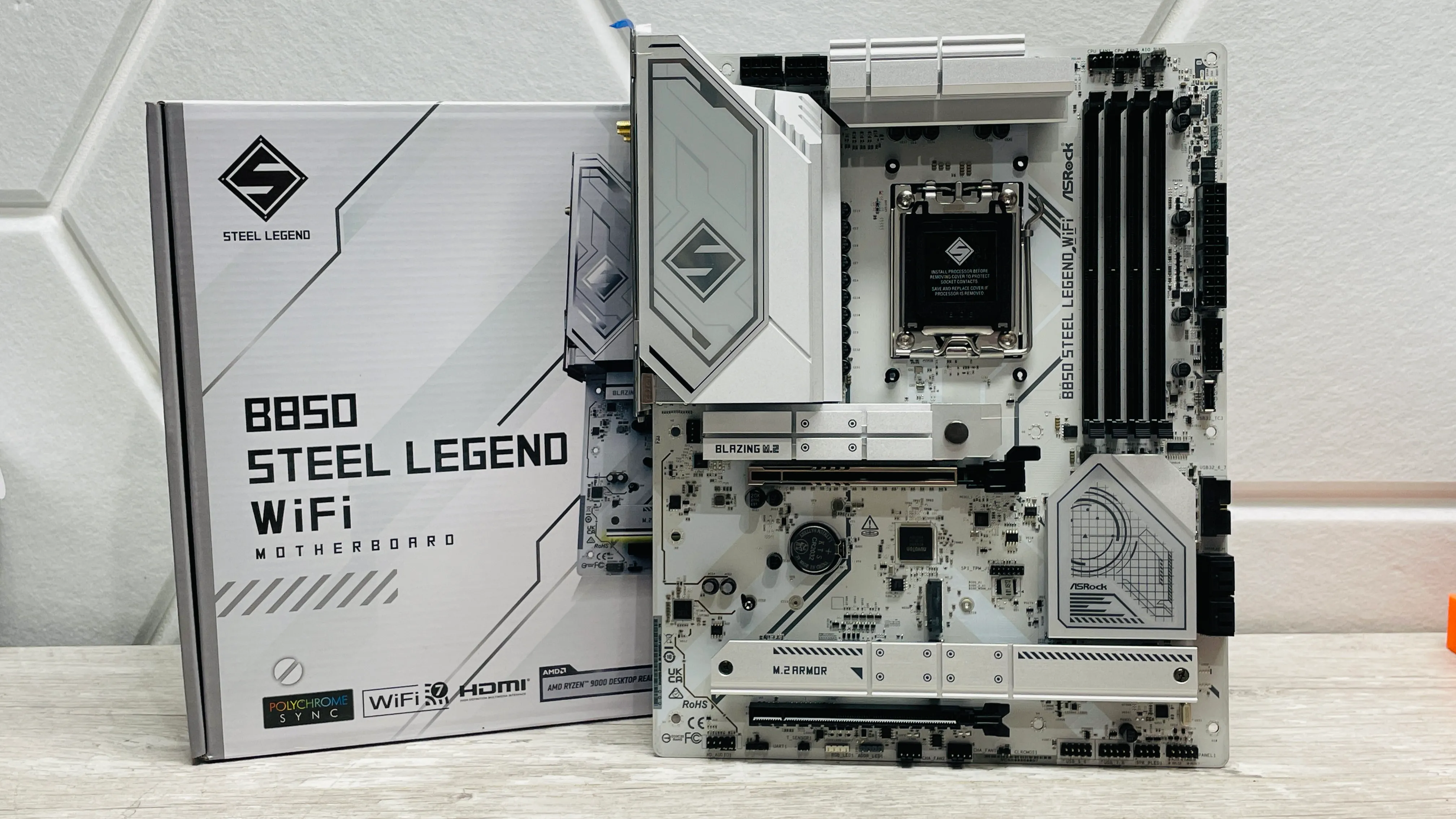
PC builders love to overspend on motherboards. We constantly chase premium X-series chipsets under the illusion of future-proofing our desktop computers. But when the dust settles and the games load, those expensive boards rarely justify their premium price tags.
Hamlin Rozario at XDA recently published a hands-on review proving exactly that. After upgrading his AM4 socket build from a dead Ryzen 9 5900X to a Ryzen 7 5700X3D, he realized his expensive X570 motherboard delivered absolutely zero real-world gaming advantage over a cheaper B550 alternative.
The Future-Proofing Myth
Paying extra for ultra-fast connectivity sounds great on paper. Motherboard manufacturers push PCIe 5.0 M.2 slots and 10GbE LAN ports as essential features for modern builders. The reality? Most users will swap their entire platform before they ever saturate those speeds. You end up paying for bandwidth you simply do not use.
Rozario points out that the real value lies in basic utility, not theoretical speed limits. A BIOS flashback button is the single most important feature you can buy. When his previous CPU failed and his computer refused to POST, that simple button allowed him to flash the firmware using only a USB drive and his power supply. It saved the entire build.
He also highlights reinforced PCIe slots as a genuine necessity. Modern graphics cards are absurdly heavy. When you hang a 5.5-pound RTX 4090 off the side of your PCB, structural integrity matters far more than a secondary ethernet port.
The Shifting Chipset Market
The line between budget and flagship hardware blurred years ago. We saw this clearly when historical pricing and specification overlaps between B550 and X570 chipsets confused buyers across the market. Budget-friendly B-series boards now routinely offer the high-speed PCIe 4.0 lanes required for your primary GPU and NVMe SSD.
The performance gap just doesn’t exist anymore for the average consumer. Mid-range boards now support the exact same processor architectures and memory speeds as their flagship siblings.
The Verdict
If you are planning a new PC build, skip the top-tier motherboard. Take the hundreds of dollars you save by dropping down to a mid-range B-series chipset and put that money directly into a faster graphics card or a better processor. Motherboards do not generate frames. As long as your board has the ports you need and enough structural strength to hold your hardware, it is doing its job perfectly.