
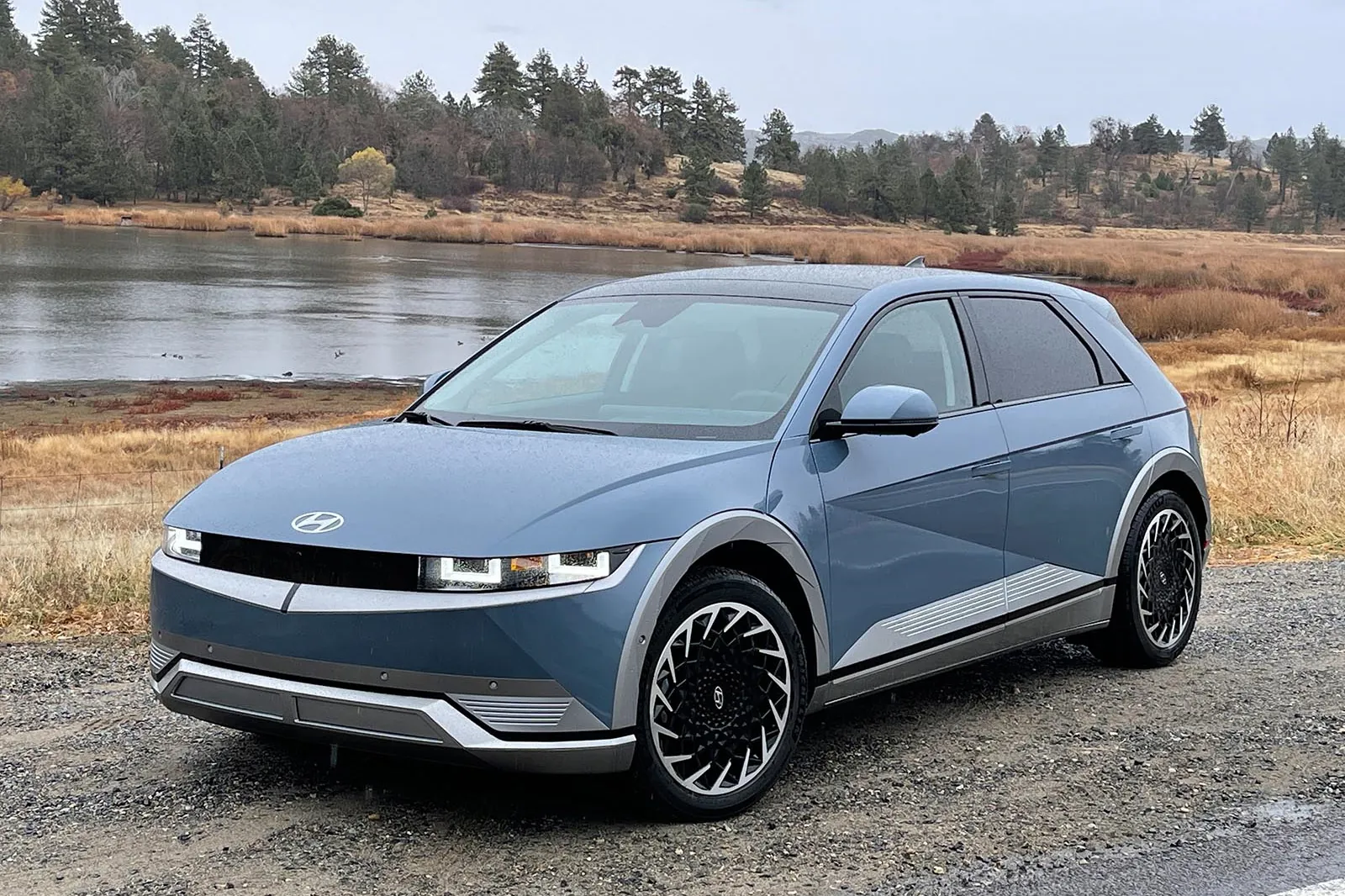
The Hyundai Motor Group is executing one of the most hyper-targeted safety actions in recent automotive history. On Monday, Hyundai and Kia jointly issued a recall for exactly 14 electric vehicles currently on the road in the United States, warning owners that their battery packs pose an active fire risk. The affected drivers are being instructed to park their cars outside and away from structures immediately.
This pinpoint recall affects six 2023–2024 Hyundai IONIQ 5s, seven 2022–2024 Kia EV6s, and a single 2024 Kia EV9. While a 14-car recall might sound tiny, the underlying defect is serious enough that both automakers are advising the impacted owners to limit their high-voltage battery charging to a maximum of 80% capacity until the physical hardware is completely swapped out.
Key Details
- The Root Cause: Misaligned electrodes inside specific high-voltage battery cells can trigger an internal short circuit, leading to thermal runaway.
- The Supplier: The defective battery modules were manufactured and supplied by SK On.
- The Fix: Dealerships will perform a complete, free replacement of the entire battery system assembly (BSA).
- Notification Timeline: Kia will mail official notification letters on August 7, 2026, followed by Hyundai on August 31, 2026.
Automakers rarely catch manufacturing defects with this level of unit-by-unit precision without a localized incident. A series of high-voltage battery fires that occurred in the South Korean domestic market triggered the US investigation. Investigators traced those overseas incidents back to specific battery modules supplied by SK On, according to AutoEvolution.
By combing through field data and production logs, engineers managed to isolate the exact manufacturing window where the electrode misalignment occurred. They tracked the defective SK On modules through the global supply chain, identifying the precise 14 compromised units that eventually shipped to North America, validating the 80 percent charging limitation advisory.
There have been no fires or injuries reported in the United States related to this specific SK On defect. But both Hyundai and Kia have extensive histories dealing with electrode-related recalls and engine-fire settlements. They are acting aggressively to neutralize the hardware before any localized thermal runaway incidents can happen.
How Granular Supply Chain Tracking Protects EV Drivers
We are looking at a fascinating shift in how automakers handle battery anomalies. A decade ago, a manufacturing deviation inside a supplier’s battery cell might have triggered a blanket recall of tens of thousands of vehicles just to be safe. Today, telematics and hyper-detailed production tracking allow companies to surgically remove 14 specific cars from the road.
This level of data granularity puts immense pressure on suppliers like SK On to maintain flawless quality control on the assembly line, but it also saves automakers tens of millions in unnecessary recall costs. By successfully identifying the exact batch of misaligned electrodes, Hyundai and Kia avoided a PR headache and demonstrated that their internal safety monitoring systems are getting incredibly sharp.