
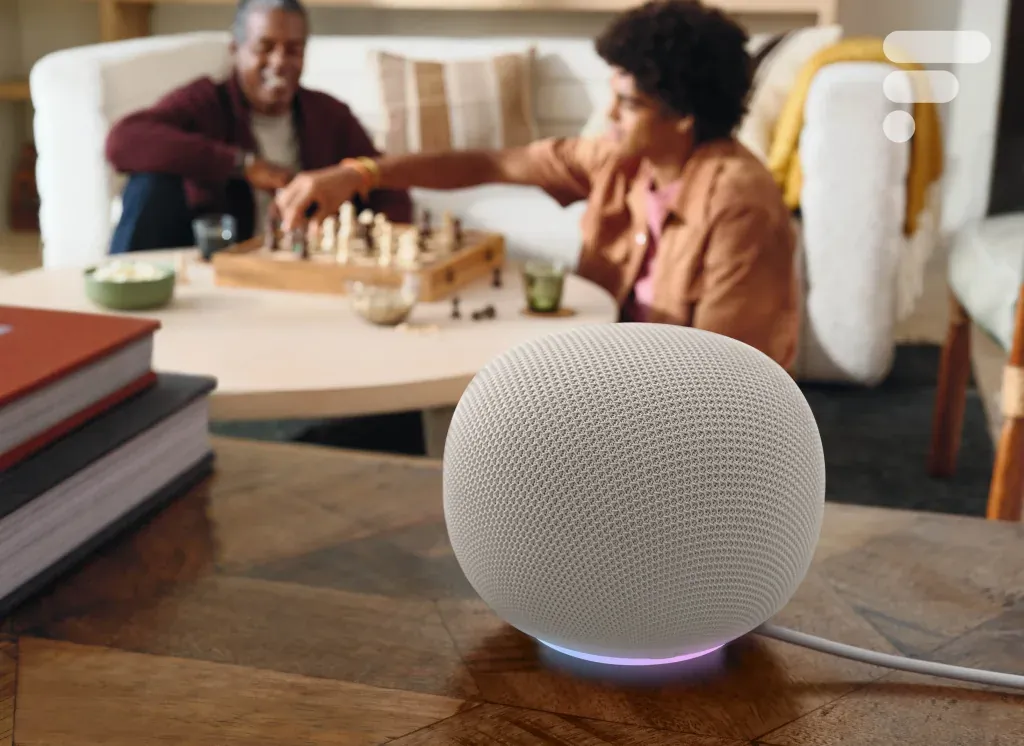
Google just launched its first dedicated smart speaker in almost six years. The $99.99 Google Home Speaker features a sleek spherical design that easily replaces the aging Nest Mini, but early testers are flagging a frustrating catch. To unlock the device’s true potential, you have to pay a monthly fee.
The tech giant is using this late June 2026 release to aggressively push its Generative AI ecosystem into the living room. “Gemini for Home” replaces the rigid voice commands of the old Google Assistant. The problem? Reviewers like Patrick O’Rourke at XDA-Developers note that the best conversational features—like Gemini Live and natural-language Automations—are locked behind a $10-per-month Premium Standard paywall after a six-month trial.
Hardware Upgrades vs Audio Downgrades
Visually, the new speaker is a hit. Google ditched the fabric-covered lozenge look of the Nest Audio for a minimalist sphere available in Porcelain and Hazel. Underneath that fabric, the internal hardware upgrades include a dedicated NPU, Wi-Fi 6, and Bluetooth 5.4 connectivity, according to Android Police.
But audio purists might want to hold onto their older gear. The new Google Home Speaker uses a single 58mm full-range driver. While that drastically outperforms the tiny 40mm driver found in the $50 Nest Mini, it is functionally a step backward in pure acoustic depth compared to the $100 Nest Audio, which packed a larger 75mm woofer and a dedicated 19mm tweeter. That older model simply delivers better bass. Interestingly, Google is also reviving its exact original naming convention from the 2016 model, completely abandoning the “Nest” branding for its audio lineup.
Key Details
- The smart speaker directly competes with the $99 Apple HomePod mini and Amazon Echo Dot Max line.
- Early testing shows it functions flawlessly as a wireless speaker for the Google TV Streamer.
- Users who refuse the $10/month or $100/year subscription will still get basic voice-activated timers and music playback, but lose conversational routine building.
The Gemini Experience
Google built this device to act as an AI terminal. When Gemini works, it feels like a genuine generational leap. The improved natural language understanding and chained-command capabilities of Gemini for Home detailed by PCMag mean you can casually ask the speaker to close the blinds at sunset without programming a rigid routine.
Yet the subscription model creates a bizarre user experience. The speaker actively competes against devices like the Amazon Echo line, and its audio comparison against the HomePod mini holds up well for the $100 price tag. Forcing buyers to pay an ongoing fee just to use the AI assistant that justifies the hardware purchase is a tough sell. If you already own older Nest Hubs or Nest Audios, those devices are also receiving Gemini for Home compatibility via software updates.
How the Subscription Pivot Changes the Smart Home
This release marks a definitive shift in the economics of the smart home. For the past decade, tech companies subsidized the cost of cloud-based voice assistants to trap users inside their hardware ecosystems. You bought the speaker once, and the AI was effectively free forever.
That era is over. Generative AI requires vastly more compute power than the simple command-and-response logic of the legacy Google Assistant. By walling off Gemini Live behind a $100 annual subscription, Google is testing whether mainstream consumers value conversational AI enough to treat their living room speaker like a Netflix or Spotify account. If buyers accept this model, expect competitors like Amazon and Apple to quickly implement their own paywalls for advanced home intelligence.