
Building a budget PC used to mean scouring the internet for the cheapest graphics card you could afford. Those days are fading fast. The silicon inside our processors has quietly leveled up, and in 2026, relying purely on integrated graphics is a completely viable strategy for 1080p gaming.
The entry-level discrete GPU is slowly becoming obsolete. Desktop builders are saving hundreds of dollars by skipping the graphics card entirely. This hardware shift is driven by bloated pricing on dedicated cards and rapid software advancements that squeeze surprisingly high frame rates out of tiny, efficient chips.
The AMD Champion Holding the Line
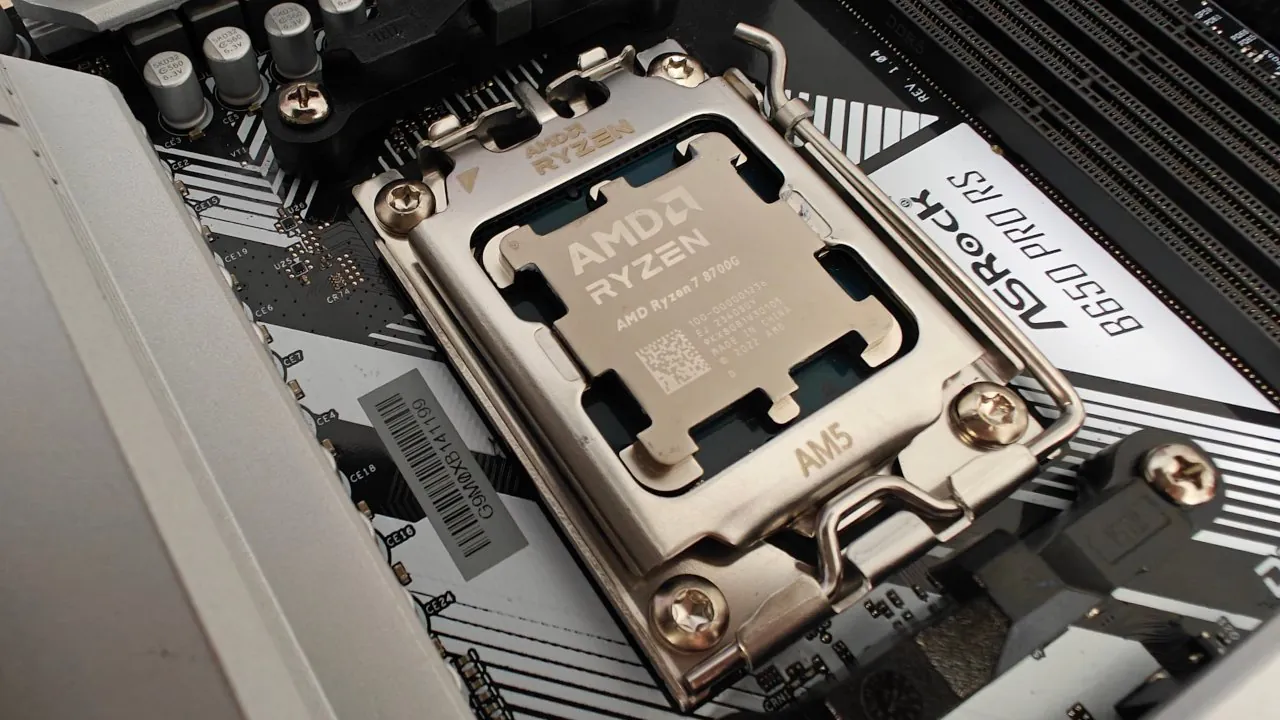
The reigning champion of this budget-friendly approach is not actually a brand-new release. The AMD Ryzen 7 8700G remains the most relevant desktop APU available today, packing a Radeon 780M graphics engine right onto the main processor. A recent hardware analysis proved that this chip can run demanding AAA titles natively with shocking stability.
Throw a heavy hitter like Cyberpunk 2077 at it, and the 780M hums along at roughly 40 frames per second on a 1080p low preset. It handles the workload without breaking a sweat, requiring no extra expansion cards or complicated power cables.
Intel has largely kept its best graphics tech locked to mobile platforms. Their highly capable Arc 140T is currently restricted to laptop chips like the Core Ultra 9 285H. Because of this, desktop builders looking to skip a GPU are almost entirely dependent on AMD’s established ecosystem.
The Upscaling Magic Trick
But raw hardware is only half the equation. The real secret to pushing these integrated chips past the 60 FPS mark relies on spatial upscaling and intelligent software interpolation. Builders are combining the APU with specific software tricks to maximize performance.
- Native rendering drop: The game renders internally at a lower resolution to significantly reduce the computational workload on the chip.
- Software upscaling: Tools like AMD’s FSR reconstruct the image back up to 1080p, sharpening the details so it looks nearly identical to a native output.
- Frame generation: Third-party applications like Lossless Scaling step in to artificially generate entirely new frames between the real ones, smoothing out the visual experience.
How Handheld Consoles Killed the Entry-Level Desktop GPU
Why did integrated graphics suddenly get so powerful? You can thank the explosion of the handheld gaming PC market. Devices demanding extreme battery efficiency forced CPU manufacturers to dedicate significantly more silicon die space to onboard graphics.
That mobile arms race bled directly into the desktop market. Intel is already restructuring its mobile processor strategy to catch up. Leaks suggest their upcoming Nova Lake-H chips will feature a 12-core Xe3P iGPU to directly challenge AMD in the premium thin-and-light and handheld categories.
The result? Desktop builders get to reap the benefits of this high-powered silicon. The integration of advanced upscaling software directly triggers a market shift where entry-level dedicated GPUs are no longer a strict requirement. PC building is getting cheaper, simpler, and far more efficient.