
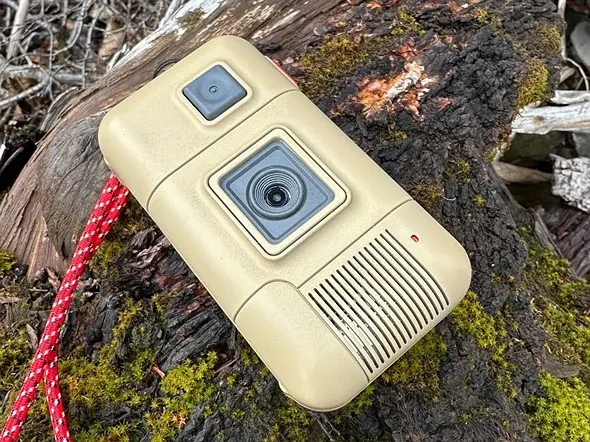
Modern smartphones are slippery, fragile rectangles of glass. They take clinically perfect photos, upload them to a server you do not own, and demand your constant attention. The Saturnix is the exact opposite.
Created by a maker known as u/Sf140—or Yutani—this chunky, retro-futuristic digital camera is a love letter to 1980s sci-fi hardware. It runs on a Raspberry Pi Zero 2 W paired with an Arducam 16-megapixel autofocus sensor. But the silicon is only half the story. The entire project is completely open-source. Four months after an initial teaser, the Saturnix has reached full release status in 2026. The creator published the complete custom firmware, 3D print files, and assembly manuals to a public GitHub repository.
Cassette Futurism Meets Offline Processing
You can see the inspiration immediately. The camera’s industrial, bolted-together aesthetic draws heavily on “cassette futurism,” taking direct visual cues from the 1979 film Alien and its surrounding media universe, according to a recent breakdown by DPReview detailing the internal Raspberry Pi processing constraints. It features an intentionally overdesigned, retro user interface on its 2-inch LCD screen.
There is no touchscreen here. To ensure a deeply satisfying tactile experience, the creator opted for mechanical keyboard hardware. The shutter and control buttons utilize Kailh switches, which pair perfectly with the on-device analog film simulations—including Kodak Gold 400, Fujifilm 400, and a lo-fi VHS filter—as noted in Yanko Design’s hardware review.
The V2 Software Upgrade
The latest V2 firmware update fundamentally changes how the camera shoots. The Linux-based system now includes a “Dynamic Mode” that grabs frames directly from the live preview stream at roughly 0.02 seconds per shot.
Users can fire off rapid bursts of 3, 5, 10, or even 20 frames instantly. The trade-off? You lose RAW (DNG) file support and shoot at a slightly lower preview resolution to achieve that speed. The update also introduces a critical battery monitoring script that automatically shuts down the system when power hits 5% to prevent SD card corruption, a feature detailed closely in an XDA Developers firmware report.
Why the Saturnix Proves Standalone Hardware Still Matters
The enthusiastic reception to this DIY build exposes a growing fatigue with tightly controlled consumer electronics. By releasing the Saturnix under MIT and Creative Commons licenses, Yutani gave the maker community total ownership over both the hardware and the software.
This device requires no companion app to function. It demands no cloud subscription to process its film presets. It simply takes photos and saves them offline, proudly tagging the EXIF data with its own name. In an era where hardware is increasingly locked down and tethered to remote servers, a camera you can print, build, and modify yourself isn’t just a fun weekend project. It is a working protest against the modern tech ecosystem.