
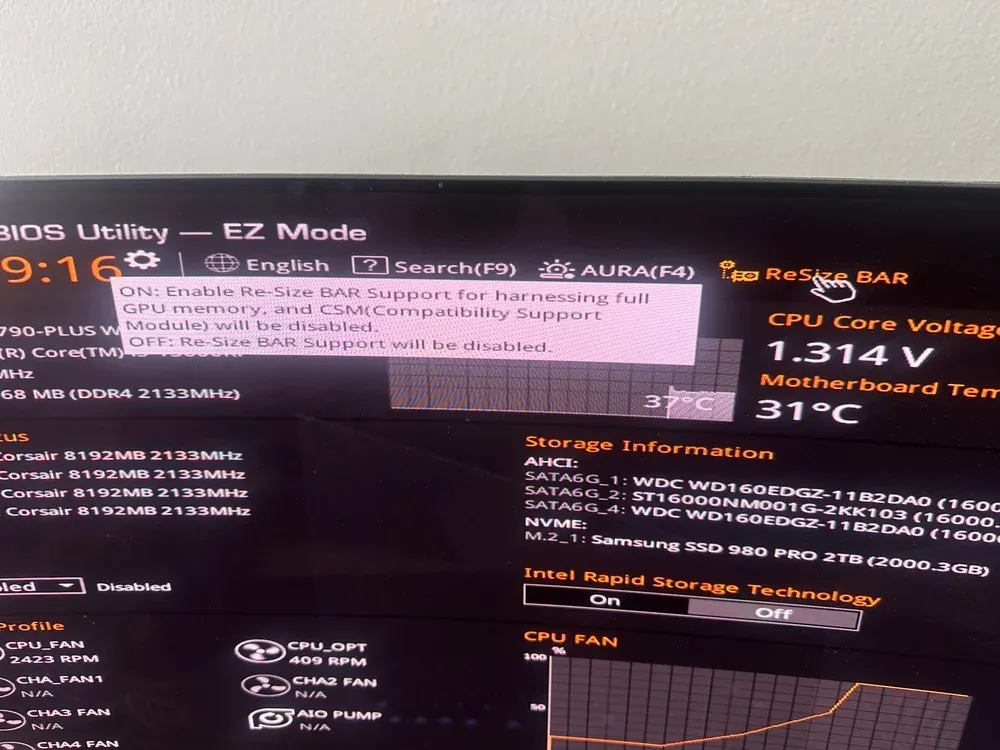
It sits right there on your motherboard, completely free. Yet, an analysis by Ayush Pande at XDA Developers reveals that a surprising number of modern gaming rigs are running with Resizable BAR disabled. That oversight is quietly bottlenecking graphics cards and costing players noticeable frame rates.
For decades, processors could only talk to a graphics card’s memory in tiny 256MB chunks over the PCIe interface. Resizable BAR (ReBAR) eliminates that artificial toll booth. It allows the CPU to map the entire VRAM buffer simultaneously. The result? Dramatically improved data transfer efficiency when streaming high-resolution textures.
Key Details
- AMD originally popularized the standard under the name Smart Access Memory (SAM) back in November 2020.
- Intel’s Arc A-series architecture relies so heavily on this feature that enabling it is practically mandatory for stable gameplay.
- Legacy operating system installs using the Compatibility Support Module (CSM) will permanently hide the setting from the user.
The hardware has supported this standard since the Radeon RX 6000 and Nvidia RTX 30 series debuted. But the software often stands in the way. Enabling the feature requires strict, specific system parameters that frequently trip up users attempting to upgrade older Windows builds.
To flip the switch, a rig must be running in pure UEFI boot mode. You also have to manually activate both “Above 4G Decoding” and “Re-Size BAR Support” directly in the firmware. For anyone looking to verify their own hardware setup, understanding these BIOS configuration steps is an absolute necessity.
Why Nvidia Restricts the ReBAR Standard
Flipping the switch in the BIOS does not instantly turbocharge every single game in your library. Broader industry testing exposes a fascinating quirk about how manufacturers handle the standard differently. While AMD pushes it aggressively across the board, Nvidia treats ReBAR strictly on a per-game driver profile basis.
Forcing the feature on globally across all software can actually backfire. Older titles were hard-coded to expect those legacy 256MB chunk limitations. Pushing an unrestricted memory pipeline into an aging game engine frequently causes system instability and degraded performance. That is exactly why graphics drivers maintain hidden whitelists to ensure the performance gains only trigger when they actually help.