
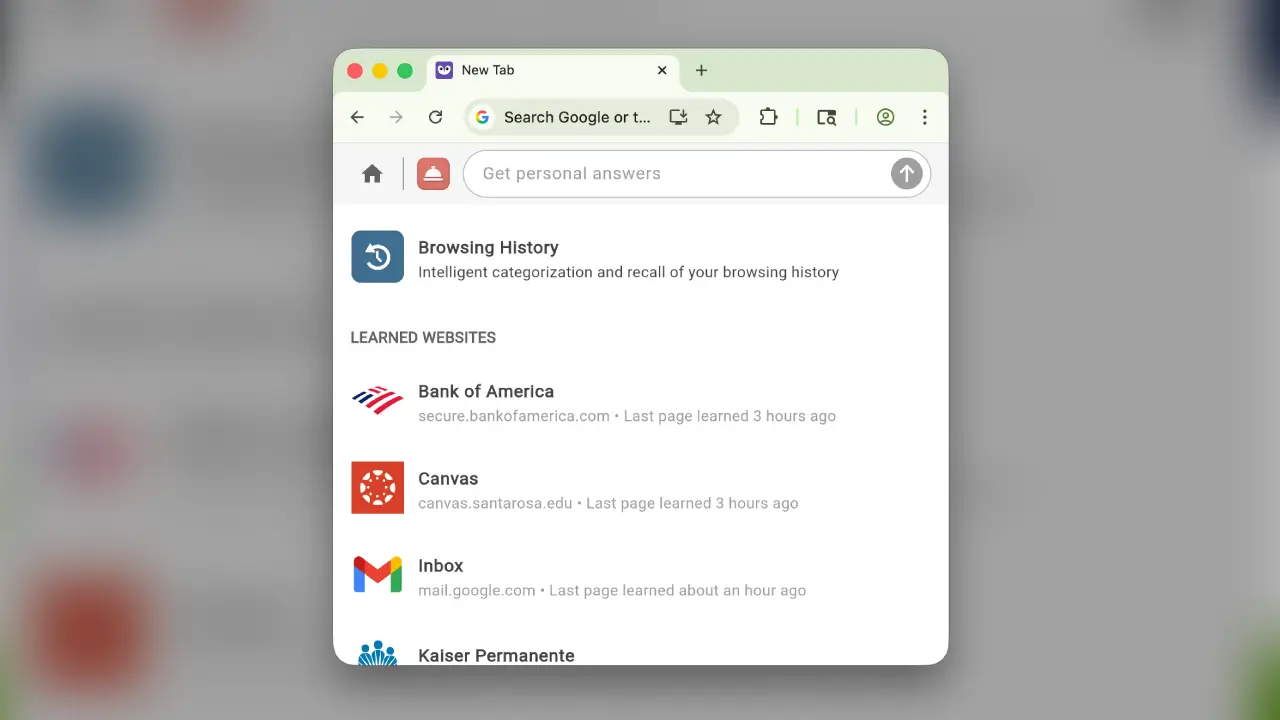
The AI browser rush is officially crowded, but almost everyone is building the exact same thing. Perplexity launched Comet, OpenAI gave us Atlas, and Google hardwired Gemini into Chrome. They all want to be your personal agent, booking flights and filling out forms while you sit back. A new Chromium-based browser called Jatter is taking the exact opposite approach.
Instead of acting on your behalf, Jatter just reads. The browser relies on the GPT-4o Mini framework to synthesize your digital life into something useful, but it completely strips out the autonomous agent capabilities. The creepy part? It isn’t actually creepy. Jatter promises end-to-end encryption and local processing to give you highly personalized answers without siphoning your account credentials.
Opt-In Memory for Your Digital Life
Most AI chatbots only know what you type into the text box. Jatter wants to know the fuller picture—your travel bookings, your research, your maps—but it asks for permission first. The system uses a strict per-site opt-in model. If you log into Booking.com to plan a trip, a prompt asks if the browser can read that specific page. Give it the green light, and it starts building memory. Deny it, and the data stays dark.
The interface strips away typical browser clutter to focus on five core native applications: Chats, Personal Answers, Notes, Maps, and Settings. The real magic happens inside Personal Answers. After you approve access to specific sites, you can ask the browser highly contextual questions about your own authenticated data. You can query your own hotel reservations or map routes, and it instantly pulls the facts together, according to a hands-on browser test published on Wednesday.
But the team behind Jatter is not new to this strict privacy philosophy. The developers, formerly known as Beacon, spent years building anonymized chat applications and encrypted location-sharing tools. They engineered this browser so that even their own servers cannot read the data it syncs. Everything is encrypted on the device, and the company confirmed no personal data is ever used to train a language model.
And if you get uncomfortable? You can wipe the browser’s learned history with a single click. It is a highly deliberate method for generating private insights from authenticated sources without handing over the master keys to your online identity.
Why It Matters
The tech industry is currently obsessed with AI agents that can browse the web and execute tasks without human supervision. That sounds incredibly futuristic, but it introduces terrifying security vulnerabilities. Handing a language model full control over your shopping carts, airline portals, and banking sessions requires absolute trust.
Jatter proves we might not need to take that security risk just to get the benefits of personalized AI. By removing the ability to “do” and restricting the AI strictly to “reading,” the browser creates a secure sandbox. It gives users the context-aware smarts of an LLM while keeping the human firmly in the driver’s seat. It forces competitors like The Browser Company’s Dia and Norton’s Neo to justify why they need so much active control over our accounts.