
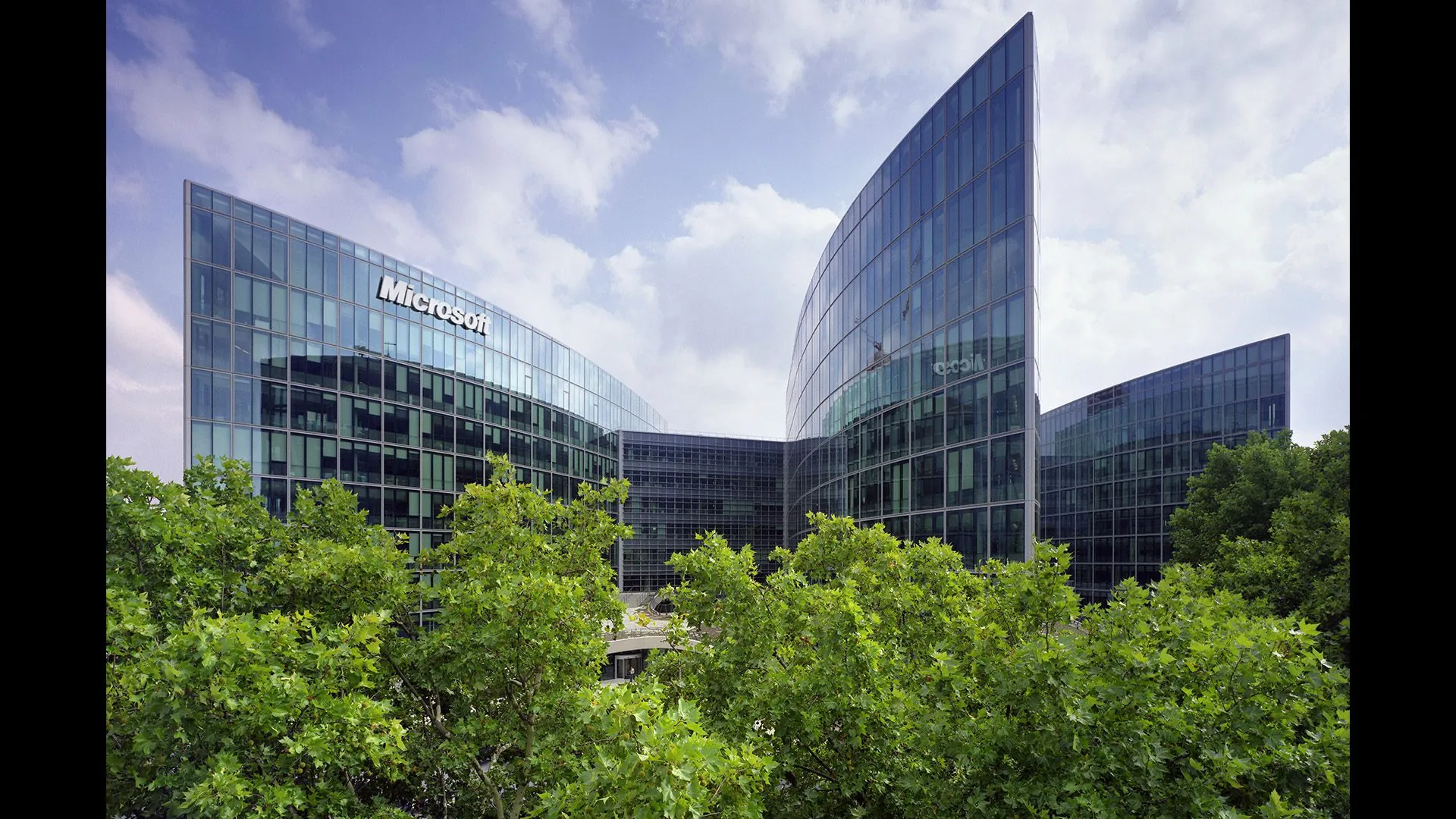
Microsoft just revealed its carbon footprint jumped roughly 25 percent over the last year. That spike pushes the company’s total emissions to nearly 15 million metric tons of CO₂e. It seriously threatens their highly publicized 2020 promise to go carbon negative by 2030.
The root cause is exactly what you might expect. The company is in the middle of an unchecked generative AI hardware expansion. We see the raw data detailed by The Verge showing this surge is heavily concentrated in two areas. Scope 3 emissions cover the supply chain and actual physical construction of advanced GPUs and sprawling new server farms. Scope 2 covers the electricity purchased to keep those energy-intensive AI workloads running.
But carbon is only half the story. Generative AI tasks demand significantly more evaporative cooling per query than traditional cloud and search workloads. That means hyperscaler water consumption has spiked right alongside the electrical draw. Microsoft is actively scaling up its carbon removal purchases. They are signing long-term offtake agreements for regenerative agriculture soil-carbon credits to try and offset the ongoing hardware demands.
How Grid Upgrades and German Law Will Force Hyperscalers to Adapt
The current AI infrastructure buildout crossed $200 billion in capital expenditure across the industry in 2025. We have not seen a technology investment cycle this aggressive since the early 2000s telecom boom. And local power grids are feeling the strain.
To prevent a regulatory crackdown, Microsoft and its primary competitors—Amazon, Google, Meta, and OpenAI—signed the White House “Ratepayer Protection Pledge” on March 5, 2026. The companies formally guaranteed they will pay the full cost of new power generation and necessary grid upgrades. They want to ensure residential consumers are shielded from sudden price hikes caused by localized server clusters.
European regulators are taking a more direct physical approach. Germany’s new Energy Efficiency Act (EnEfG) goes into effect this month, July 2026. The law legally mandates that all new data centers must capture and utilize at least 10 percent of their waste heat for local district heating. That strict capture requirement is legally scheduled to hit 20 percent by 2028.