
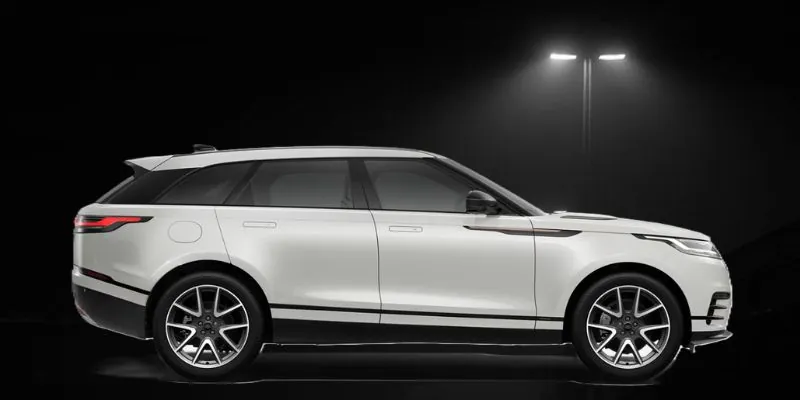
Land Rover is ripping up the playbook for the second-generation Range Rover Velar. Slated to arrive within the next six months, the incoming luxury SUV represents a drastic departure from the familiar shape it has carried since 2017.
The biggest shock? They are completely eliminating the physical rear window. Instead of glass, drivers will rely entirely on a rear-facing digital camera system to see what is behind them. That sharp, heavily raked rear roofline pulls direct inspiration from coupe-SUVs like the BMW X4 and the Polestar 4.
Under the Hood: The 800-Volt Architecture
This will be the very first Land Rover vehicle to utilize the company’s new Modular Longitudinal Architecture (MLA) platform. The tech specs here are genuinely exciting. The platform features an advanced 800-volt electrical system. That means rapid EV charging speeds that can finally match the top competitors on the market without breaking a sweat.
It also marks a historical milestone for the brand. This redesign is one of the final Land Rover models sketched out by former Chief Creative Officer Gerry McGovern before he stepped away.
Why JLR is Retrofitting the MLA Platform for Hybrids
The engineering under the floorboards tells a completely different story about the global auto market in 2026. JLR initially designed the MLA platform to be strictly electric-only under its highly publicized “Reimagine” timeline. But they just blinked.
Land Rover confirmed the MLA platform will now support hybrid powertrains alongside fully electric options. That multi-billion-dollar pivot is an insurance policy against slower-than-expected global EV adoption. The reinforced structural rigidity of the MLA platform allows engineers to cram in high-density battery packs without sacrificing off-road capability. At the same time, maintaining combustion flexibility keeps the Velar viable in regions where charging infrastructure is lagging.