
Formula One awards championship points to the top 10 finishers of a standard Grand Prix. The race winner takes exactly 25 points. From there, the scale drops incrementally down to a single point for the tenth-place driver. This core distribution system dictates both the individual driver standings and the team-based financial payouts across the grid.
The modern framework went into effect in 2010. It rewards consistency at the front of the pack while making the middle of the pack fight fiercely for the lower points allocations. We are going to look strictly at the mechanics governing the 2026 season, from sprint weekends to tie-breaker contingencies.
How F1 Race Points Work
The standard Sunday Grand Prix remains the primary way to score. The winner takes 25 points, second place gets 18, and third place secures 15. The remaining top-ten finishers receive 12, 10, 8, 6, 4, 2, and 1 point, as detailed in the official documentation published by Formula1.com.
But the racing calendar also features Sprint races. These shorter events take place on Saturdays during select weekends. Sprint races offer a reduced points pool strictly for the top eight finishers. The winner of a Sprint race earns 8 points. That number scales down by one point per position until the eighth-place finisher takes home 1 point. DIRECTV Insider confirms this structure remains the standard for the sprint format.
Drivers also pay a fee per point to renew their Super License each year. Scoring points is the goal, but it literally costs the participants money to keep competing at the highest level.
Why Teams Track Two Different Championships
Every race weekend feeds into two parallel title fights. You have the Drivers’ Championship and the Constructors’ Championship. The points a driver scores apply directly to their personal tally. At the exact same time, the combined points of both cars on a team count toward the team’s total in the Constructors’ Championship.
This dual-tracking system creates unique administrative situations when a driver switches teams mid-season. If a transfer happens, the driver gets to retain their individual championship points. The constructor points stay permanently with the team they drove for at the time. Red Bull’s championship points guide outlines this split tracking rule explicitly.
Famous Examples from Recent Seasons
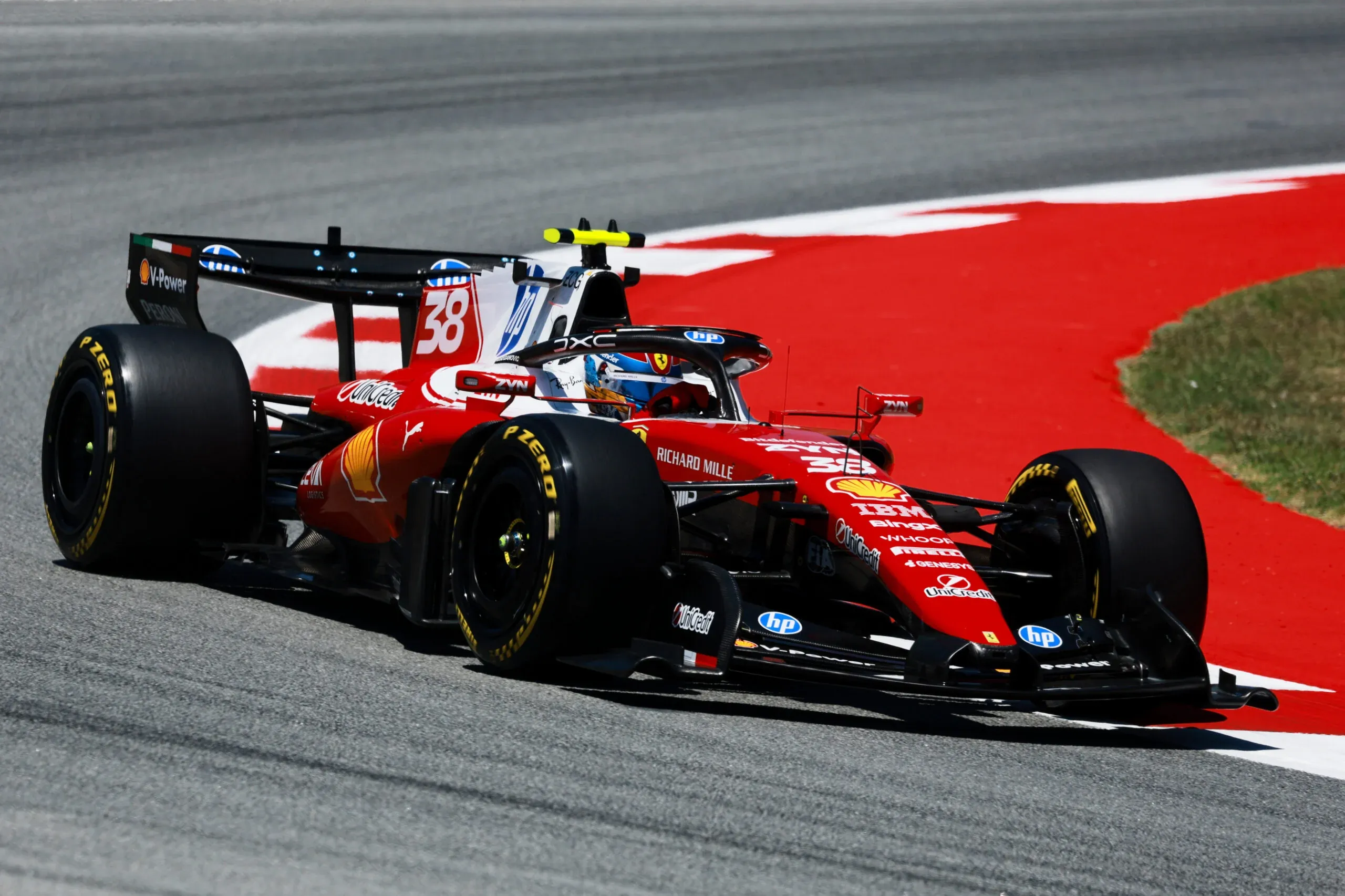
To see how this plays out, look at the 2024 season. Ollie Bearman substituted for Ferrari’s regular driver Carlos Sainz for a single race. He finished in the top 10 and scored 7 points. Those points counted toward Bearman’s personal Drivers’ Championship total, and they went directly into Ferrari’s Constructors’ Championship total.
Later in the year, Bearman drove for Haas. Yet those original 7 points stayed safely in Ferrari’s column.
Points also carry a heavy financial burden for the teams in the following season. Teams must pay an annual FIA entry fee based entirely on the number of points they scored in the previous year. The Constructors’ champion pays a significantly higher cost per point than the baseline rate for the rest of the grid. Following a dominant 2023 campaign, Red Bull Racing scored 860 points. RacingNews365 published that the team faced an estimated FIA entry fee bill of over $5.6 million just to compete the next year.
Common Misconceptions About F1 Rules
One of the most common errors casual fans make involves the fastest lap point. Between 2019 and 2024, an extra point went to the driver who recorded the fastest lap of the race, provided they finished in the top 10. That rule is gone. It was abolished starting with the 2025 season.
Tie-breakers also confuse many viewers. If two drivers end the year tied on points, the FIA does not declare co-champions. The title is decided by a countback. The driver with the most Grand Prix victories wins the tie. If they share the exact same number of wins, the officials look at who has the most second-place finishes.
Shortened races trigger a completely different scoring mechanic. Weather delays or severe track incidents often force race directors to rely on FIA yellow flag regulations and subsequent red flags. If a Grand Prix is called off early, points are scaled based on the distance completed. The leader must complete at least two racing laps without a safety car for any points to be awarded. From there, the sliding scale rules distribute points based on whether 25%, 50%, or 75% of the race distance was reached.
Key Takeaways
- Grand Prix weekends distribute points heavily toward the winner, while Sprint weekends offer a smaller, tighter point pool exclusively for the top eight drivers.
- Driver points and team points operate on separate tracks, meaning mid-season roster changes do not strip constructors of the points a departing driver previously earned for them.
- Scoring heavily leads to steep financial obligations, as championship-winning teams must pay multi-million dollar entry fees based directly on their prior year’s points total.