
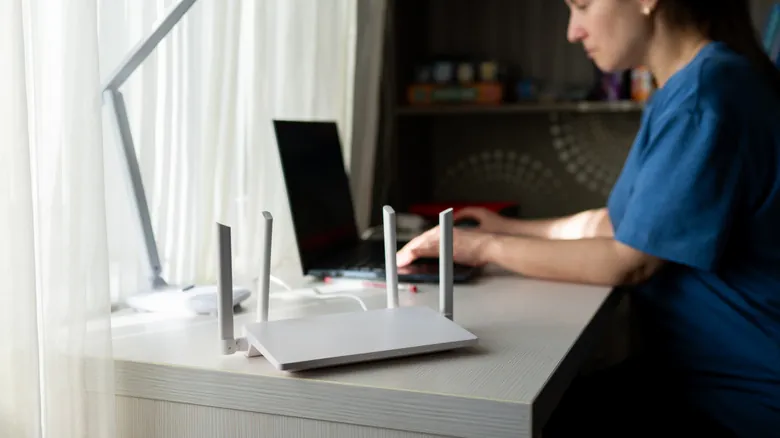
Modern smart devices stubbornly cling to the 2.4 GHz Wi-Fi band, causing unnecessary buffering and lag even when you sit directly next to the router. The fix isn’t buying an expensive new mesh system. It is a single automated toggle inside your router settings called band steering.
According to a recent test by XDA Developers, enabling this automated router feature completely eliminates home network latency issues. Hardware stays glued to the 2.4 GHz frequency because of its superior wall-penetration capabilities, which quickly turns that network lane into a congested traffic jam. By turning on band steering, the router actively nudges capable devices over to the faster 5 GHz frequency without dropping the connection. It does this by quietly suppressing probe responses on the crowded 2.4 GHz lane.
Key Details
- Windows laptops frequently fall back to the slower 2.4 GHz band because Microsoft natively prioritizes raw signal strength over actual bandwidth speed.
- Flipping the band steering setting immediately cured sluggish smart bulb responses and delayed YouTube video starts for the tester.
- Early 802.11ac networks struggled with this feature, but modern routers now handle the frequency transition invisibly.
Years ago, IT professionals told everyone to manually split their 2.4 GHz and 5 GHz networks into two different names to avoid connection drops. That advice is now completely obsolete. Today, major hardware manufacturers explicitly push for unified networks. Apple went as far as updating its documentation so Apple’s official network policy actively warns against separating network bands. The company directs users to keep a single network name across 2.4 GHz, 5 GHz, and 6 GHz to prevent limited compatibility errors on newer Wi-Fi 6E hardware.
Why Unified Wi-Fi Standards Overwrite Old Router Habits
The shift away from split networks fundamentally changes how home users approach network troubleshooting. For the last decade, power users micromanaged their connected gadgets by manually forcing TVs and laptops onto a dedicated 5 GHz SSID. With the widespread adoption of Wi-Fi 6E and strict compatibility mandates from companies like Apple, routers now possess the processing power to manage that traffic logic internally.
Relying on band steering prevents modern operating systems from getting confused when moving between rooms. The router acts as an automated traffic cop, distributing bandwidth effectively rather than forcing the user to memorize which network name is faster. Turning this feature on modernizes aging networks without requiring any new hardware purchases.