
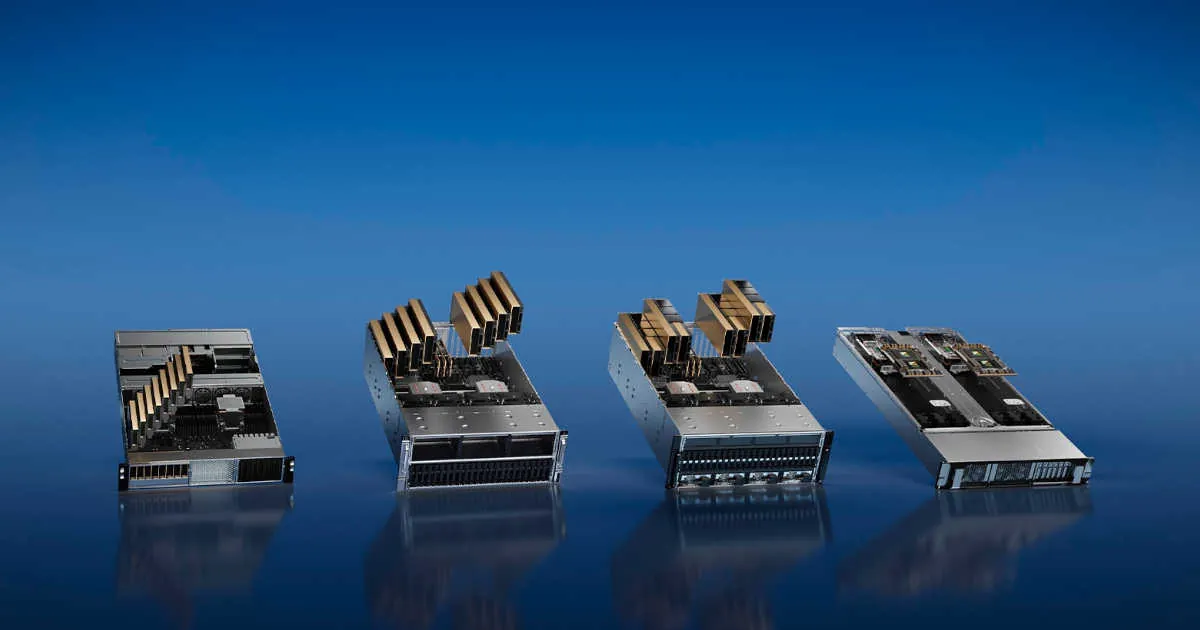
Nvidia just hit a physical wall. The company’s next-generation Kyber rack-scale architecture—specifically the NVL144 system built for the upcoming 2027 Rubin Ultra chips—is delayed to 2028. That pushes the timeline back by more than 12 months.
The delay directly cuts the performance ceiling of the entire Rubin Ultra product line. Nvidia canceled the planned quad-chip version of the hardware. Engineers are falling back to a dual-chip design that effectively halves the expected system-level performance.
The PCB Midplane Bottleneck
The roadblock comes down to the physical limits of hardware fabrication. A Monday report from research firm SemiAnalysis revealed that manufacturing the highly specialized, multi-layer printed circuit board (PCB) midplane proved too difficult to scale.
Nvidia tried to pivot. Engineers proposed a backup architecture called the NVL72x2, which relied on a back-to-back rack design. That idea died quickly. Hyperscale cloud service providers rejected the concept entirely, citing the heavy operational burden and structural complexity of the setup, according to the SemiAnalysis data.
Scaling up further is also hitting snags. The larger NVL576 configuration, designed to link eight racks using optical connections, will likely face its own delays. The Co-Packaged Optics (CPO) technology required to run it remains immature. That restricts early production to small-scale pilot volumes at best.
The Oberon Pivot
To bridge the gap, Nvidia is expected to lean heavily on its current-generation Oberon Rubin racks. The company needs to maintain supply chain momentum through 2027 while it irons out the Kyber manufacturing issues.
Why AMD and Google Suddenly Have Breathing Room
Nvidia’s aggressive annual release cycle has dominated the AI hardware space. This manufacturing stall creates a rare opening at the very top of the market. The lack of a stable, large-scale system for the Rubin Ultra generation leaves hyperscalers waiting for their next major training clusters.
Competitors now have a window to catch up. AMD’s MI500X and Google’s TPU v8i systems are positioned to grab market share from companies unwilling or unable to wait until 2028 for Nvidia’s high-end scale-up solutions. The hardware race just got a lot tighter.