
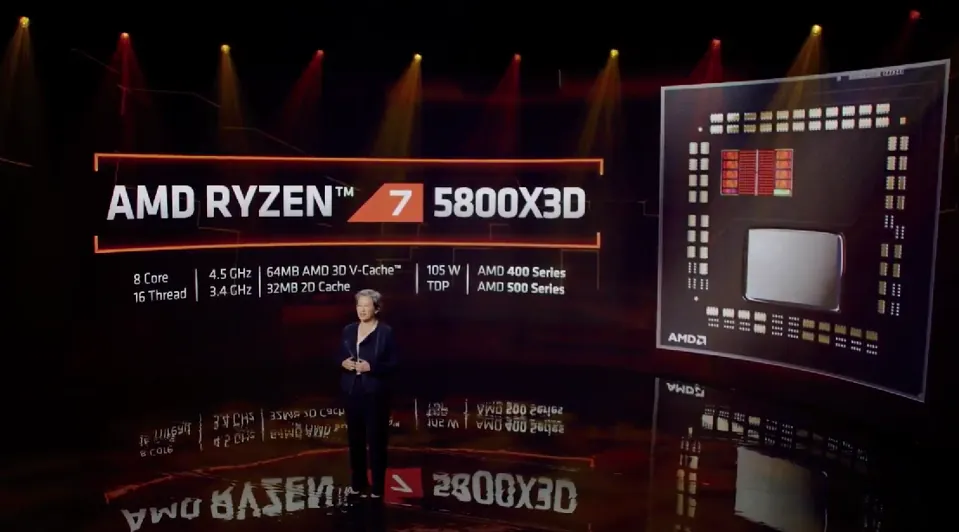
AMD officially relaunched the “10th Anniversary Edition” of the Ryzen 7 5800X3D for the older AM4 platform on June 25, 2026, setting the MSRP at $349. The move offers a direct lifeline to PC gamers who find themselves stranded by the escalating costs of next-generation hardware. But the real story is the underlying macro-economic shift driving this unusual product revival. Enterprise demand for High-Bandwidth Memory (HBM) to supply AI data centers is aggressively stripping manufacturing capacity away from standard consumer RAM.
Top semiconductor fabricators like Samsung, SK Hynix, and Micron have aggressively diverted their silicon wafer production away from standard desktop memory. The result? Consumer RAM prices have skyrocketed since mid-2025. Standard 32GB DDR4 memory kits now cost roughly $200, which marks a 200% to 300% increase. The situation is even worse for the newer standard. Builders looking to adopt AMD’s AM5 socket face DDR5 kit prices exceeding $400, reflecting a 300% to 440% jump.
Making the jump to next-generation sockets is economically unviable for average builders right now. And bringing the old chip back was not a simple copy-and-paste job. TSMC entirely altered its fabrication processes since initially transitioning to AM5 manufacturing. To bypass the DDR5 upgrade bottlenecks and get the older chip back on shelves, AMD had to completely re-engineer the revived processor.
How the AI Memory Squeeze Forced Intel to Hike Arrow Lake Prices
The AI-driven supply chain squeeze is dictating terms across the entire desktop market, not just for AMD. Intel recently hit the exact same capacity wall. The company quietly raised the recommended pricing on its Core Ultra 200S Plus (Arrow Lake Refresh) desktop chips by up to $50.
That adjustment pushed the Core Ultra 7 270K Plus to $349 just three months after the official March 2026 launch. Consumers are now paying the price for the AI boom directly at the checkout screen, according to hardware specifications verified for the $349 re-release. With both major CPU manufacturers struggling to maintain affordable platform transitions, the hardware industry is forcing builders to rethink their upgrade schedules.